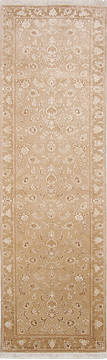
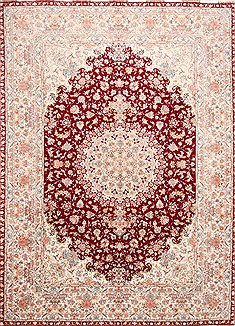
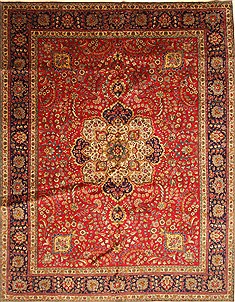
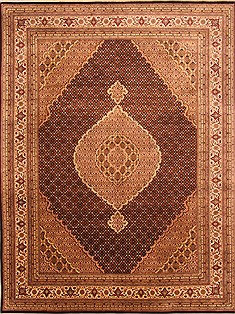
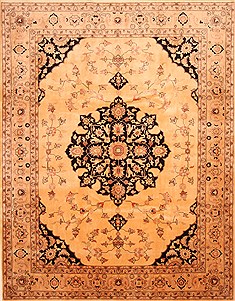
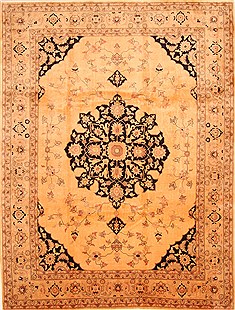
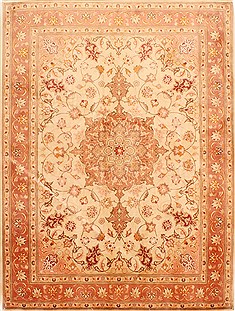
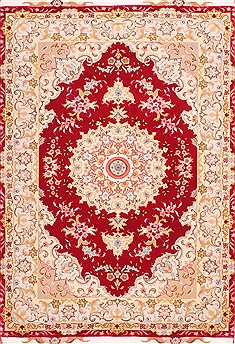
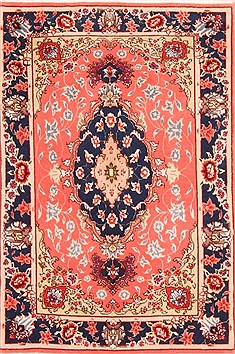
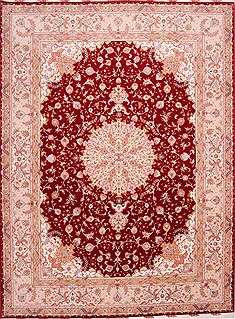
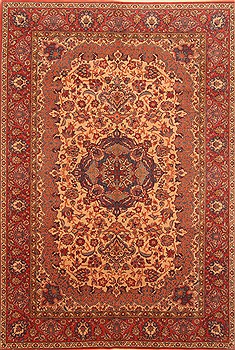
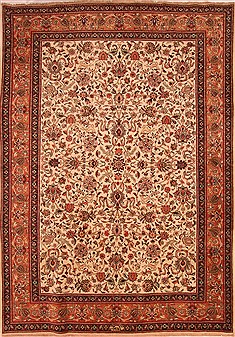
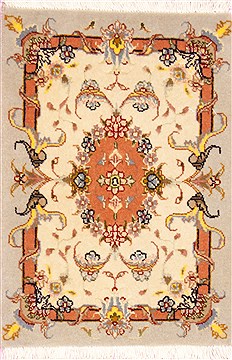
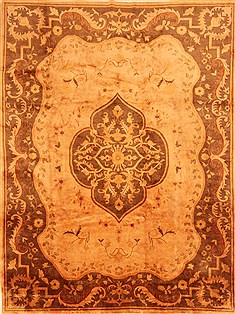
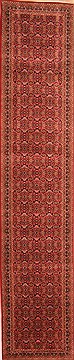
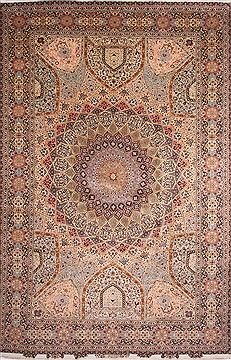
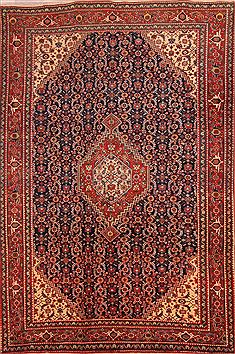
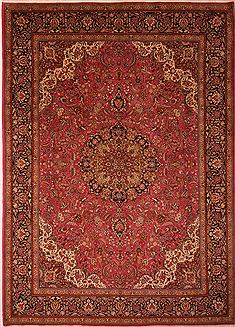
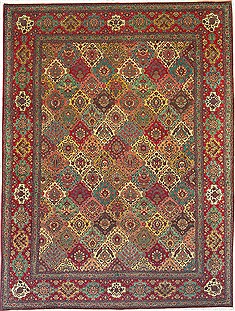
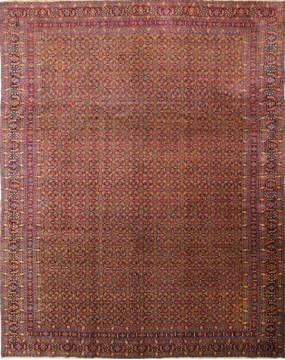
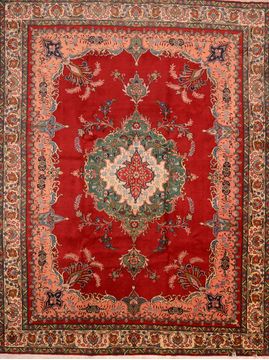
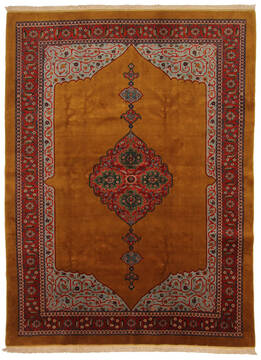
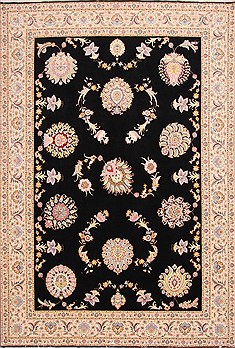
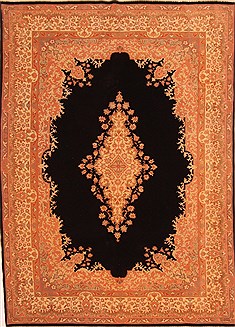
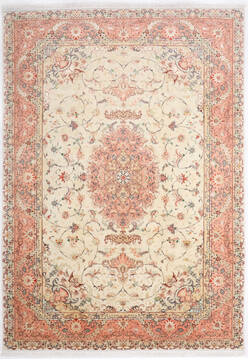
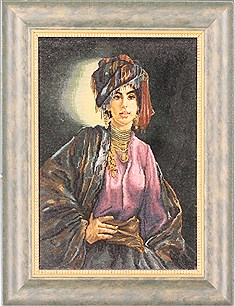
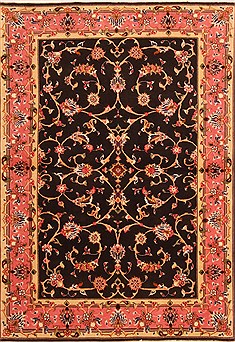
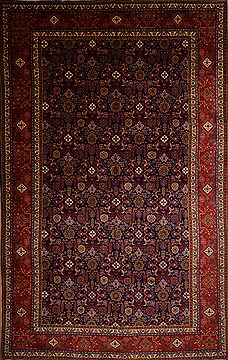
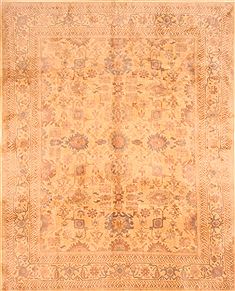
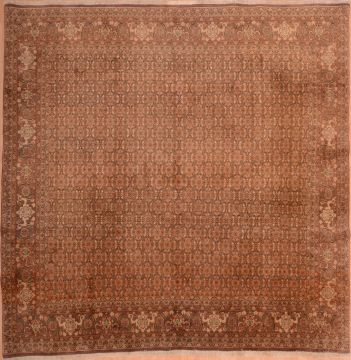
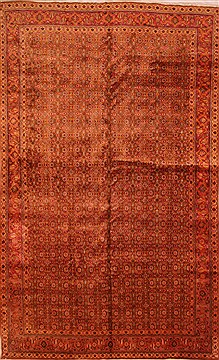
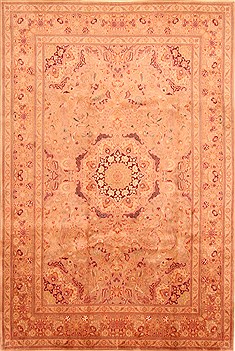
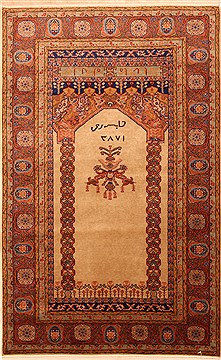
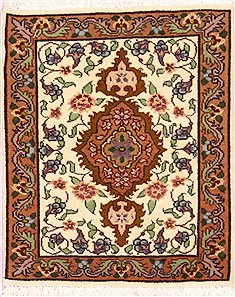
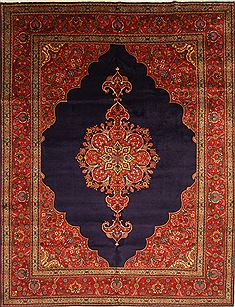
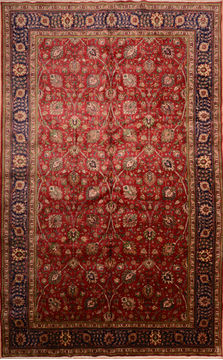
It is not exaggerated to claim that Tabriz Persian rugs are most popular brand tag in the hand knotted category. It may also be accurate to declare Tabriz general Area as the birth place of the rug weaving art. Tabriz rugs are the examples of fine traditional artistic items of home decor and ultimate luxury, intriguing detail, captivating imagery and articulate designs. The finest examples of Traditional Floral rug designs, geometrical patterns, extremely elaborate famous fish designs, or fascinating pictorial wall hanging rugs can only be found among Tabriz Persian Rugs.
Tabriz is an ancient city in north-western Iran, and the most prolific of all carpet centres. The quality in their carpets is generally exceptional, with most on a base of fine cotton, but sometimes on pure silk. There are many unique designs but typically the pattern in a Tabriz rug is filled with dense floral motifs, large palmettes, vases, or vivid hunting scenes or pictorials in the field. These can be with or without a medallion, and geometric designs are also seen. Tabriz has sub-styles as well. These include the restrained and elegant 'Mahi' in co-ordinated borders of subdued tones that fit in anywhere; the Naqsheh, with its plethora of pinks on beige, or very occasionally, black; and the wild but beautiful Tabatabaie, always in touches of orange, lemon green and beige. The finer Naqsheh and Mahi are mostly in highly-priced Kurk wool, and silk is often used to outline lavishly the highlights of the rug.
Tabriz is probably the most prolific carpet-producing center in the world, and certainly one of the oldest. This enchanted city was established more than a thousand years ago. After many invasions, occupations and wars, Tabriz took the ancient techniques of the past and created a huge rug-exporting industry. The finest era of Persian rug weaving was the Safavid Dynasty (1499 - 1722), when the Safavids overthrew the Turks who had occupied Tabriz. They gave the city one of the first Royal workshops, making it the artistic center of Persian culture. In spite of all the later conquests and political restructurings, Tabriz managed to keep these ancient traditions alive. Today, many rugs produced in Tabriz emulate the artististic heritage of the Persian Safavid carpet, and when a designer in any part of the world wants to commission a certain pattern to be hand-woven, Tabriz is the city that he visits. Attesting to their pride in producing fine carpets, the master-weavers of Tabriz often weave their signature into a part of the carpet's border. These signatures can, of course, be found on extremely fine rugs made in other cities, but a signature on the 'ceremonial' border of a Tabriz Naqsheh is the ultimate in formality and sophistication. The material used for the pile of these rugs are wool, silk, or a combination of the two. A beautiful blend of fine Kurk wool and silk is the most common in a fine Tabriz, with wool only used in those of average quality. In the very finest carpets, the foundation of the rug is pure silk instead of cotton, and some even have 18 or 24 karat gold threads woven into the foundation, with 300 to 800 KPSI not being uncommon. The only rugs that can be compared with a fine Tabriz are Isfahans, Kashans, Kermans, Qums, and Nains. Most spectacular are the Nagsheh (some of the many hudnrdes of beautiful patterns are still owned by private families), the intricate, restrained Mahi (the Decorator's carpet), or the magnificent Dome, depicting the internal architecture of a mosque.
(11'6" x 16'5") Persian Tabriz
SKU 254-29169
(9'10" x 13'6") Persian Tabriz
SKU 254-29345
(10'0" x 13'3") Persian Tabriz
SKU 254-29352
(13'0" x 19'8") Persian Tabriz
SKU 254-30297
(13'1" x 16'5") Persian Tabriz
SKU 254-30299
(10'0" x 12'6") Persian Tabriz
SKU 254-29138
(13'0" x 20'0") Persian Tabriz
SKU 254-30296



Be the first to know about new designs and
exclusive offers, and get up to
10% OFF
your first purchase
Rugman since 1998 | The first and oldest online rug store
You can unsubscribe with a single click. We value your privacy; click here for more info.
You have one more step to join
Rugman Insider Club.
A coupon code will be emailed to you.
Please check your email and just
click the green “Confirm Subscription” button.



 Rectangle
 Round
Round
 Runner
 Square