Qum
rugs originated from Qum, located in central Iran, and is just south of
Tehran. Commercial traditional rug weaving can only be traced back to
the 1930s. Famous designers including Rastehzadeh, Arsalani, and Ahmad
Archang oversee the production of Qum rugs, weaving them in their
workshops. However, the workshops in Qum do not have the same level of
technical sophistication as those in Nain or Isfahan. Interestingly
enough the quality of newer Qum rugs is superior to an older one. In
most other regions, the converse would be true. Known as a major
production center for silk traditional rug weaving, the highest quality
Qum rugs are made of pure silk with very high KPSI (knots per square
inch). Extremely talented local artisans use Persian knots to produce
some of the most beautiful rugs in the world today.
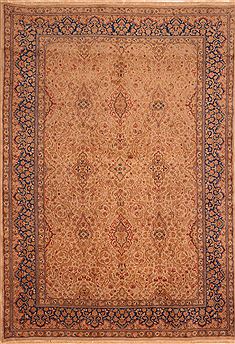
Since rug production did not begin in Qum until the 1930s, Qum doesn't
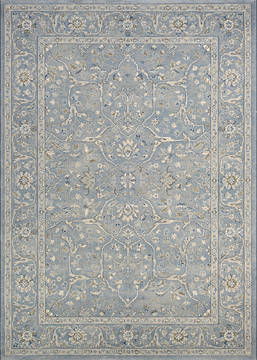
have any traditional rug designs of its own. They have adapted designs
from other regions and personalized them in a unique fashion. The
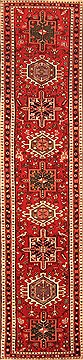
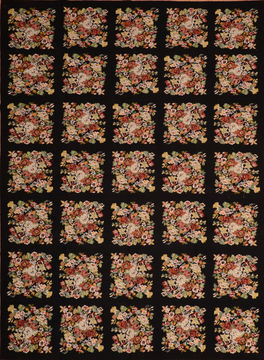
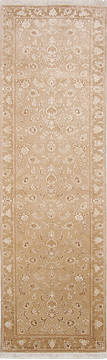
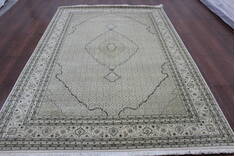
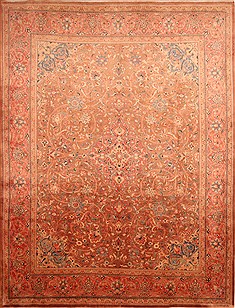
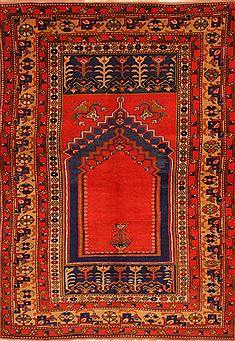
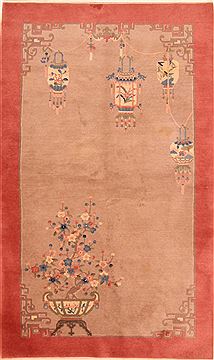
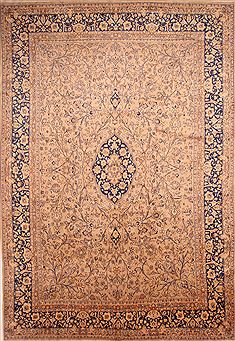
patterns on Qum rugs are typically curvilinear, but landscapes and
pictorial motifs recounting historical events are also popular. The
color palette on Qum rugs will be predominantly red, blue, and ivory.
The foundation of Qum rugs may be either cotton or silk. The pile may
be all silk, a combination of silk and wool, or kork (fine wool taken
from the belly of sheep). The majority of Qum rugs are small to
mid-size (3’ x 5’ to 5’ x 7’). You may find the signature of the weaver
woven into the border of Qum rugs, much as you would find the signature
of the artist on a fine painting. Revered and treated as works of art,
many owners of Qum rugs will hang it on the wall instead of placing it
on the floor in order to show it off to its best advantage.