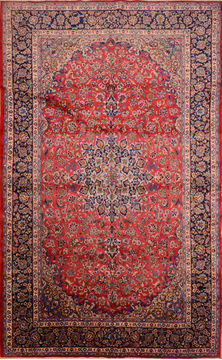
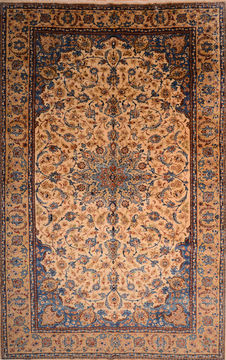
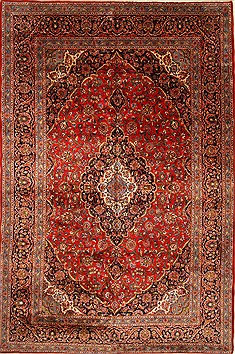
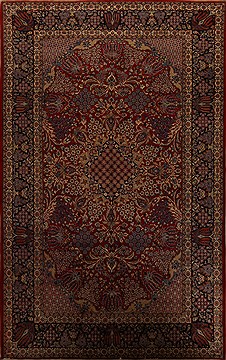
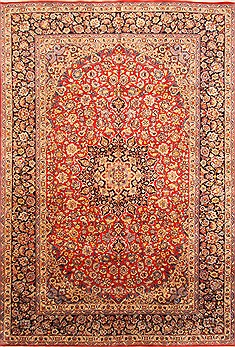
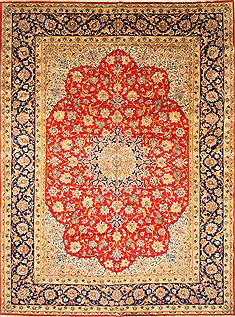
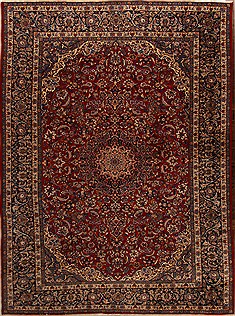
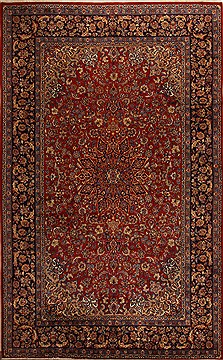
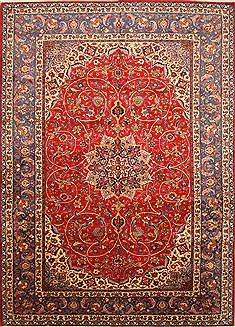
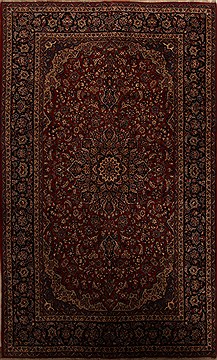
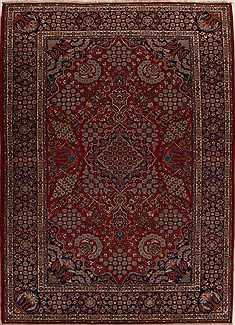
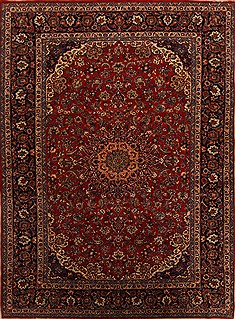
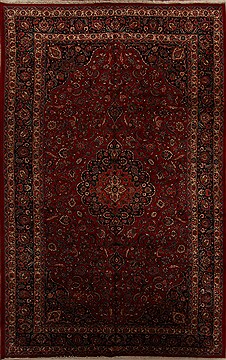
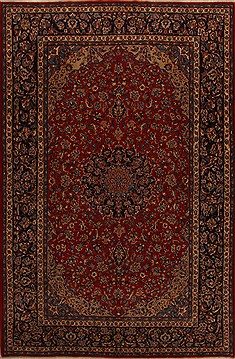
Najafabad or Najaf-Abad rugs originate from Najafabad, located in central Iran near the city of Isfahan. As well as being a well known and respected center for area rug weaving, Najafabad is also the trade center for an agricultural region noted for its pomegranates. Najafabad rugs woven are not distinctive to the city, but rather to the region. The style follows most closely the designs and colors of its neighbors in Isfahan and Kashan and to a lesser degree Yadz and Ardekan. Although not the equal of the legendary Isfahan area rug, Najafabad rugs are of extremely good quality and have great symmetry to them. Local artisans use Persian knots which offer greater precision.
Known for curvilinear patterns with medallions, Najafabad rugs will typically feature symmetrical designs of single medallions, flowing vines, and sword flowers on an ivory background. The symmetrical and well balanced designs on Najafabad rugs often feature a striking contrast between the borders and field. Najafabad rugs in the Kashan style is decorated with variations on a traditional floral pattern that hasn't changed a great deal since the 17th century - a single medallion in the center, and Persian floral motifs including arabesques, flower stems, palmettos, rosettes, and blossom and leaf motifs forming extremely dense patterns. In addition to the traditional vibrant reds and blue, Najafabad rugs will feature subtle, muted shades of beige, pale blue, sage, khaki, and olive green.
The warps on Najafabad rugs are cotton, while the wefts are either cotton or wool. Although available in a wide range of sizes, Najafabad rugs are typically mid-size. The exquisite color palette will harmonize with modern and contemporary décor in addition to complementing antique furniture. The extraordinary quality of the hand knotting and weaving backed in sturdy cotton make it possible for Najafabad rugs to last for centuries.
(9'6" x 15'6") Persian Najaf-abad
SKU 100-76315
(9'10" x 15'6") Persian Najaf-abad
SKU 100-75974
(11'0" x 16'5") Persian Najaf-abad
SKU 250-28583
(9'6" x 15'6") Persian Najaf-abad
SKU 251-15705
(9'9" x 14'5") Persian Najaf-abad
SKU 250-30457
(12'4" x 16'8") Persian Najaf-abad
SKU 250-30460
(11'4" x 15'9") Persian Najaf-abad
SKU 251-15666
(10'0" x 16'1") Persian Najaf-abad
SKU 251-15672
(10'2" x 15'0") Persian Najaf-abad
SKU 250-30371
(9'8" x 16'0") Persian Najaf-abad
SKU 251-15704
(9'0" x 12'6") Persian Najaf-abad
SKU 251-14288
(9'10" x 16'3") Persian Najaf-abad
SKU 251-15687
(9'6" x 14'11") Persian Najaf-abad
SKU 251-15675



Be the first to know about new designs and
exclusive offers, and get up to
10% OFF
your first purchase
Rugman since 1998 | The first and oldest online rug store
You can unsubscribe with a single click. We value your privacy; click here for more info.
You have one more step to join
Rugman Insider Club.
A coupon code will be emailed to you.
Please check your email and just
click the green “Confirm Subscription” button.



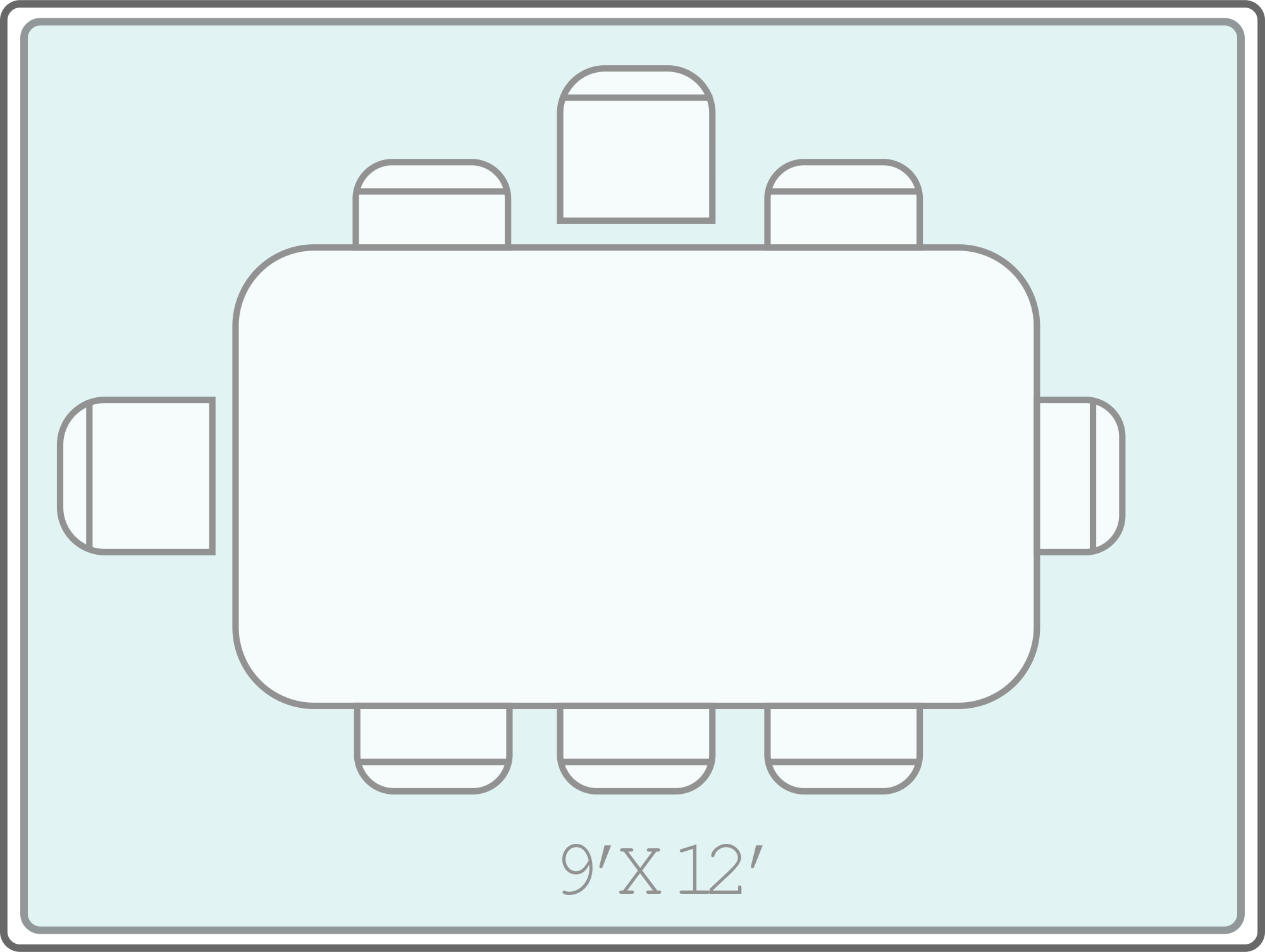 Rectangle
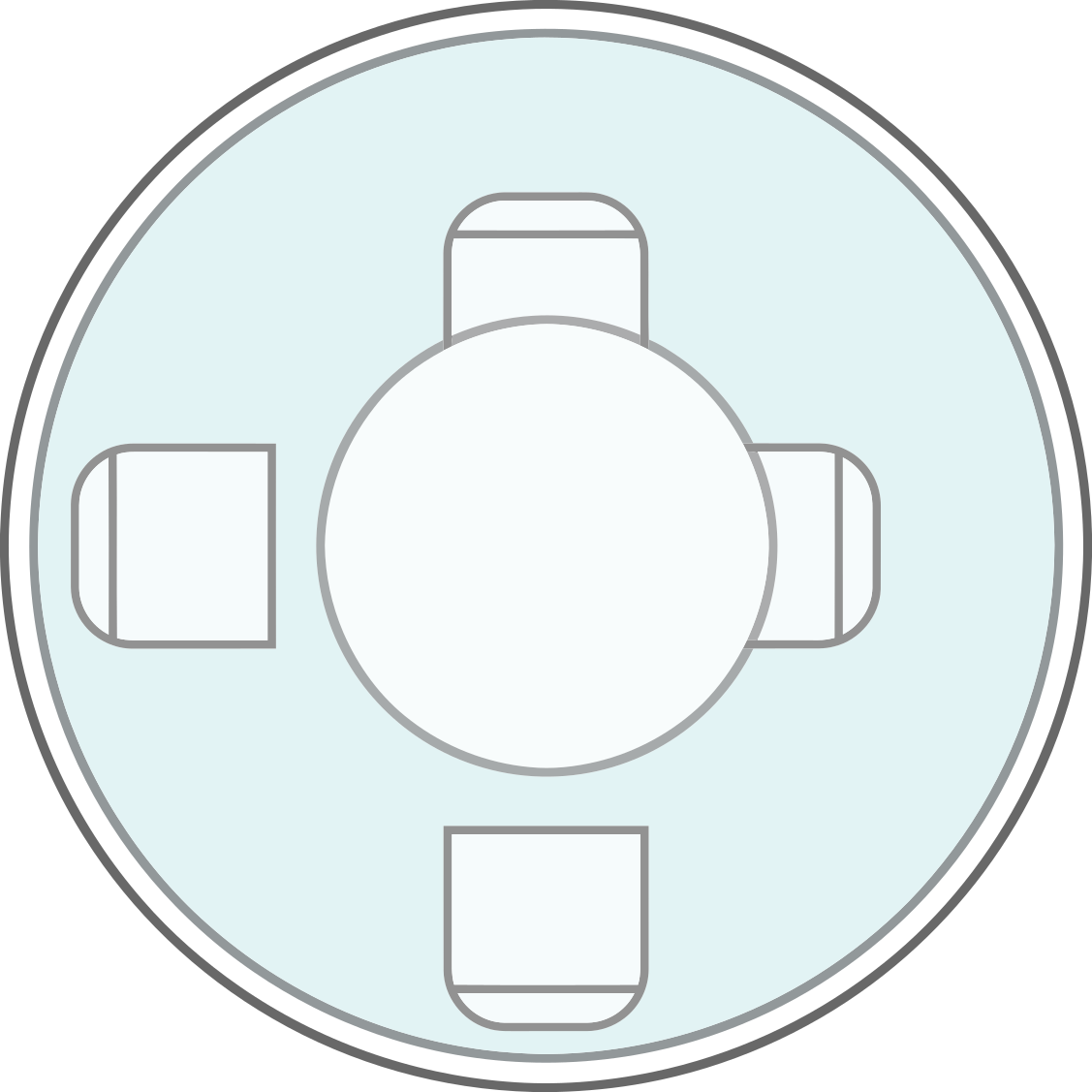 Round
Round
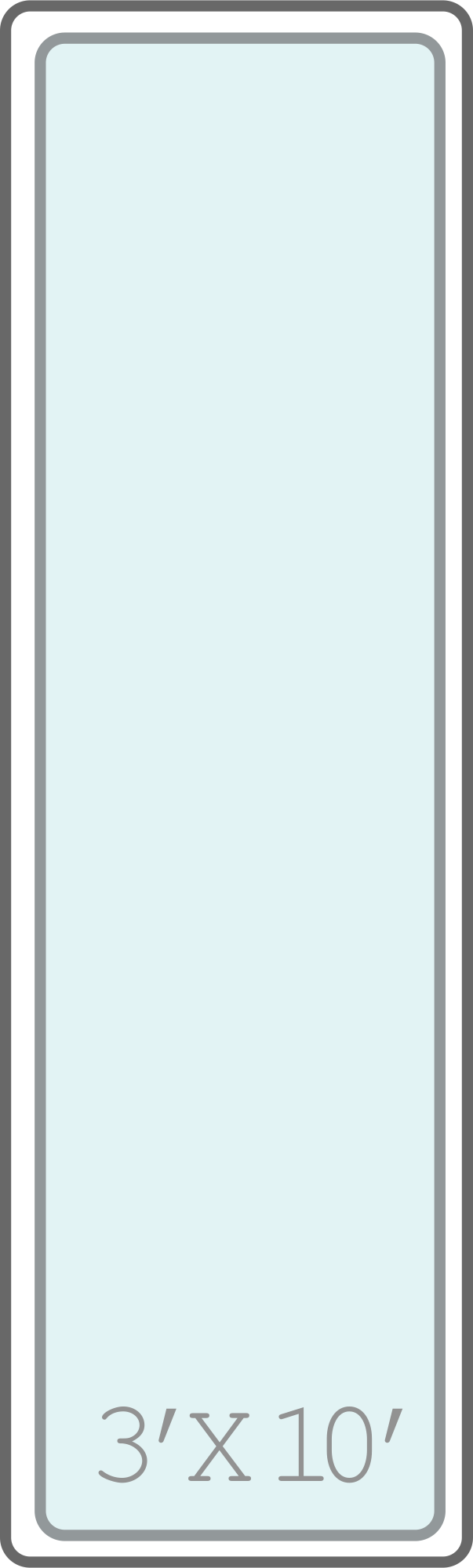 Runner
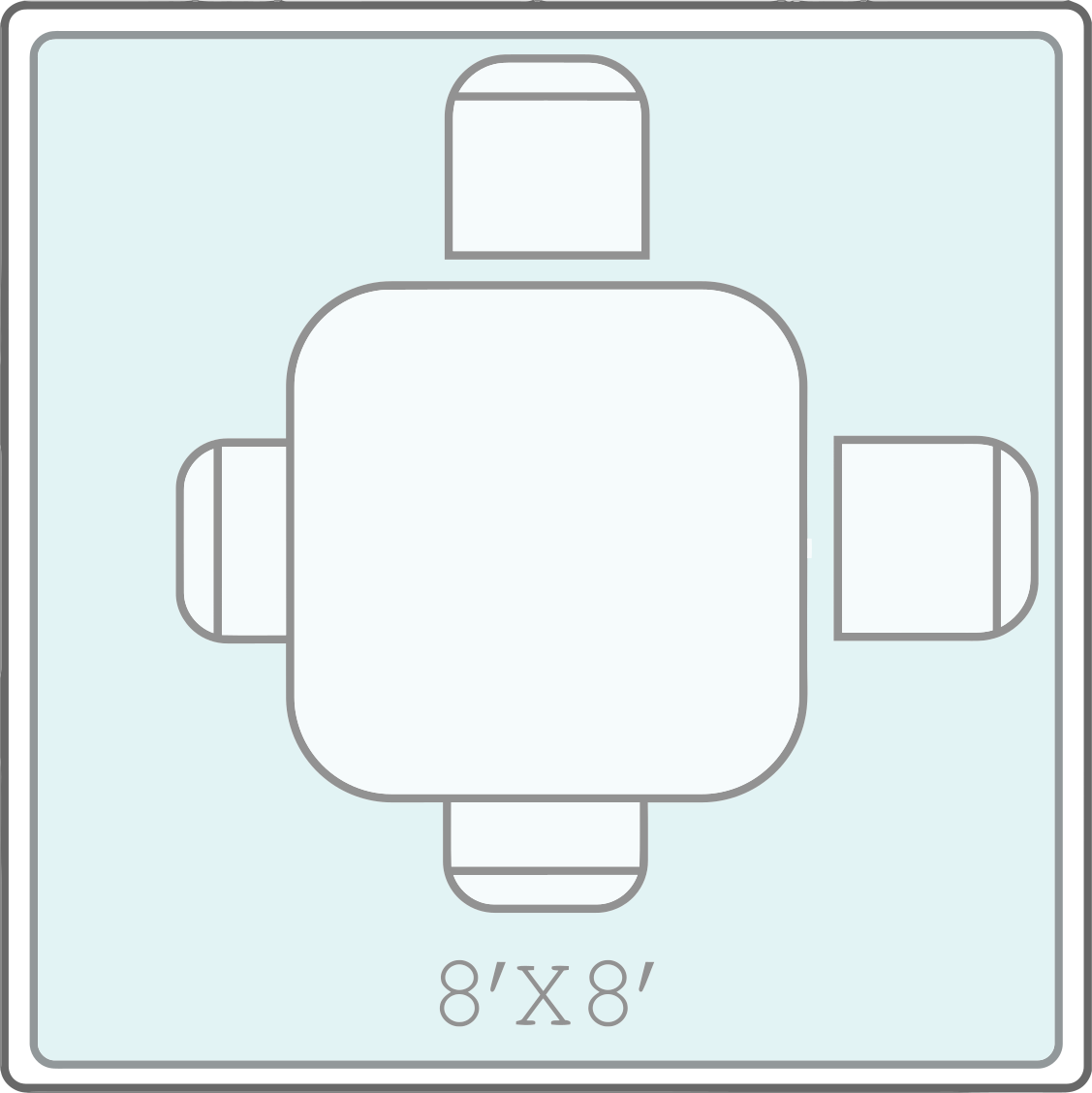 Square