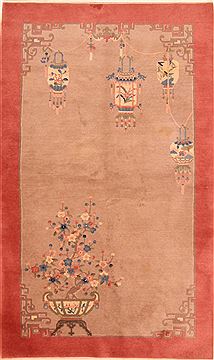
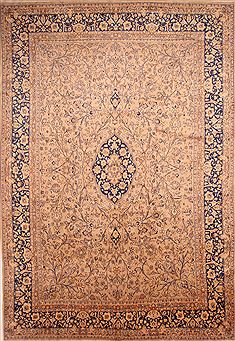
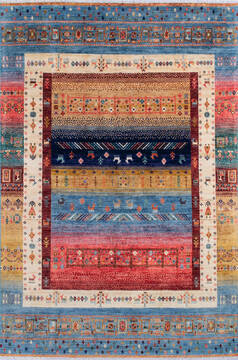
Nain
rugs originate from Nain, located in central Iran, just south of
Isfahan. Prior to the 2nd World War, Nain was a center of fine
textiles. The shift to the production of fine Persian carpets came
after the war. Nain rugs are in such high demand worldwide that there
are many counterfeits produced in India and Pakistan being sold as
authentic. Always purchase from a reputable dealer in order to avoid
disappointment. The Habibian workshop is reputed to produce the finest
quality Nain rugs. These are very difficult to come by as they are
woven in limited quantity. Even more rare is a signed piece. Master
craftsmen weave Nain rugs using Persian knots. Experts use a different
measurement called LAA, a Farsi word meaning layers, to define the
quality of Nain rugs. LAA refers to the number of threads forming each
fringe at the end of the carpet. The LAA number on Nain rugs is a good
indicator of the price. As the LAA numbers decrease, the price
proportionately increases.
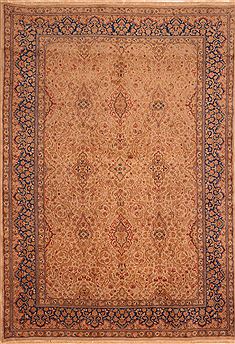
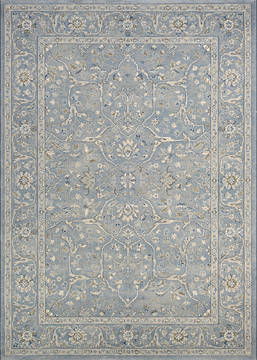
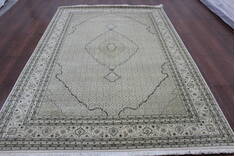
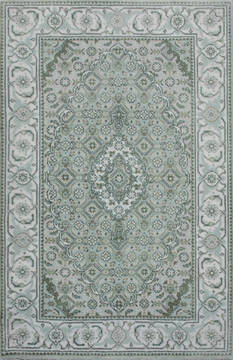
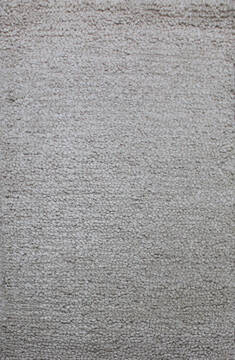
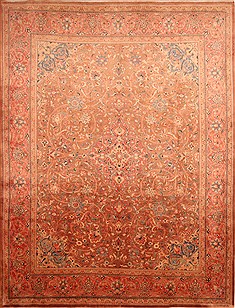
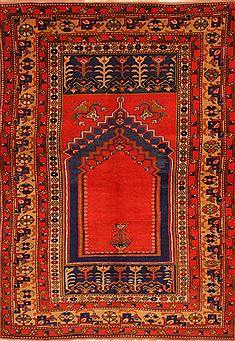
Nain rugs have detailed curvilinear designs, but their unique feature
is that they use more animal motifs, especially birds, in the
background. The Islimi design also features prominently. A
distinguishing characteristic of Nain rugs is their single medallion
set in a blue or ivory background. It is very rare to find a red
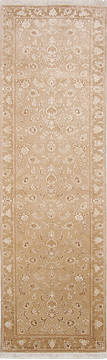
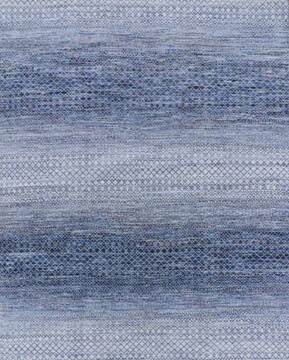
background. The colors on Nain rugs are very subtle and muted shades of
white, ivory, beige, buff, light gray, light blue, turquoise, navy,
light brown, camel, and burgundy created from natural vegetable dyes.
The foundations of Nain rugs are either cotton or silk with wool pile
or a combination of wool pile and silk highlights. The majority are
mid-size, but larger sizes are available. Prized and sought after by
collectors, treasured and cherished by those who own them, Nain rugs
are nothing short of breathtaking. They define “fine”.