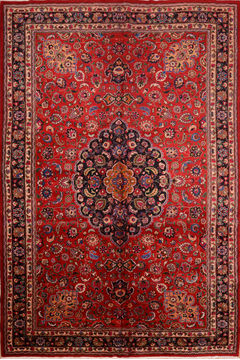
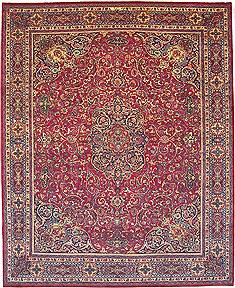
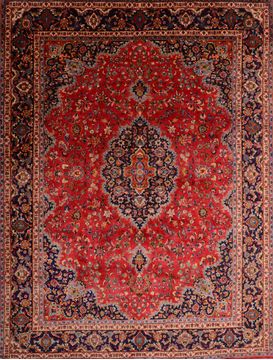
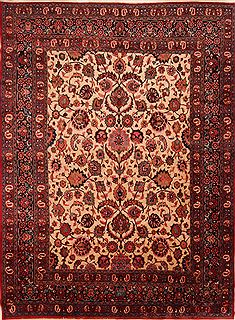
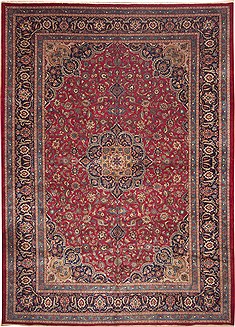
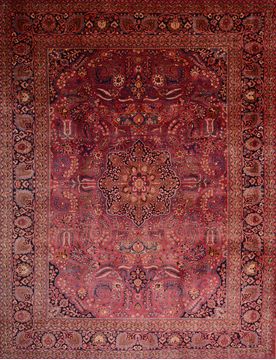
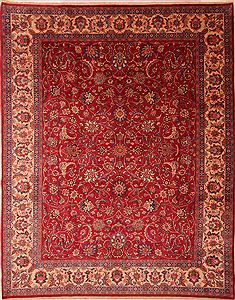
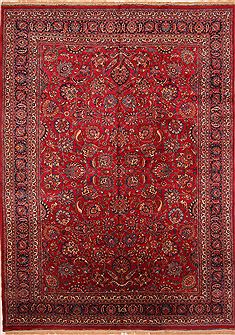
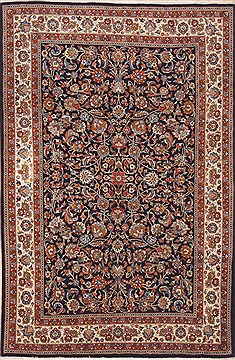
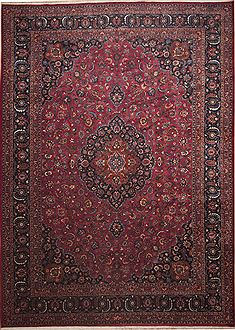
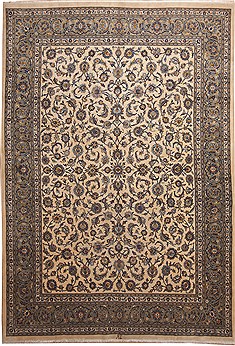
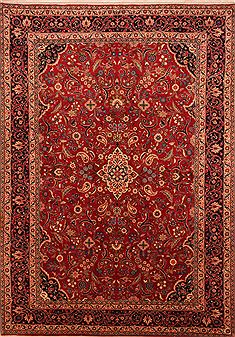
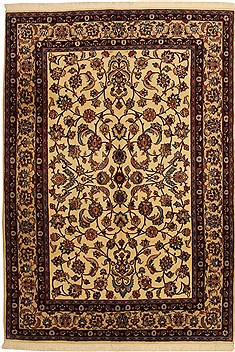
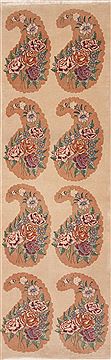
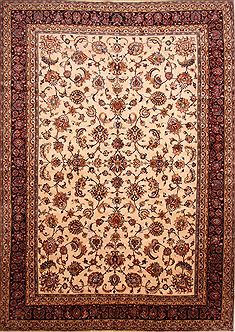
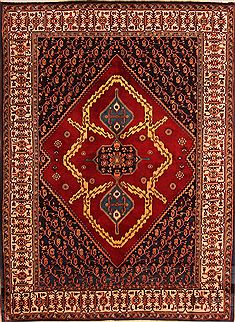
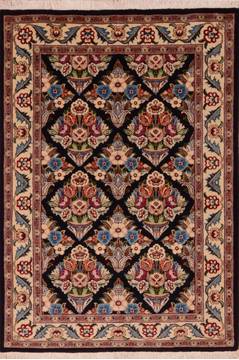
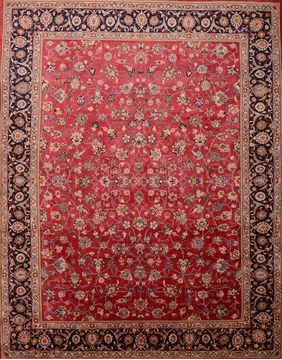
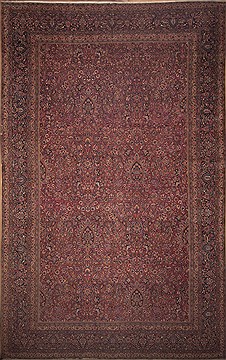
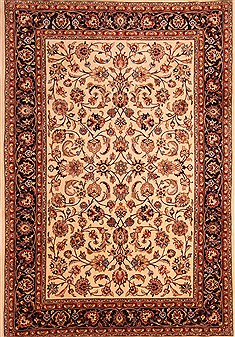
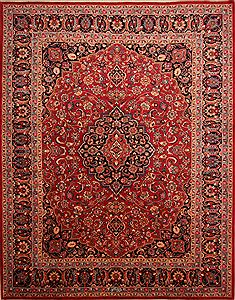
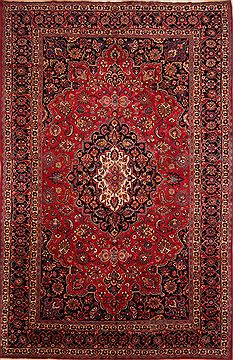
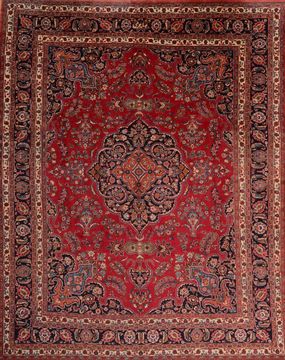
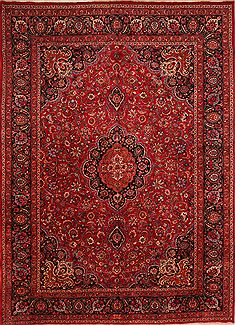
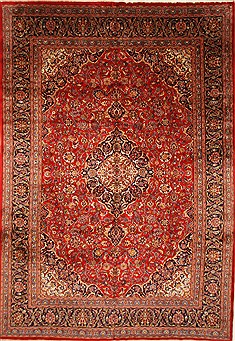
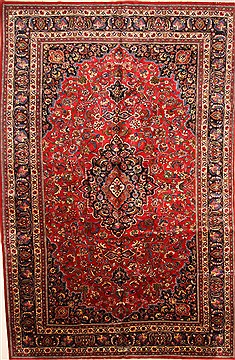
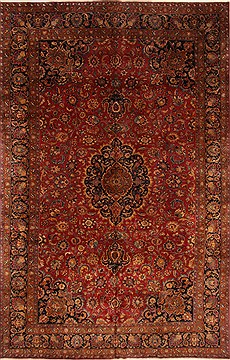
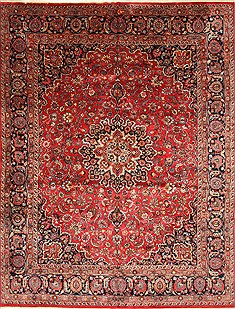
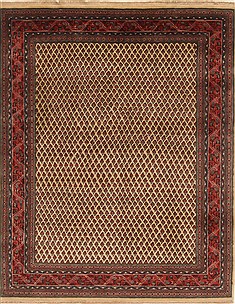
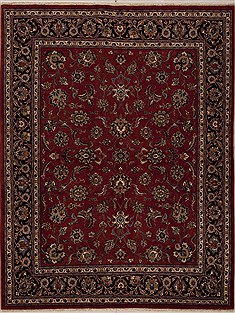
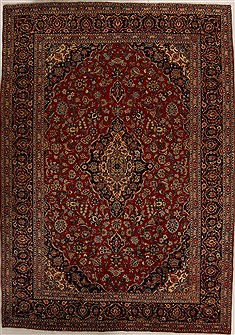
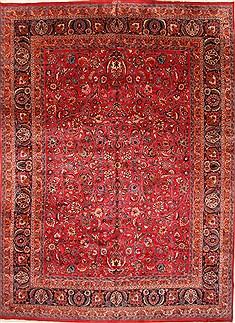
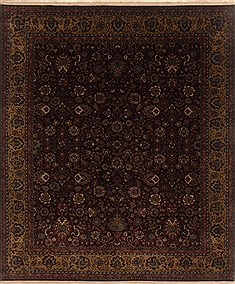
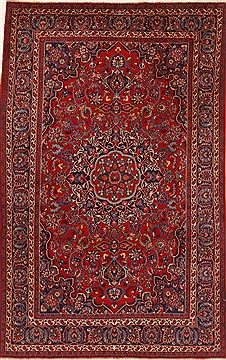
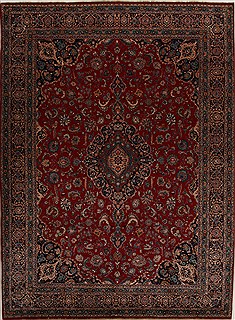
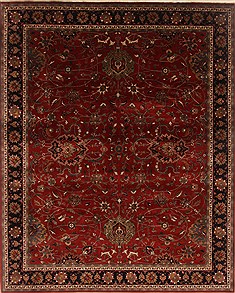
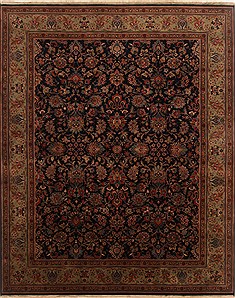
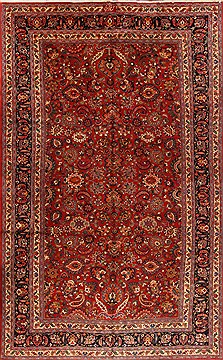
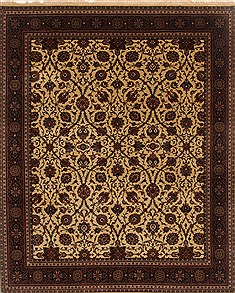
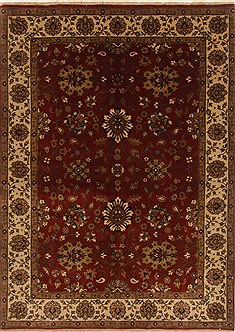
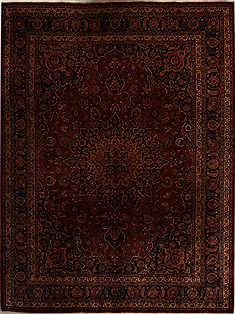
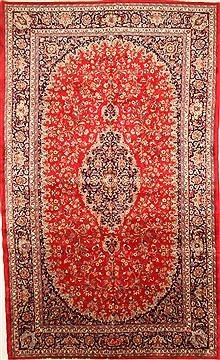
Appropriately named after Mashhad, Iran, a city known for producing high quality carpets, a Mashad rug has many distinct features. A Mashad rug uses cotton to form a base followed by a wool pile for a soft, cozy and durable texture. The mashad rug typically has medallions and pendants woven throughout with ivory, red and blue as its commonly used colors. A Mashad rug can be a perfect addition to a home with traditional or modern décor because it can complement either style effortlessly. Are you drawn to antique Persian rugs? You’re sure to love our collection of Kerman rugs.
Mashad Floral medallion or allover design is one of the most representing categories of Persian carpets. Mashad rugs are typically formal and most suitable for a Traditional home setting and very consistent with the classical architecture. Mashad rugs also can be a statement maker in your modern home living room, dining room or family room where you have simple modern furniture. A Mashad allover carpet without medallion would be more appropriate for a bedroom.
Mashad hand knotted rugs are among the most famous Persian and oriental rugs. They stand for formality as they represent class wealth and style. Generally speaking the larger Province of Khorasan which is located in north East Iran, includes the three provinces of Khorasan-e Razavi, Northern Khorasan and Sothern Khorasan is an area with ancient culture of weaving piled hand knotted rugs and carpet. Mashad the provincial capital of Khorasan-e Razavi according to recent provincial divisions is the most famous for its fine rugs as such that most rugs woven throughout the entire province are often called Mashad rugs.
Located in Northeastern Iran, Mashad is an important center of the carpet weaving industry. It is also considered the most holy city of Iran. This is because it holds the shrine of Imam Reza who is very dear to Muslims around the world. Mashad carpets are usually bright and cleverly colored therefore litteraly giving life to any dull room. Their color schemes are usually tones of red or blue. Mashad carpets are very well made and they will last a very long time, as would any other persian rug.
The Persian province of Khorassan is the biggest province in Iran. It stretches along the northeast of the nation. Many beautiful rugs come from this area of Iran. The capital city is Mashad, which is also where most of these rugs are marketed everyday. Some other rug producing centers in this region are Kashmar (Turshis), Mood, Sabzevar, Ghain, and Birjand, most of which are situated very close to Mashad.
Many Baluch type rugs are also woven in this province by Baluchi nomads who inhabit the areas more to the south. In 1722 there was an Afghani Invasion into Iran. This left the country in a state of political confusion for many years, and the rug industry in a state of disorientation, especially in well established areas such as Mashad. However, despite the mass invasion, Khorassan along with many other regions were able to get back on their feet and so the rug industry started up again as the royal courts of Iran did everything in their power to bring this great art back home. Many times, Kings of Iran such as Shah Abass would seize and destroy low quality carpets and those with inferior coloring techniques to make sure the integrity of this ancient Persian art wasn't lost.
There are many grades of handmade rugs produced in this vast Persian province of Khorassan, ranging from medium to fine. All however are very sturdy and indestructible. The carpets woven inside of the cities, such as Kashmar, Mashad, Mood, Sabzevar, and Birjand are usually better quality than those woven by the nomads in the area. Although it was originally the nomads who wove these rugs for their own use, the cities adapted the talent and perfected it into an art. Almost every color can be seen in various rugs of this type. Almost all of these rugs have a pile of all wool, and a foundation (warp and weft) of cotton. In extremely rare cases, silk may be seen in these rugs as part of the pile, foundation, or the entire carpet might be made of silk. That is very unlikely unless you are dealing with much older pieces from a couple of centuries ago. The wool however, is very lustrous and soft and is exclusive to the people of Khorassan. This fine wool, along with beautiful designs and genius craftsmanship, combine to produce these exquisite carpets.
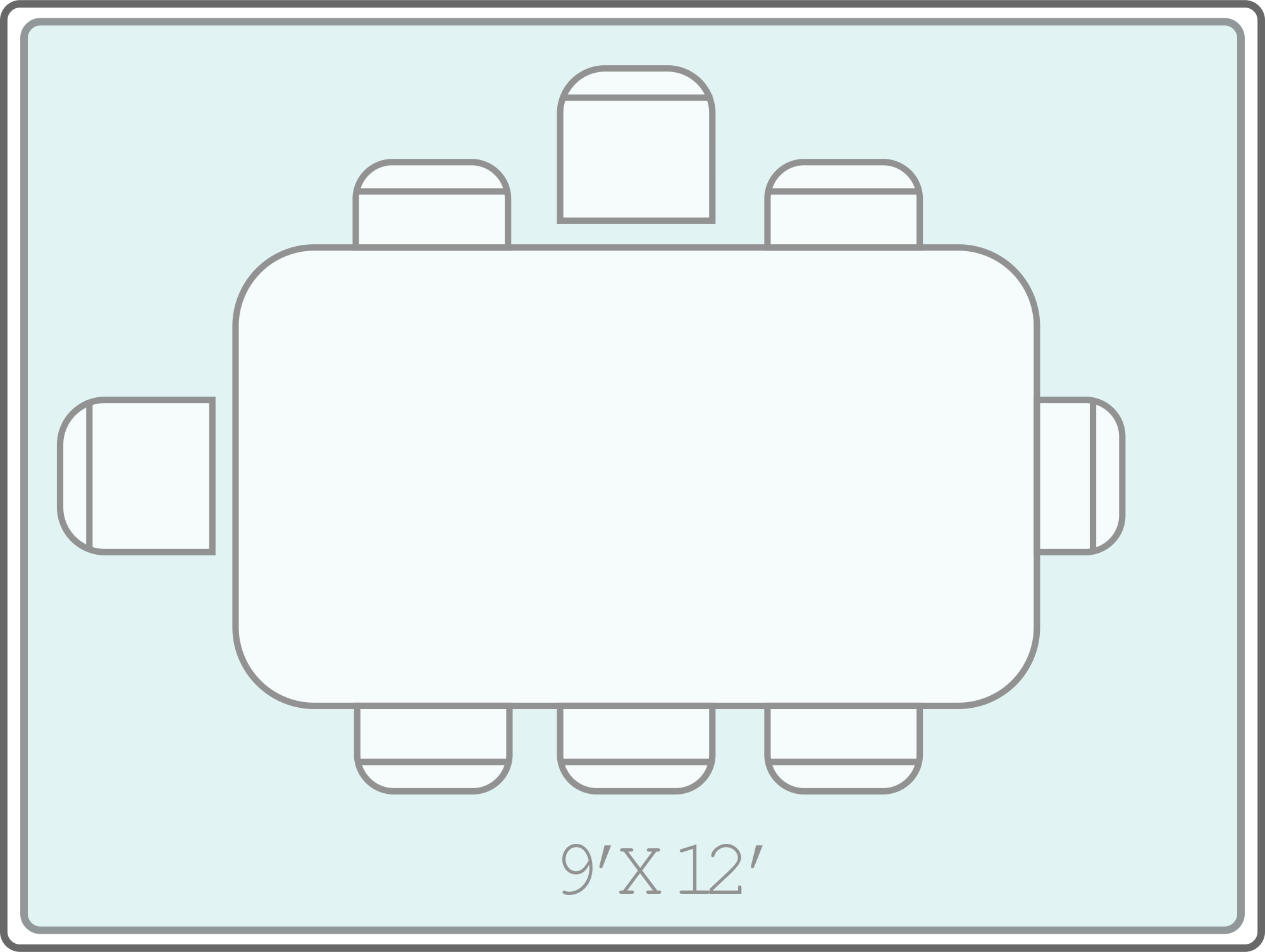
Mashad is known for its large rugs and often the sizes are larger than 8x10 and 9x12. Mashad rugs have been sitting in many palaces and reputable places for centuries. Some of the famous rooms in the Persian palaces of the Pahlavi Dynasty, Reza Shah Pahlavi and Mohammad Reza Shah Pahlavi were decorated by Mashad area rugs.
The dominant colors in Mashahd Rugs are red and navy blue. The colors like other formal rugs such as Kashan and Kerman rug is very vibrant in Mashad carpets. Most typical Mashad rugs have certain degree of resemblance to Kashan rugs both in term of use of colors and design. Relative to the quality of the rug Mashad rugs are often among the most affordable hand knotted carpets.
With a vast land and endless pastures the province of Khorasan and vicinity of the city of Mashad, is one of the regions that raise sheep herds. The entire area is known for the quality and softness of the wool. The weavers in the region also go out of their way in choosing the finest quality of material including the wool and the cotton that is normally used for the foundation of the rugs as weft and warp.
Mashad rug weavers are also very peculiar in choosing designs and motifs that are local and very resistant about designs that are used by some other weavers that are coming from foreign sources. As a result Mashhad rugs throughout the centuries have kept is authenticity and local signature of their own
Persian Mashad rugs are normally made with Persian knots although in the past Mashad rugs used both Persian and Turkish knot technique. There is hardly any geometric design in Mashad rugs with the exception of rugs that are woven by tribes who speak Turkish. Mashad rugs are normally having medium and high pile and they are thick and quite heavy and warm under your feet.
Mashad rugs are very durable and appropriate for heavy traffic. Because of busy patterns and dominant red and navy blue they are also stain resistant by nature. They are suitable for rooms with heavy traffic and crowded families with children. If they are used in dining rooms in particular they wouldn’t show small stains from food and liquid drop easily. In the same way they are easy to clean and very practical.
Some of the famous names in Mashad signature rugs are Saber Amoughlu, Kafi, and Makhmalbaf. Rugs woven by these master weavers and designers maintain a very high quality of standard for the weave and quality of the material they use.
Rugman.com has established a name for its high quality hand knotted Persian Mashad rugs. We have a huge selection of beautiful Mashad carpet as well as a reasonable number of Antique Mashad rugs.
(12'4" x 19'9") Persian Mashad
SKU 100-11289
(10'11" x 15'2") Persian Mashad
SKU 250-30440



Be the first to know about new designs and
exclusive offers, and get up to
10% OFF
your first purchase
Rugman since 1998 | The first and oldest online rug store
You can unsubscribe with a single click. We value your privacy; click here for more info.
You have one more step to join
Rugman Insider Club.
A coupon code will be emailed to you.
Please check your email and just
click the green “Confirm Subscription” button.


 Rectangle
 Round
Round
 Runner
 Square