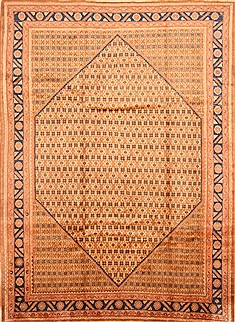
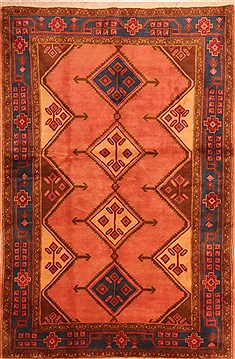
Koliais are tribal Persian rugs made by nomadic Kurdish people of western Iran. They are more than often characterized by the bright and lively colors that they use. The Koliai often has a large central medallion with a classic hexagonal Herati diamond design and beveled corners inside the main border. These rugs were not originally made to sell commercially. Rather, women who wove them were following an ancient custom that provides tribal families with hand-woven articles of practical value such as floor coverings, blankets, storage bags, saddle blankets, and financial security in case of future harsh times. A truly beautiful and vibrant collection, the Koliai rugs will keep a room looking lovely for many, many years.
Kurdish carpets are woven throughout western Iran, in and around the rugged mountainous region of Kurdistan. The Kurds derive from the ancient nomadic peoples that roamed the area thousands of years ago. They live a semi-nomadic life, either in villages or in moving tribes away from the cities, where they can still carry out their old traditions and live as they did thousands of years ago. A few of the Kurdish tribes of the western regions include the Herki, Senjabi, Gurani, Jaffid, and Kalhors. A few major Kurdish rug-producing centers are Senneh, Bidjar, and the district of Khamseh. Some other Kurdish villages and districts that produce rugs are Borchelu, Goltogh, Khoi, Koliai, Lylyan, Mousel, Nanadj, Songhore, Touserkan, and Zagheh. As you can see, the Kurds are well established, and historic semi-nomadic and/or nomadic peoples of Iran who date back thousands of years. Many other major rug producing centers of Iran, such as Hamadan, Lorestan, or even Arak show obvious traces of Kurdish influence. Sometimes they incorporate the style and techniques of the Turkish people of Iran, who are also very widespread. The Kurds are a very peaceful and gentle group who prefer their simple nomadic lives to the complexities and frustrations of the modern technological world.
Kurdish rugs, like all other Persian rugs are all 100% handmade. They are made of pure wool which is spun from the weaver's own sheep. In very rare cases you might find a carpet that has silk in the pile, and you will often see the foundation of Kurdish rugs being made of goat hair. The pile however, is always wool. The weaving quality in Kurdish rugs varies from loose to dense knotting and the Persian asymmetrical knot is used more than the Turkish symmetrical knot. The colors are attained mainly from natural vegetable dyes. The color schemes of most Kurdish rugs are bright and vibrant. Unlike most people in the western world who like faded and muted colors, the Kurds love bright lively colors. These exciting rugs bring life to these simple people's dull homes. All Kurdish rugs are rugged and long lasting as they have proved to be for thousands of years.




Be the first to know about new designs and
exclusive offers, and get up to
10% OFF
your first purchase
Rugman since 1998 | The first and oldest online rug store
You can unsubscribe with a single click. We value your privacy; click here for more info.
You have one more step to join
Rugman Insider Club.
A coupon code will be emailed to you.
Please check your email and just
click the green “Confirm Subscription” button.


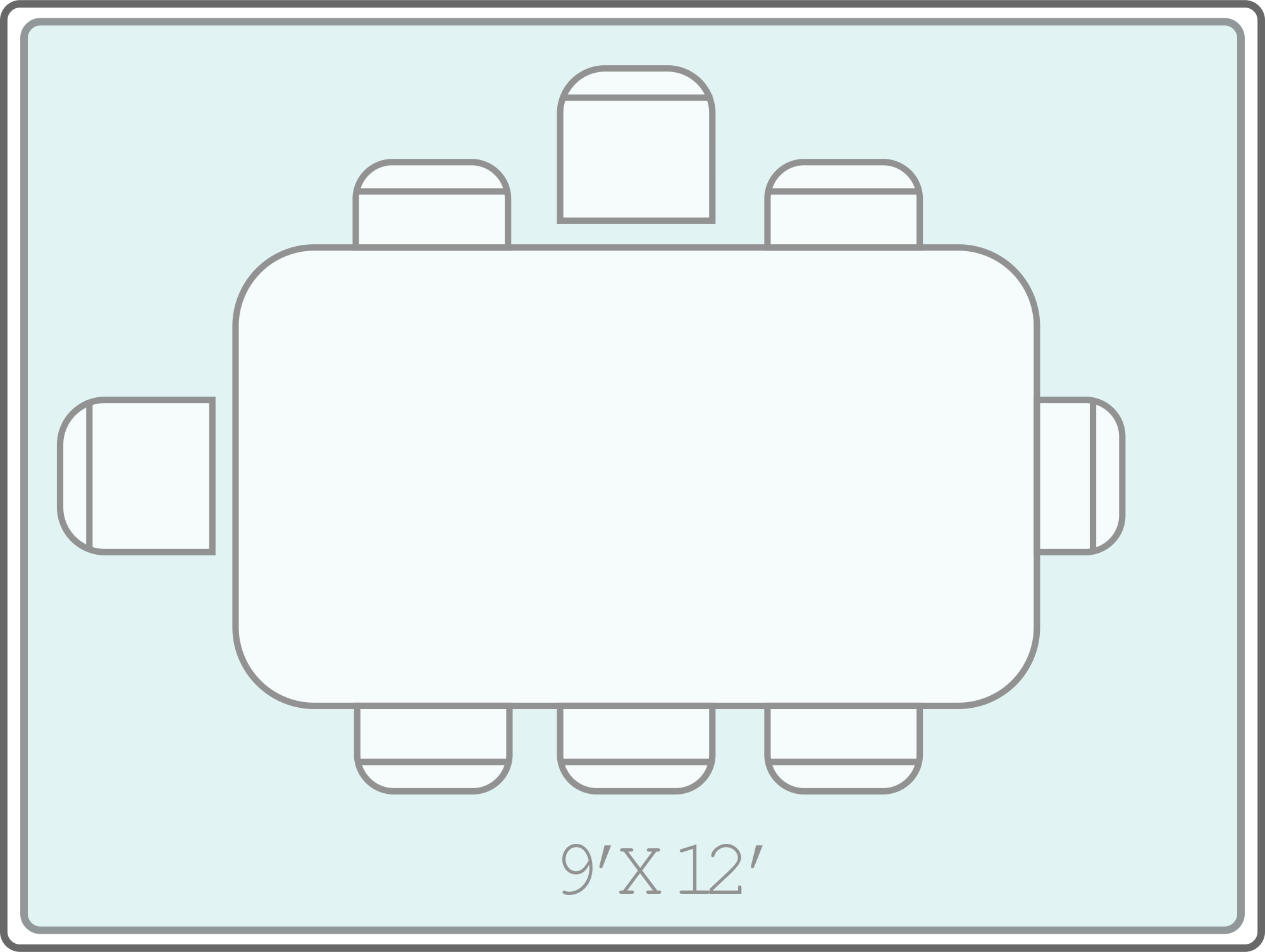 Rectangle
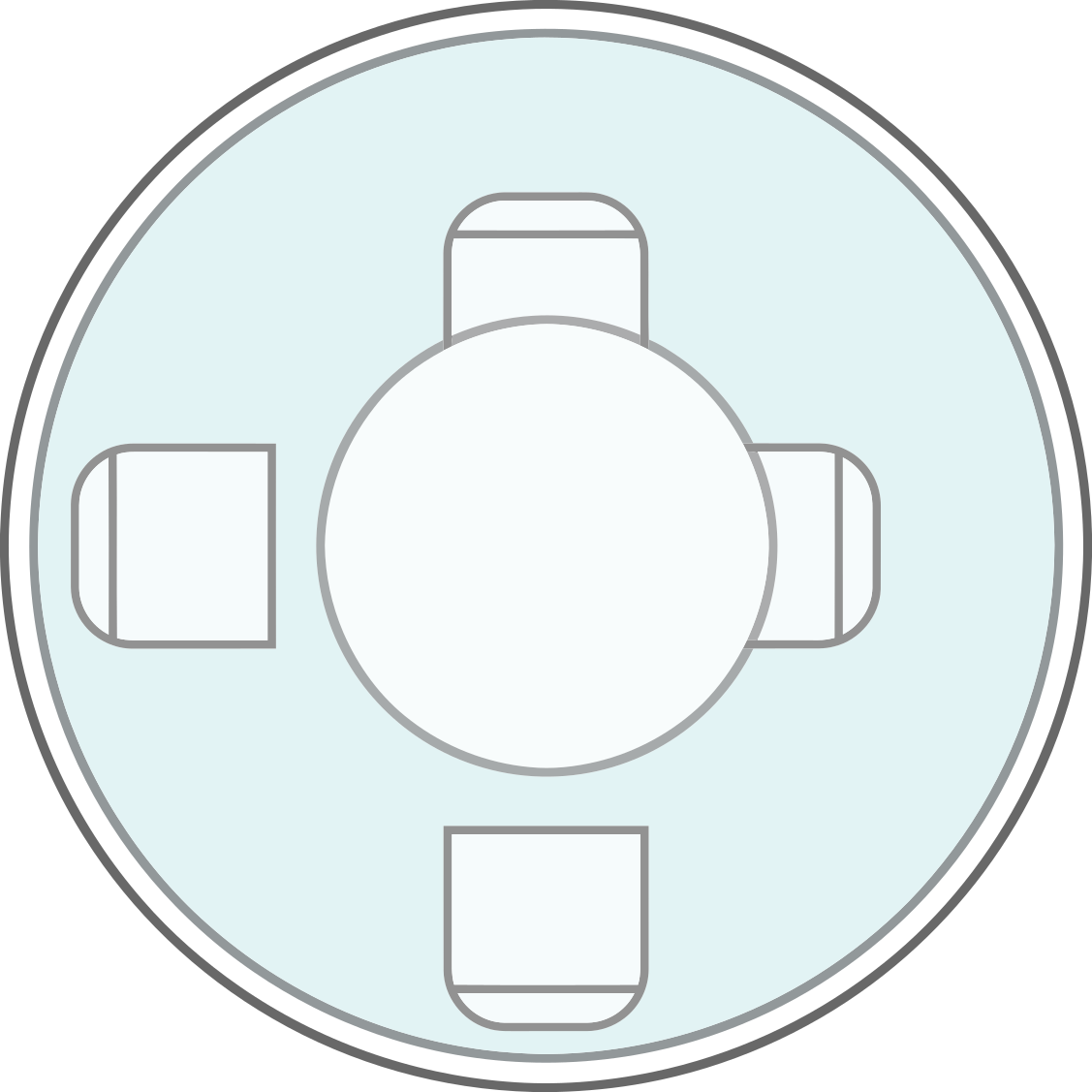 Round
Round
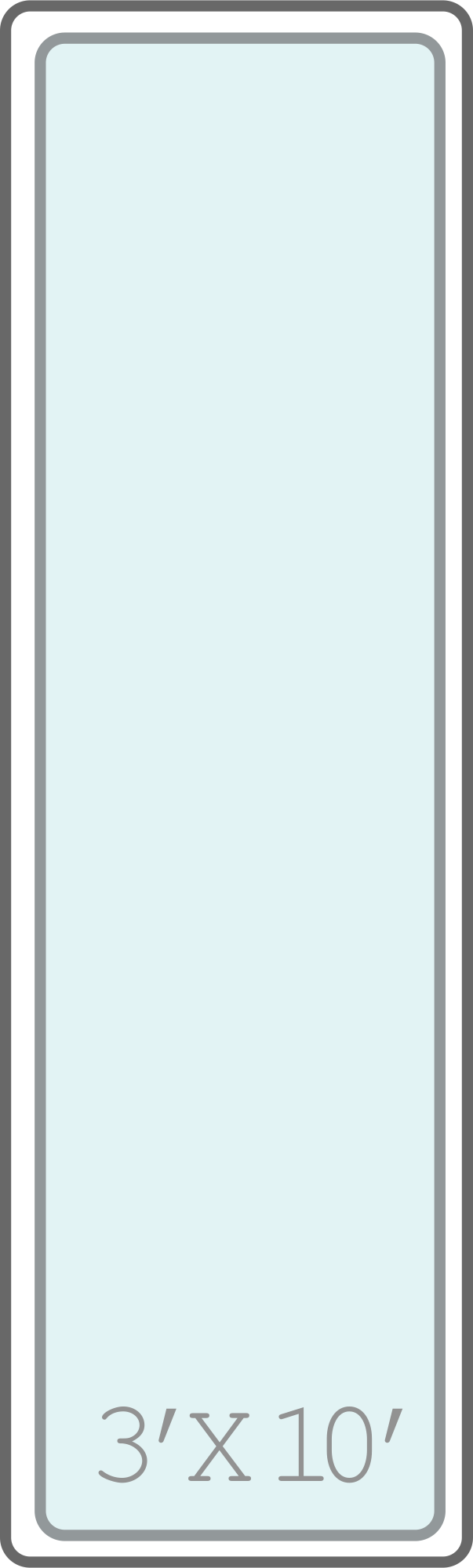 Runner
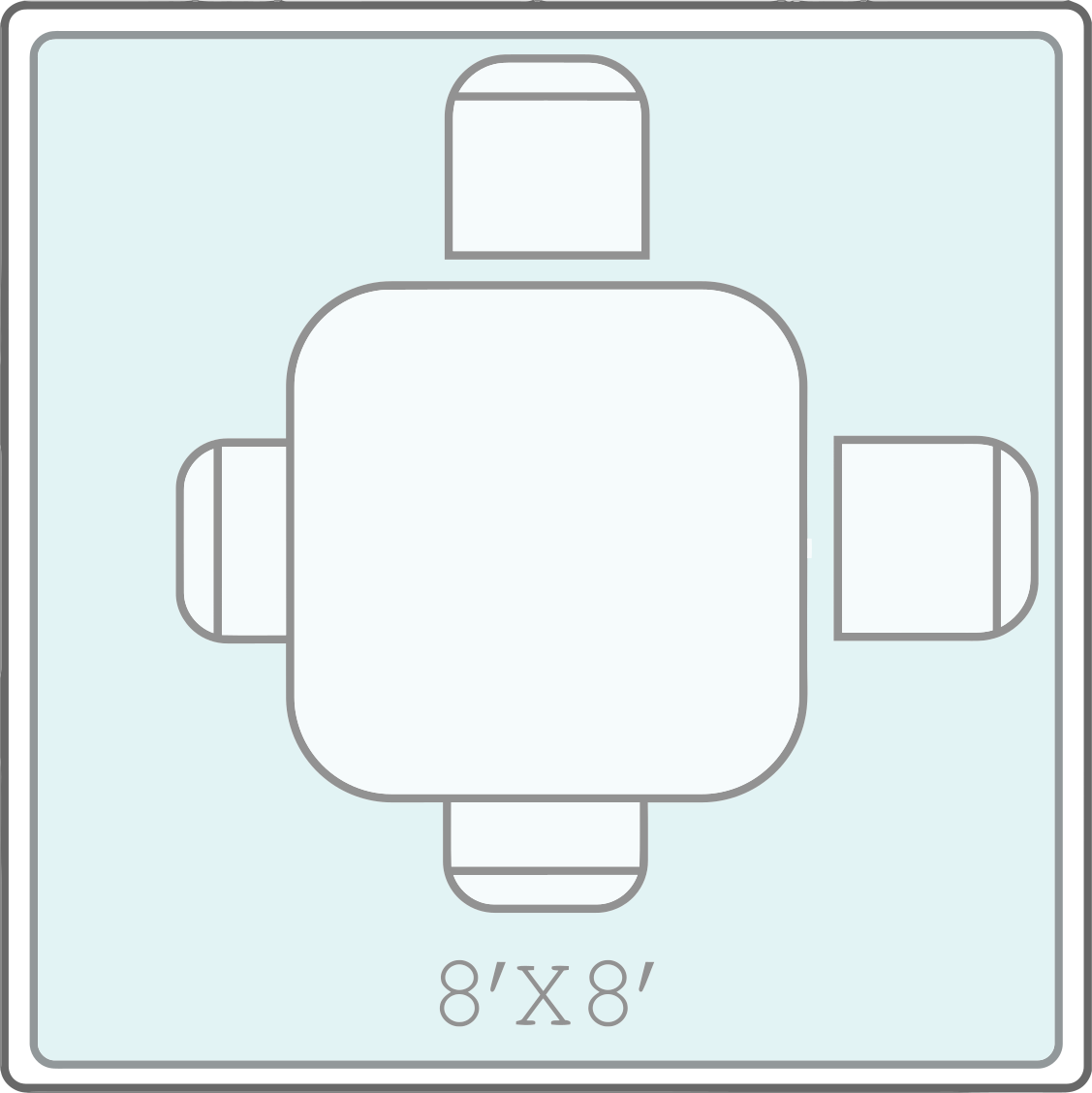 Square