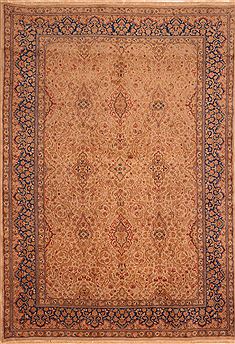
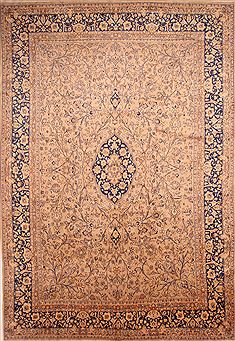
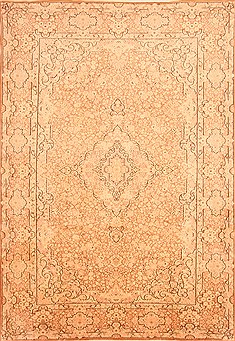
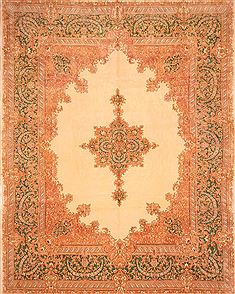
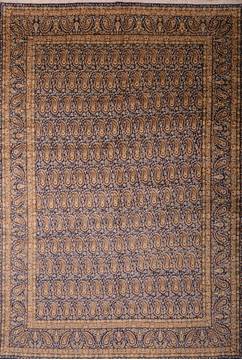
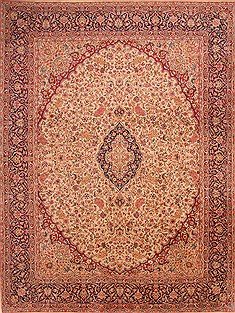
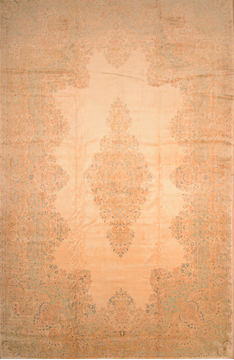
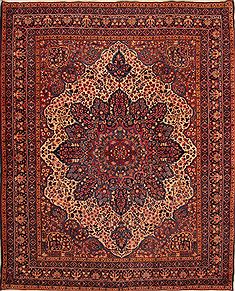
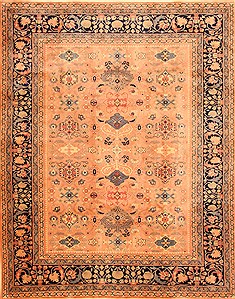
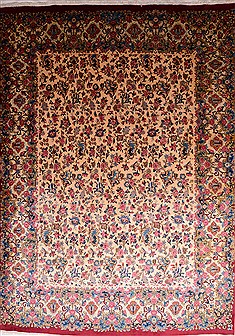
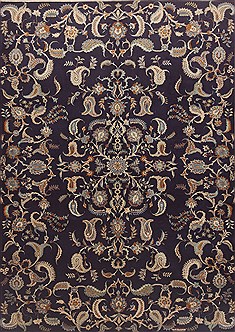
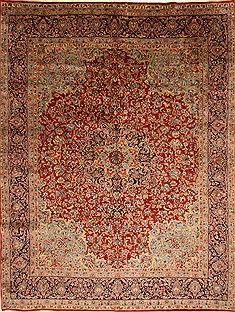
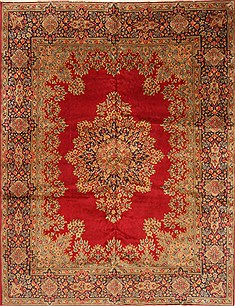
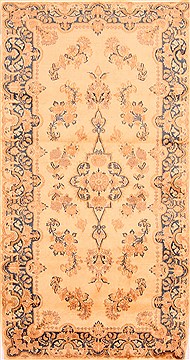
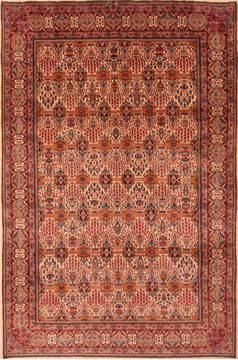
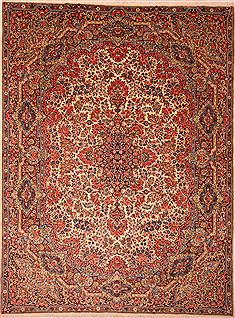
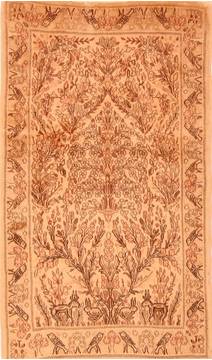
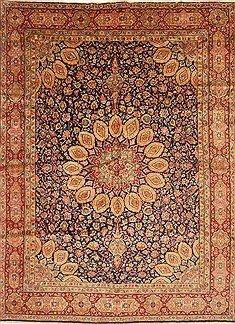
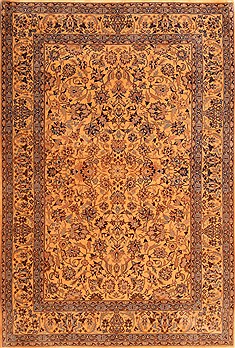
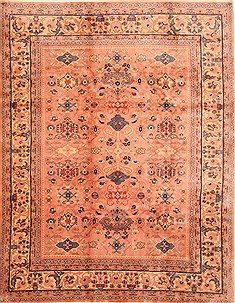
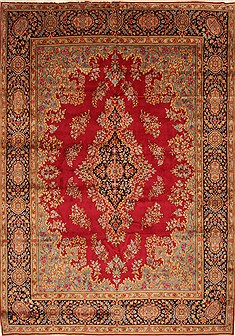
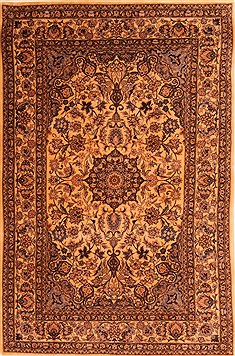
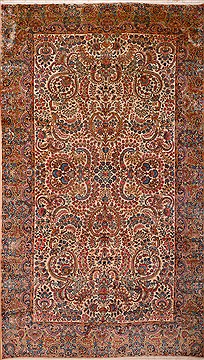
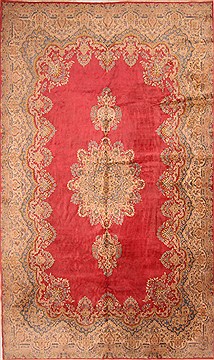
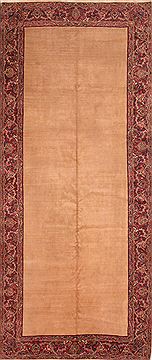
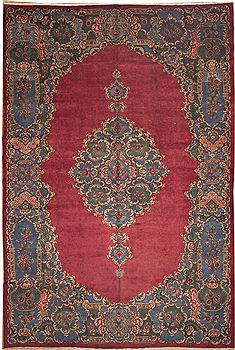
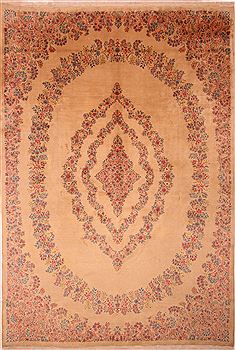
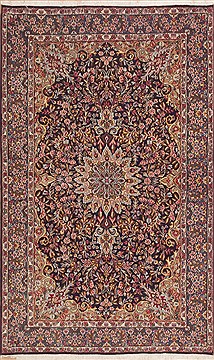
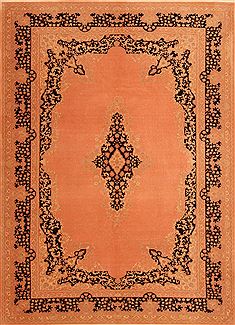
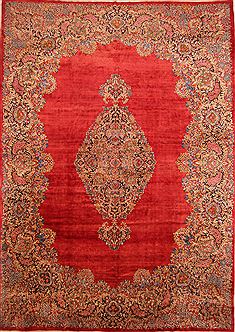
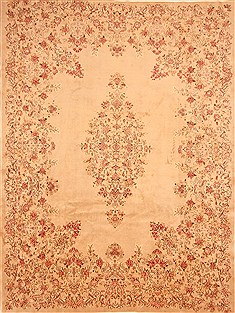
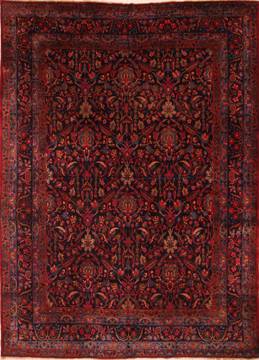
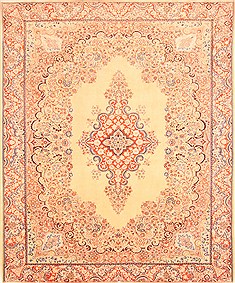
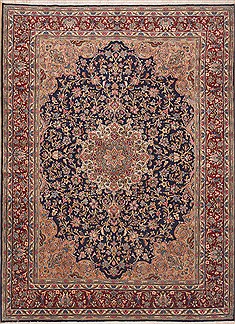
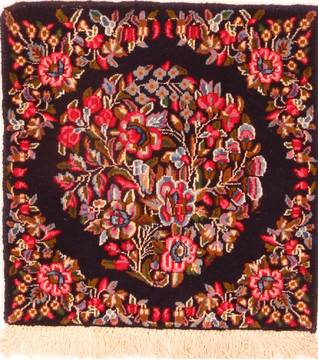
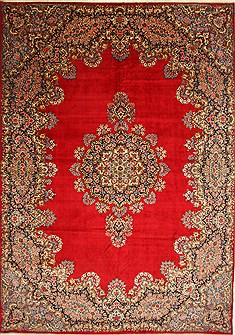
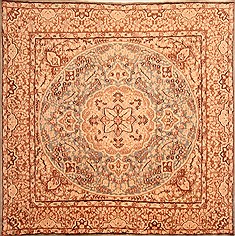
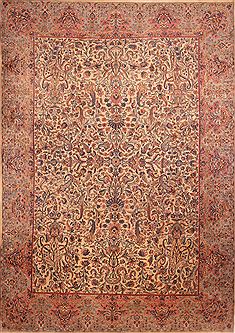
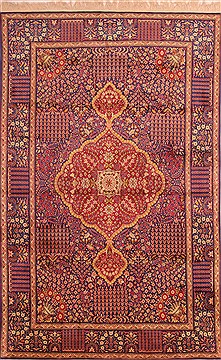
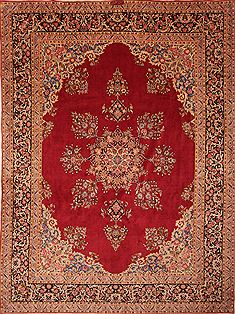
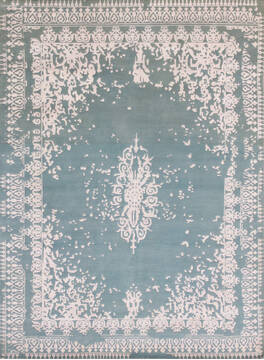
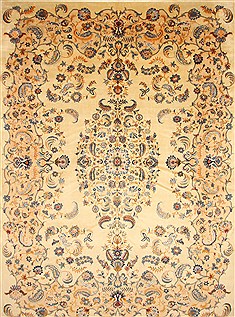
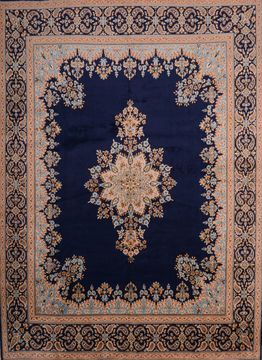
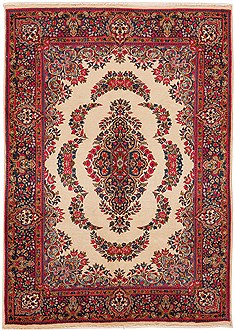
Kerman rugs have a rich history, and a link to a very famous explorer. Crafted in Kerman, an Iranian city in the southeastern portion of the country, the first Kerman rugs were constructed over a thousand years ago. Kerman rugs were made popular all around the world when Marco Polo noticed their incredible craftsmanship and distinct designs. Kerman rugs typically feature flowers in their design; they often have a floral or architectural theme in the border with a medallion in the center on the rug. Would you like to see more traditional Persian rugs? A Mashad rug is a traditional rug that can also fit into a modern home or office.
The incredible Kerman Persian rug is a handmade treasure, which is cherished and respected worldwide. Created by genius artists with the remarkable talent of rug making, Kermans are among the most beautiful Persian carpets ever. They have a very rich and celebrated history. The makers of Kermans take great pride in their work and will never weave the pattern of another city. The patterns in Kermans are very distinguishable from other rugs and they look very similar to one another. There are a few famous motifs carried out in Kermans. The traditional one is that with the outermost border and innermost medallion being intricately detailed, and the field being a rich solid color. Others are the famous all over patterns or the many forms of pictorials which usually tell the story of a significant figure or incidence in history. Often their pattern is imitated but an expert can always point out a genuine Kerman. An Authentic Kerman rug is a flawless work of art that will always remain invaluable and only become more beautiful with time.
Kerman rugs are known for the fineness and sheen of their wool as such that many people are not able to tell apart Kerman wool rug form the silk. The most expensive hand knotted rug ever sold is believed to be a Kerman rug.
With over 1000 years of history, Kerman Carpet is woven in the Province of Kerman which is located in the south central Iran. The city of Kerman the capital City of the Province where some of finest Kerman rugs are made is well known for the finest hand woven Persian garments. Kerman is also famous for its shal or scarf with elaborated designs which is believed to have influenced the Rug weaving industry in Kerman. In fact some of the earlier Kerman rugs are based on the design of Kerman shals. Gradually Kerman rug weaving industry adopted a wide range of designs.
Kerman rugs were also among the first to be introduced to foreigners. Europeans fell in love with Kerman rugs since they entered Persia. As a matter of fact the European market influenced the rug weaving industry in certain ways and Kermani rug weavers created designs and motifs that was admired and loved by their European customers. Among the famous Kerman rug designs are Gol-farang, goldani, Zillussltan, Tasviri which were created by famous rug designers such as Hassan Khan, Ahmad Khan, and Zaman khan.
Kerman is an ancient Persian city that is renowned worldwide for its amazing carpets. It has an incredible history dating back to well over a thousand years ago. Much like many other major rug producing centers in Iran, Kerman's rug weaving industry has lost a lot of its integrity over the past century and went downhill. This is largely due to high levels of greed and corruption. Although Kerman"s rugs today aren"t nearly as fine as they were a hundred or more years ago, they have managed to keep one of the highest reputations of Iran's rugs. Kerman is a city of tropical climate, and can get very hot in summer. It is located in the central southeastern section of Iran in the province that bears its name. Many books have been written about the rich history of this city, and the carpet industry is just one of its treasures.
Rugs woven in this region have amazing quality renowned and recognized all over the world. The rugs woven in major cities of central Iran cannot even be compared to the village rugs. Often, a professional weaver in one of these cities will work non-stop on a rug for many years. The famous asymmetrical Persian knot is only used in the weaving of these fine rugs. The materials can be all wool, all silk or a precise ratio of the two. The foundation (warp and weft) of the rugs is cotton except in very fine pieces where it is pure silk. Countless handmade Persian rugs made in such cities as Kashan, Yazd, or Kerman, have been known to last several hundred years. That just goes to show that it is not an exaggeration when stated that these rugs are the highest quality carpeting in the world. The rugs produced in the major cities of this region are far superior in quality and symmetry to the ones produced in the outskirts. However, the tribal rugs of this region are some of the best tribal rugs of Iran. No words can describe the beauty that these rugs bring to one's home.
Most Kerman rugs are called 3 pood, or three woof rugs. That means there are three horizontal lines of threads after each line of knots made. In Kerman rugs normally the first and third waft are thicker and the middle one is thinner. Some rugs however could be 2 woofs, in which case the first woof is thick and the second woof is thinner. In the larger area of Kerman both Persian and Turkish knots may be used. In the weave of the city of Kerman mostly Persian knot is used, while in the village weave both Turkish and Persian knots are equally used.
Development and evolution of Persian Kerman rugs has gone through several stages in the last centuries. The first period started by the decline of the Shal weaving industry in Kerman. This resulted in a booming in carpet weaving business in Kerman. Kerman rug designers started creating hand knotted rugs based on the design of Kerman shals, namely boteh Jeghgheh, pattern which was a new innovation in the carpet design.
The second period in the evolution of Kerman rugs is called the revival or return period. In this period the traditional Kerman design was revived and weavers started creating Kerman area rugs similar to those was historically produced in Kerman. By the end of the First World War and the shift in the taste of the Western and American consumers taste, Kermani rug producers returned to the Safavid era designs and eslimi, shah Abbasi floral design, and framed designs, namely medallion in open field and a lachach toranj border, as well as filled lachak toranj without the open area in the medallion section returned into Kerman rugs.
The third period in the evolution of the Kerman area rugs is called goblin tapestry and needlepoint period. The justification for this period is that Kerman rugs were inspired by the French tapestry ideas in making rugs. In this period Kerman carpet loses its originality and this period can be seen as an era of decline in Kerman rug industry.
Generally what make Kerman rugs especial and unique from other rugs are the excessively detailed and elaborate motifs which cover the entire field of the Kerman rugs requiring enormous amount of work and effort. Another distinct theme in the Kerman rugs is the design known as sabzikar. These rugs are covered by floral patterns, gardens, trees, rivers and lakes or water falls in Kerman rug, creating a paradise type environment on Kerman rugs.
The irony is that Kerman is indeed located in a central desert of Persia and to a great extent is deprived from water and green environment. Rug experts have tried to explain depicting these themes in Kerman rugs. The most common explanation is that Kerman weavers have tried to fill their inner quest for water, flowers, gardens and trees by imagining this paradise.
The present writer however, has his own theory about those garden designs, in Kerman rugs. Ancient Kerman may have, indeed, been such a green environment. A circumstantial evidence may support this claim. Famous poet and epic writer Ferdowsi has described the Sistan and Baluchistan region of Persia with a similar picture which is filled with gardens and farms and water and looks like paradise. The most famous of Sabzikar motif is woven in Ravar of Kerman.
Kerman Rugs are a symbol of elegance and richness. They come up in every day conversation of persian people; they are present in people’s jokes and expressions. The phrase “Kerman rug” is used symbolically to refer to anything of higher quality, durable, elegant, sophisticated and beautiful. People even might use “Kerman rug” when they are referring to a beautiful girl or sexy lady. Even referring to and aged woman in a complimentary way to say that her look does not represent his real age, they would say she is a Kerman rug.
Another distinct feature that makes Kerman rugs stand out from other area rugs is the use diversity and vibrant colors. In spite of the fact that older Kerman rugs have used vegetable dye, they are very vibrant and clear and the variety of the colors in Kerman rugs range from minimum of 15 to 30 colors.
And if different shades of the colors and visual effect of the neighboring colors is taken into consideration, the number of colors significantly increases. Kerman rugs are among the most diverse with respect to the use of colors and are considered to be one the most colorful types of Persian rugs.
Most common colors in Kerman handmade rugs are dark burgundy, and light burgundy, beige, burnt red, copper, navy blue, baby blue, green in different tones and gold. Kerman is also very famous for the dying technics and is among the few places that still insists in using local natural colors and avoid using imported dyes.
Kerman rugs are mostly produced in larger sized and there is little effort to make smaller size rugs. Kerman rugs are among the category of rugs that is very easy to find really large sizes up to 480 square feet. However as is the case with most famous categories of Persian rugs, custom-made rugs in Kerman can be almost any size. Weaving runner in Kerman rugs are not a very common practice. Most common Kerman Rugs are rectangular and square.
It is significant to mention that recently China is professionally copying Kerman rugs and exporting to European and North American market and consumers would need an expert help or a trustable dealer to avoid purchasing Chinese rugs for the original Persian Kerman rugs.Kerman hand knotted area rug is one of the most valuable categories of Persian rugs. Fine classic design and vibrant colors with or without medallion could make a center piece at your home and impress any lover of ancient art and invite many compliments and admirations about your furnishing talent. Kerman Rugs weaving is one of Persia’s oldest rug weaving traditions. A Kerman area rug would sit very nicely in your living room, dining room or bedroom, or welcome your guests at the entrance.
Rugamn.com one of the leading online rug retailors in the world offers some of the finest Kerman area rugs from Antique to modern and from ready rugs to custom made.
(11'10" x 15'0") Persian Kerman
SKU 100-25684
(11'10" x 16'9") Persian Kerman
SKU 100-25675




Be the first to know about new designs and
exclusive offers, and get up to
10% OFF
your first purchase
Rugman since 1998 | The first and oldest online rug store
You can unsubscribe with a single click. We value your privacy; click here for more info.
You have one more step to join
Rugman Insider Club.
A coupon code will be emailed to you.
Please check your email and just
click the green “Confirm Subscription” button.


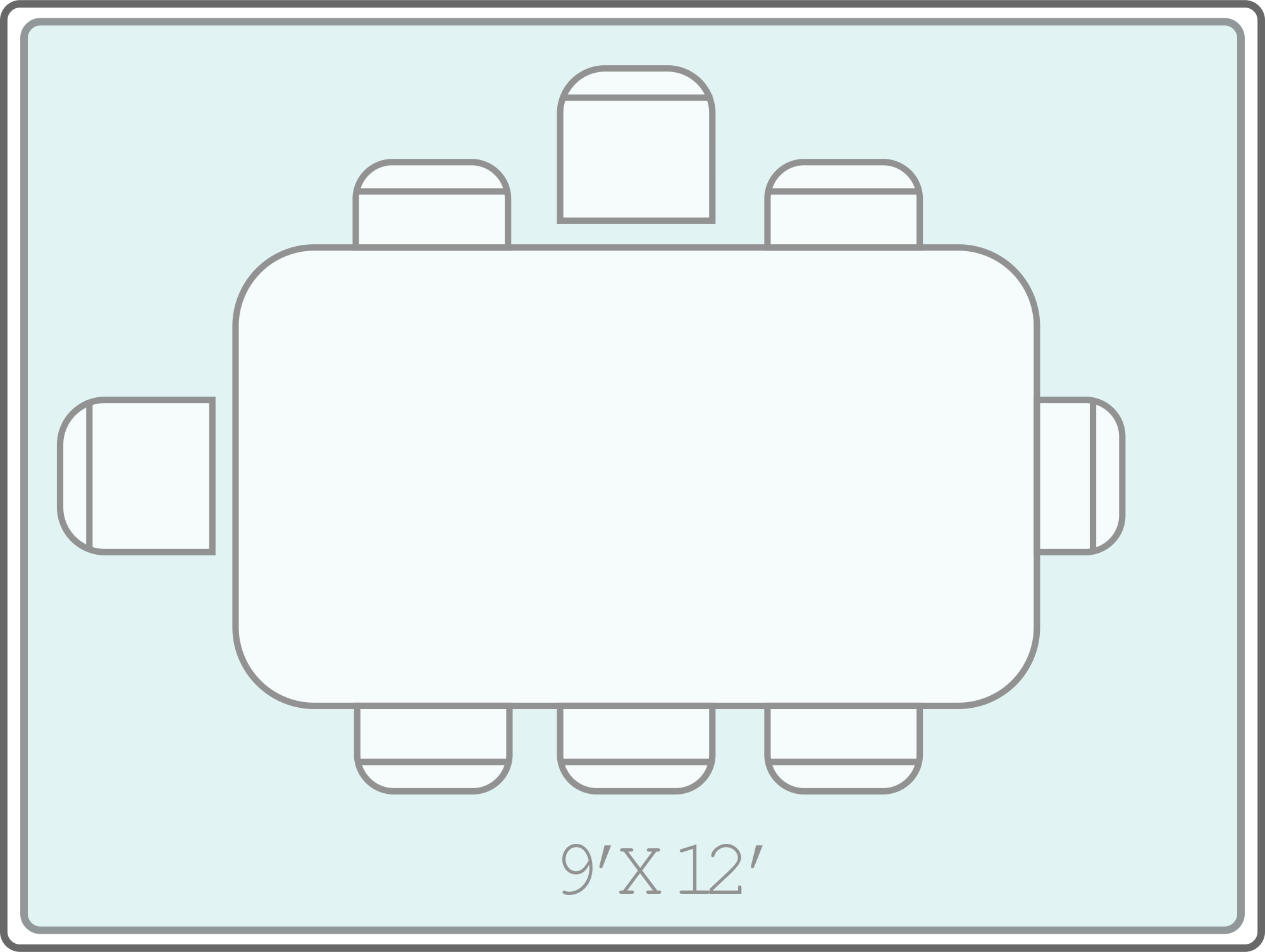 Rectangle
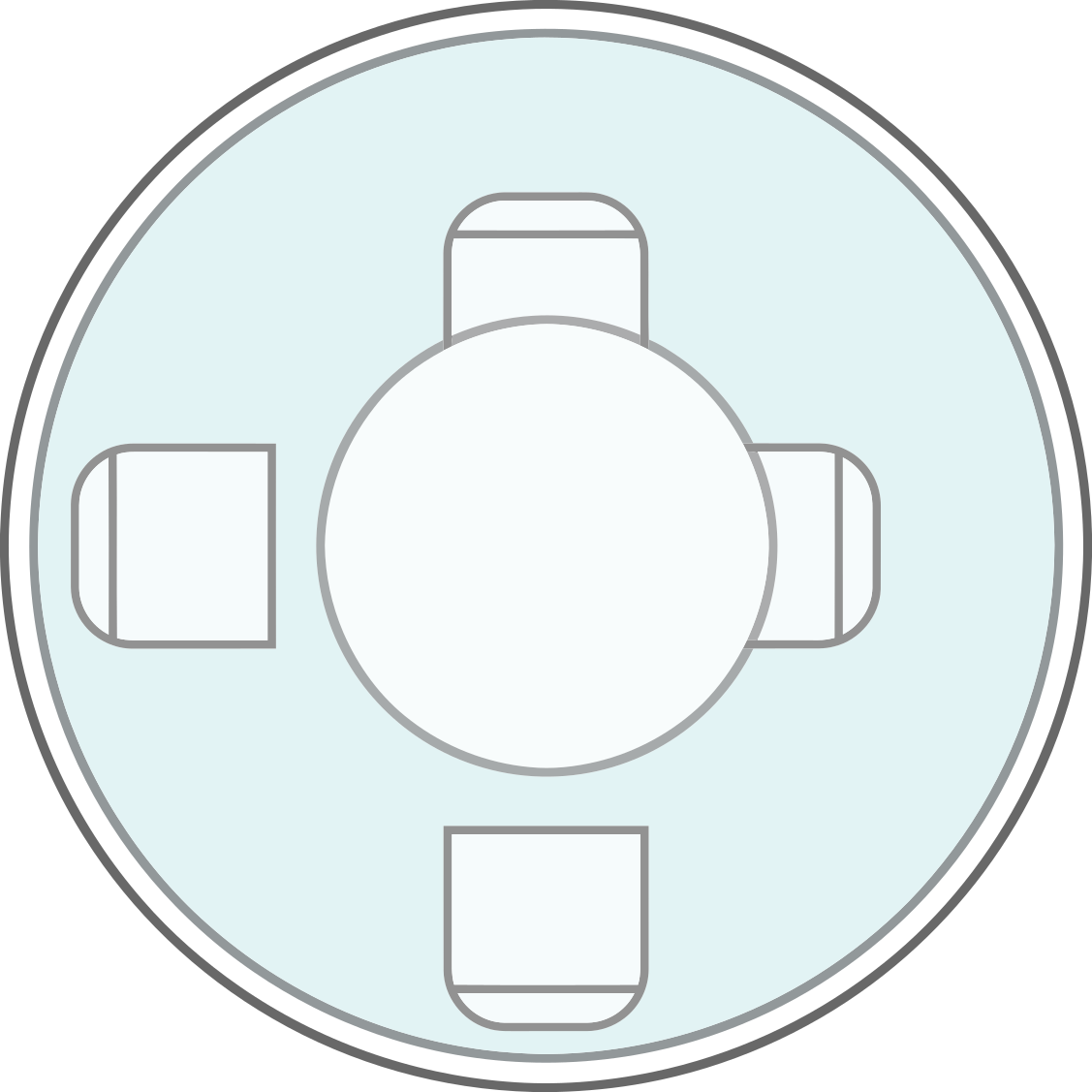 Round
Round
 Runner
 Square