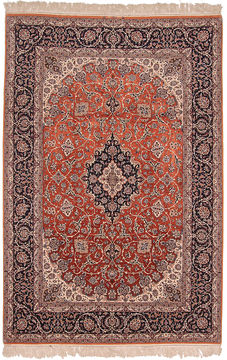
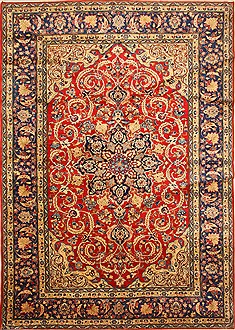
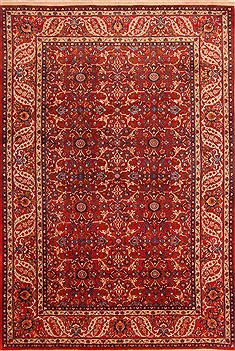
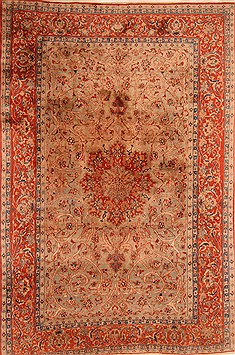
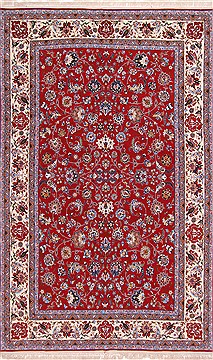
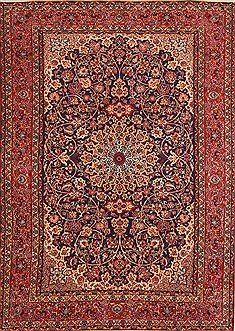
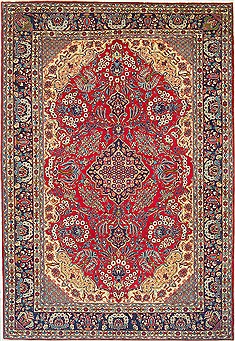
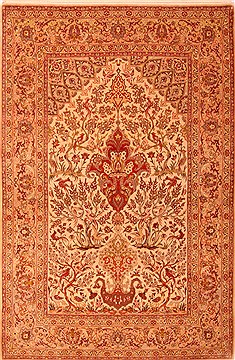
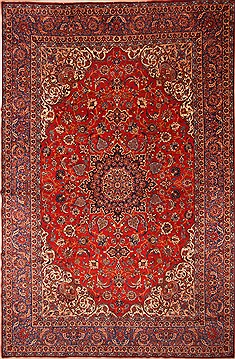
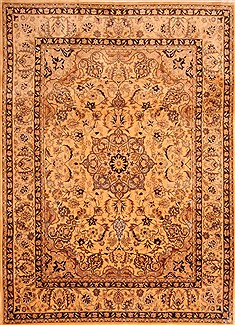
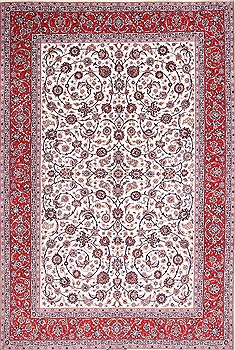
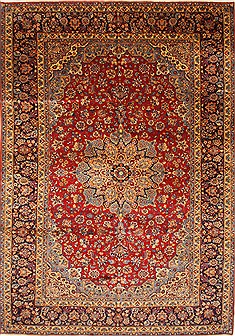
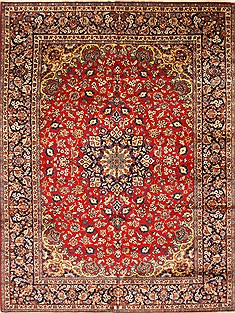
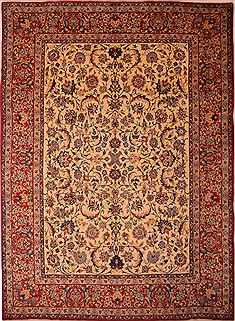
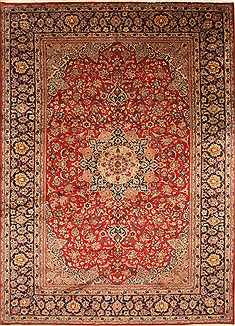
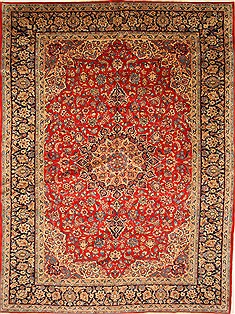
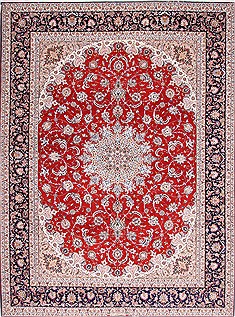
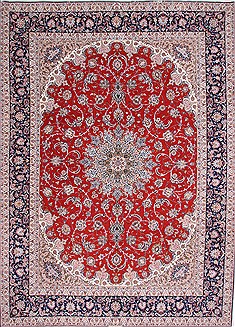
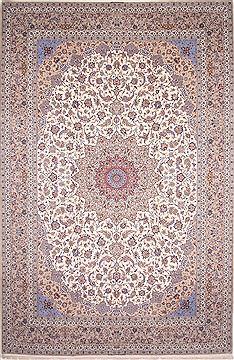
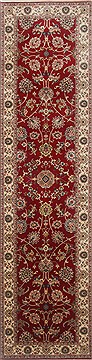
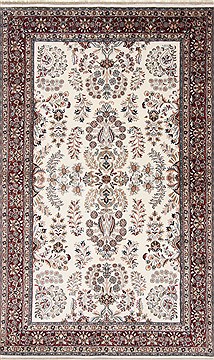
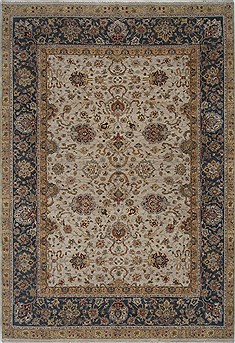
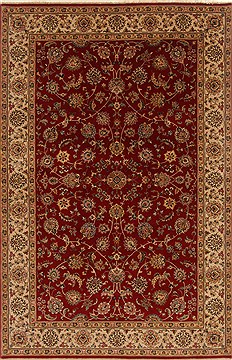
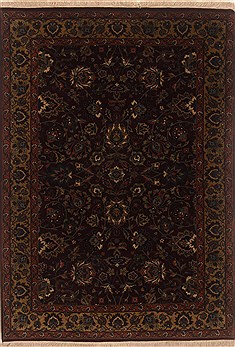
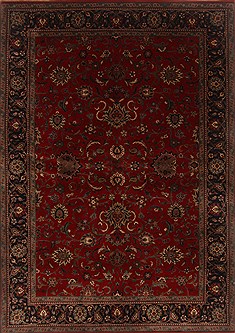
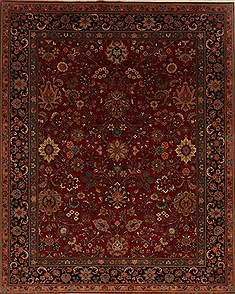
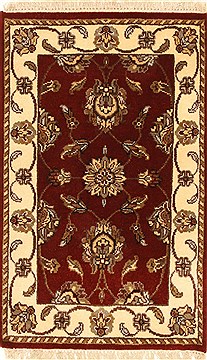
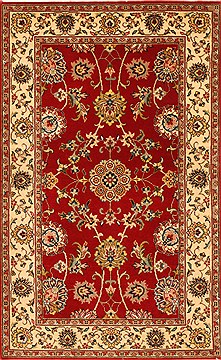
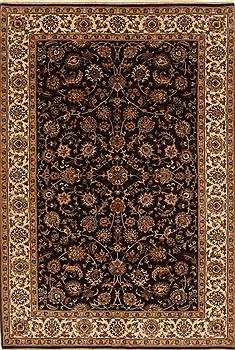
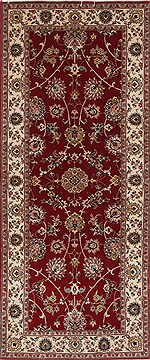
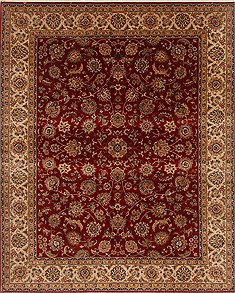
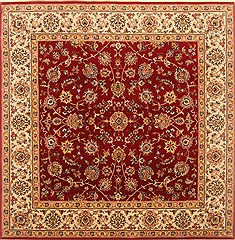
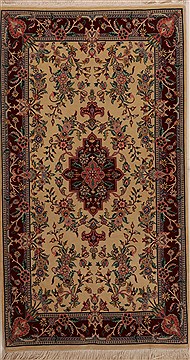
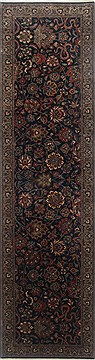
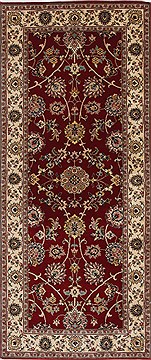
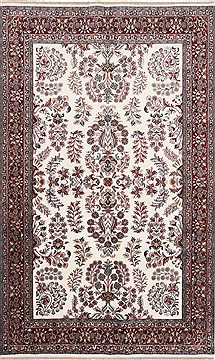
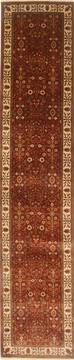
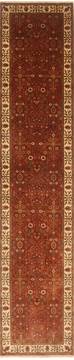
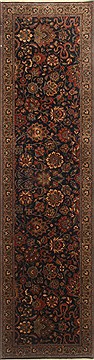
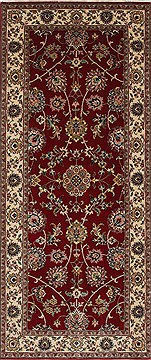
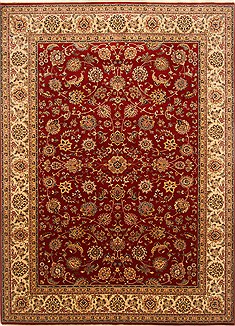
Among the finest handmade carpets in the world, if not the finest, Isfahan rugs are the real deal; the 'creme de la creme.' They are notorious world over for their delicacy and utmost beauty. The rugs that are woven inside the city of Isfahan are very respected in the Persian rug industry because of their rich ancient history and honorable reputation dating back to the 16th century. Most Isfahan rugs are a favorite of many, and command higher retail prices due to their extraordinary quality and elegant symmetry. There exists in the world today, many Isfahan rugs that cost several hundreds of thousands of dollars.
Isfahan area rugs definitely have one of the highest standings among the Persian rugs and can compete with Tabriz and other fine Persian rugs. In a broader sense any rug that is made in the larger area of the Province of Isfahan is called Isfahan rug provided it has the general characteristics of Isfahan established designs and weaving technics. It is important to mention that there are other towns in the province of Isfahan that have established their own independent identity and thus the rugs weaved in those cities are called by their own distinct name and are not called Isfahan rugs. A clear example of this exception is the category of Nain rugs, which has a totally independent identity as they are significantly different form that of the Isfahan.
Tabriz and Isfahan have both served as the capital city of Persia under the Safavid rule, which is considered to be one of the most powerful Persian dynasties. Safavids were lovers of fine arts and architectures and perhaps with the exception of the Achaemenid era there is no time in Persian history that the arts and architecture advanced as they did under the Safavid rule. During the long rule of Safavid Empire rug weaving art in Persian Empire improved enormously and the finger prints of this popular dynasty can be found everywhere in the rugs which has survived from that era.
Safavis were originally from Ardebil a city in the north of Persia in the present province of Azerbaijan where there was a very rich culture of rug weaving tradition. When they chose Isfahan as the capital city and moved there immediately a nice marriage was formed between the two rich Persian cultures that were involved in rug weaving art as well as fine Persian architecture. Safavid kings brought distinguished master weavers and architects from Ardebil and Tabriz to Isfahan and commissioned them with weaving masterpieces for the kingdom’s court. Naturally those master weavers were met with those from Isfahan and as a result of the interaction between the two rugs making cultures, new styles, designs and technics were born.
Some of those designs and motifs bore the name of those kings and are still being used in fine rug weaving both in Tabriz and Isfahan. The famous Sheikh Safi design which is employed in weaving one of the most valuable surviving rugs known as Ardebil Rug which is now in a London museum bears the name of Shay Safi al-din the founder of the Safavid dynasty and still being copied in making rugs in Iran. There are other famous designs that carry the name of Shah Abass, Shah Abbassi design, and Shah Ismail, Shah Ismaili and other famous king of the Safavid dynasty.
Although Isfahan had a long history of rug weaving before the Safavids, it seems that there hasn’t been any significant improvement until the Safavis moved the Persian Capital to Isfahan and closely and personally got involved in rug making art which was either produced to use in the empires courts, as gifts to European rulers or as a means of income for the kingdom. The Safavid era rug workshops in Isfahan were mainly located near the Allighapou the place where the kings resided. The master pieces of the Isfahan carpets that have survived now stand out in the most famous world museums. Silk rugs during the Safavid era, in particular, were the, most favored rugs of all and played a significant role in the economy of the dynasty.
After the demise of the Safavid dynasty, the rugs industry in Isfahan had a dramatic decline as such that at the end of the Rule of Nasir al-din Shah of Ghajar Dynasty, there was no active rug workshop in Isfahan and only individual weavers sporadically would make rugs in their homes. With all ups and downs Isfahan hand knotted rug now stands out as one of the finest Persian rugs in the world, and now are among the most favored by the wealthiest people all over the world.
It is safe to say that Isfahan still produces the world's finest rug. The ancient Persian kings always had these rugs placed throughout their palaces; on the floors, and sometimes placed on the walls like priceless paintings. Isfahan itself is a very historic city, and it is responsible for a great portion of the reputation that the Persian rug name has today.
There can be many combinations in the materials used for Isfahans. These are: wool on cotton, wool and silk blend on cotton, wool and silk blend on silk, or silk on silk. The most common is a superb blend of wool and silk used for the pile, woven on a foundation of pure silk. Unlike the intuitive execution of tribal weavers who weave rugs on remembered motifs and learned ornamentation, the complex colors, shapes and 'Arabesque' swirls of the Isfahan are first carefully drawn on large sheets of paper in the form of a template by a master designer. The template then serves as a guide for the weavers to ensure accuracy and quality control throughout the long weaving process, which can be several years. There are literally hundreds of commercially operated vertical looms at work in Isfahan at all times to meet demand. An authentic fine Isfahan rug is absolutely priceless and without exaggeration, the most gorgeous thing that can be placed on any floor.
The loom in the Isfahan rugs are significantly more advanced than most other areas which makes the weaving towards the completion of the rugs easier and this is unique to Isfahan looms. They are vertical looms. Isfahan Persian rugs normally use double knots for the open fields of the rug if any, and single knots and finer threads for the patterns and motifs in order to make them accurate. This method is not, however, used in high end rugs because it can cause inconsistency and it is more common to use single knots all over the rug particularly in silk rugs.
Isfahan rugs are normally made of cotton base and a wool or mix of wool and silk pile. Pure Silk Isfahan rugs, however, use silk base and silk pile. Isfahan area rugs have a very high quality and Antique Isfahan rugs are a good investment for future generations. The wool used in Isfahan hand knotted rugs either comes from other provinces such as Kerman, Kermanshah, or foreign countries such as Australia. In weaving Isfahan Rugs, the knots are made by hand and no hook or tool is used to make the knots.
In the Safavid period, curved lines and floral patterns became popular and several motifs were created and named after the Safavid rulers that are widely used in Isfahan rugs. Among them Shah Abbasi design, Saha Safi, or Shaykh Safi design, and khatei designs were created.
Although there are many different opinions about the Khataei floral pattern, and some try to relate that to Chinese roots, the present writer tends to believe that khataei is also a reference to the pen name of Shah Ismaeil. The founder of Safavid king as you would often find this design being mentioned together with the name of Sahah Abasi design and Shah Safi designs. Therefore, we would think the khatai also is a reference to a design attributed to Shah Abbas and since fe people are aware of the Poetry of the Shah Abbas and his pen name khataei, they have tried to find some other explanation for the khataei designs.
There is also a belief that the Safavid era Isfahan rug may have been influenced to a certain degree by European painting and use of colors in certain fabrics. However a second opinion asserts that although the European arts and painting found their way to Persia, Isfahan rugs were greatly immune from being influenced by foreign factors. From the wide range of pictorial rugs survived one may conclude that Isfahan rugs have always concentrated to Persian themes and very little influenced by foreign elements.
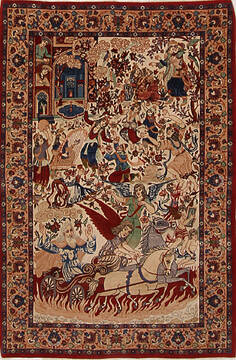
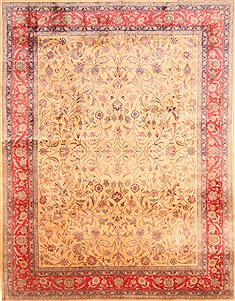
Most Isfahan rugs today carry the traditional pattern of lachak toranj and and Islimi curves that surround the Shah Abbasi and khatei flowers independent of the central medallion toranj design. Among other famous designs are arch with two columns, prayer mat designs, tree of life, hunting designs, birds and animals.
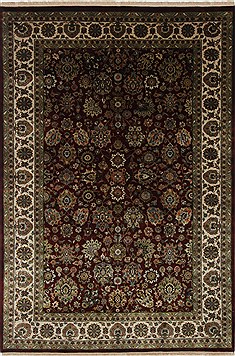
Isfahan rugs, like Kerman is one of the most colorful rugs and the minimum number of colors used in most rugs are about 14-15 colors, the back ground in most temporary Isfahan rugs are beige, cream, navy blue, baby blue, turquoise, deep blue, different shades of gray and red. And most Isfahan rugs have a light background.
The most popular colors used in the fine rugs of the Safavid era Isfahan that are known as the Polonies rugs, are bright yellow, bright green, orange, turquoise, and rose. These rugs normally have light colors and golden or silver backgrounds. These colors were the favorite of the European rulers and consistent with the European taste of those days. Polonies rugs initially were being weaved for the Polish rulers and that is how these rugs got that title.
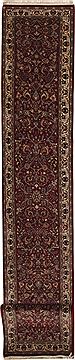
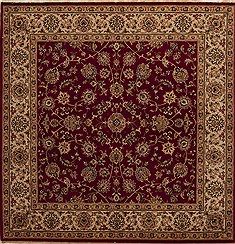
Isfahan Rugs come in a variety of sizes and shapes ranging from small rugs all the way to 4x5, 6x9, 8x11, and 9x12. Isfahan rugs weavers show little interest in making runners. Isfahan handmade rugs mostly come in rectangular, square, round, octagon and hexagon shapes.
Among the signature brand names in Isfahan, Sayrafian of Isfahan is the most popular. Rugman.com is one of the most trustable online rug dealers that provide the most educational information about the Isfahan valuable carpets that you decide to invest in.
(9'2" x 13'4") Persian Isfahan
SKU 100-28136
(6'10" x 10'0") Persian Isfahan
SKU 100-23240
(6'1" x 11'3") Persian Isfahan
SKU 254-29586
(8'5" x 12'2") Persian Isfahan
SKU 254-29241
(8'6" x 11'10") Persian Isfahan
SKU 100-21187
(9'8" x 13'11") Persian Isfahan
SKU 100-14798
(11'10" x 18'0") Persian Isfahan
SKU 100-25754
(8'6" x 12'5") Persian Isfahan
SKU 254-29664
(9'8" x 13'0") Persian Isfahan
SKU 100-28024
(9'5" x 13'3") Persian Isfahan
SKU 100-28001
(10'1" x 13'6") Persian Isfahan
SKU 100-27996
(10'0" x 13'3") Persian Isfahan
SKU 254-29360
(10'0" x 13'10") Persian Isfahan
SKU 254-29354
(13'4" x 20'0") Persian Isfahan
SKU 254-30298




Be the first to know about new designs and
exclusive offers, and get up to
10% OFF
your first purchase
Rugman since 1998 | The first and oldest online rug store
You can unsubscribe with a single click. We value your privacy; click here for more info.
You have one more step to join
Rugman Insider Club.
A coupon code will be emailed to you.
Please check your email and just
click the green “Confirm Subscription” button.



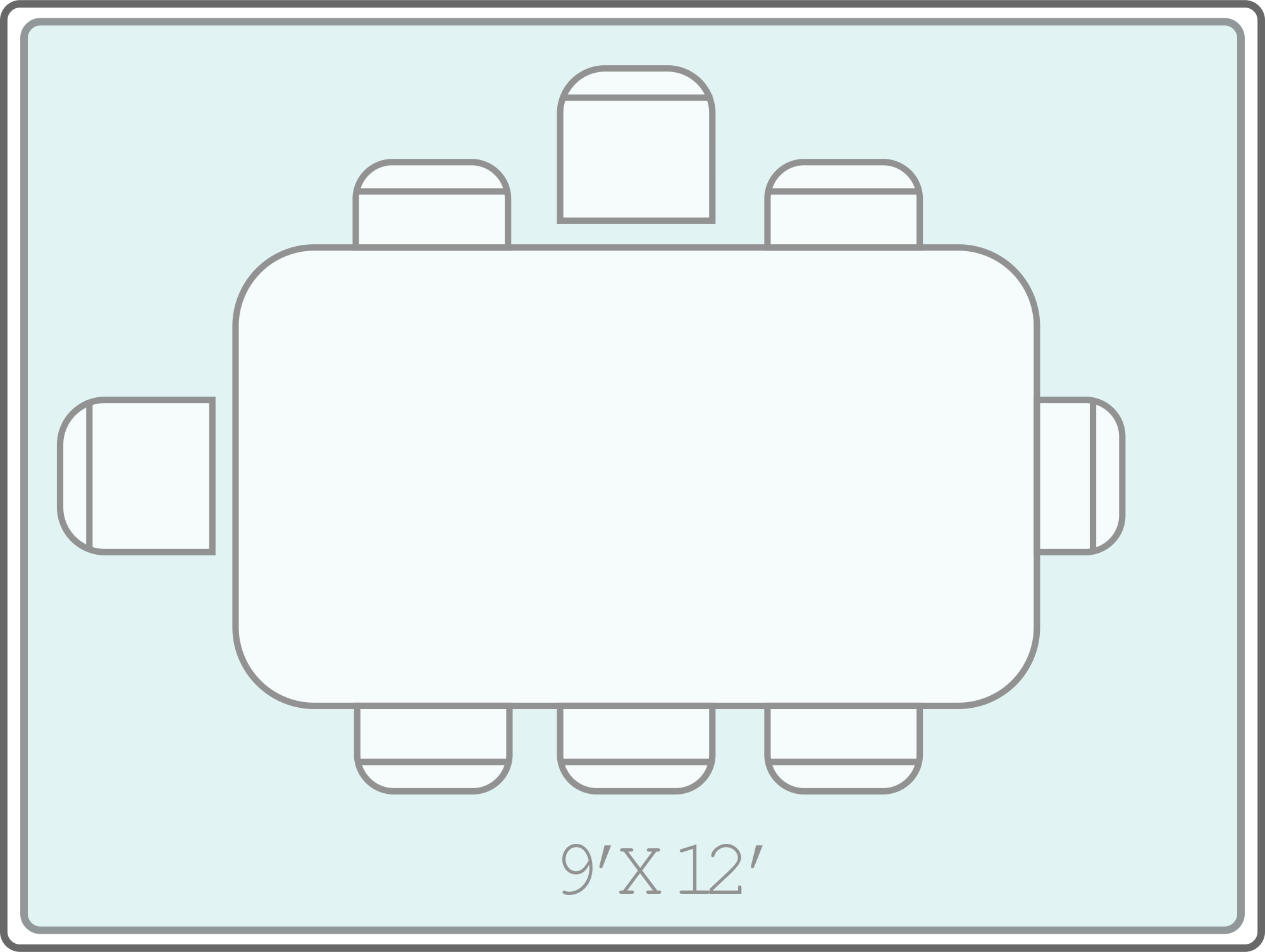 Rectangle
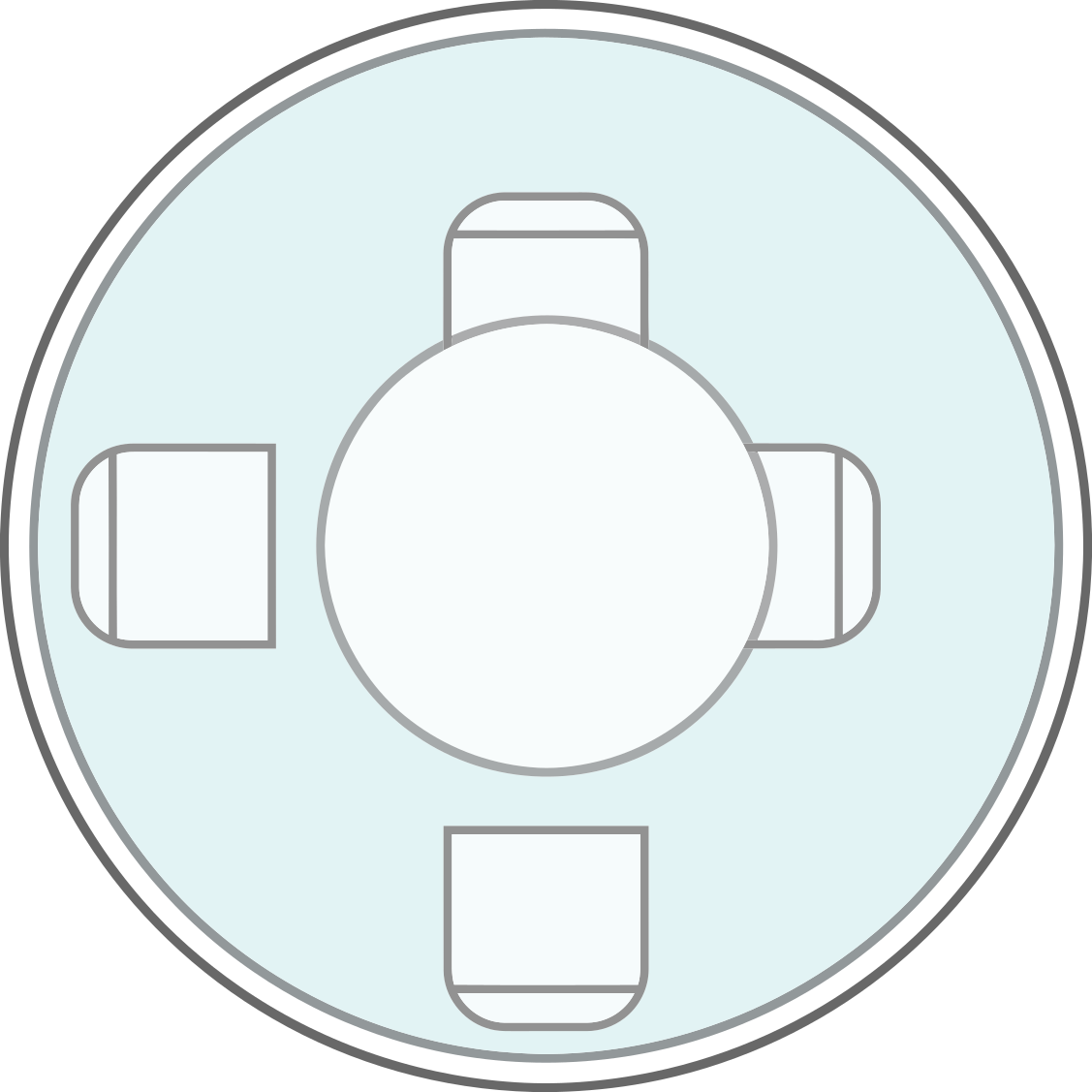 Round
Round
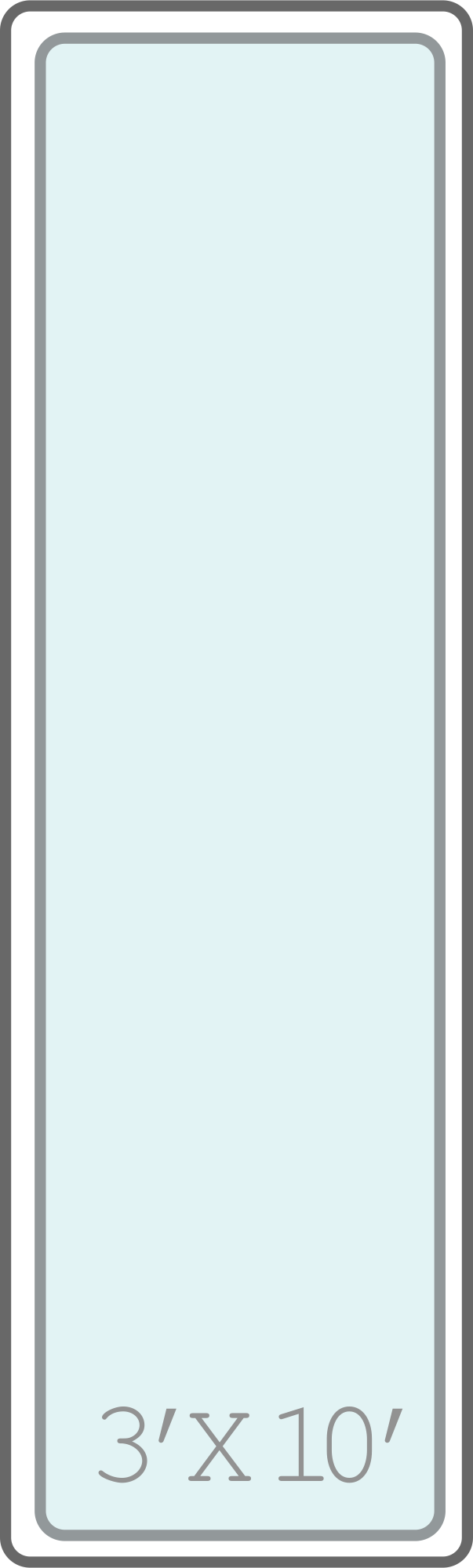 Runner
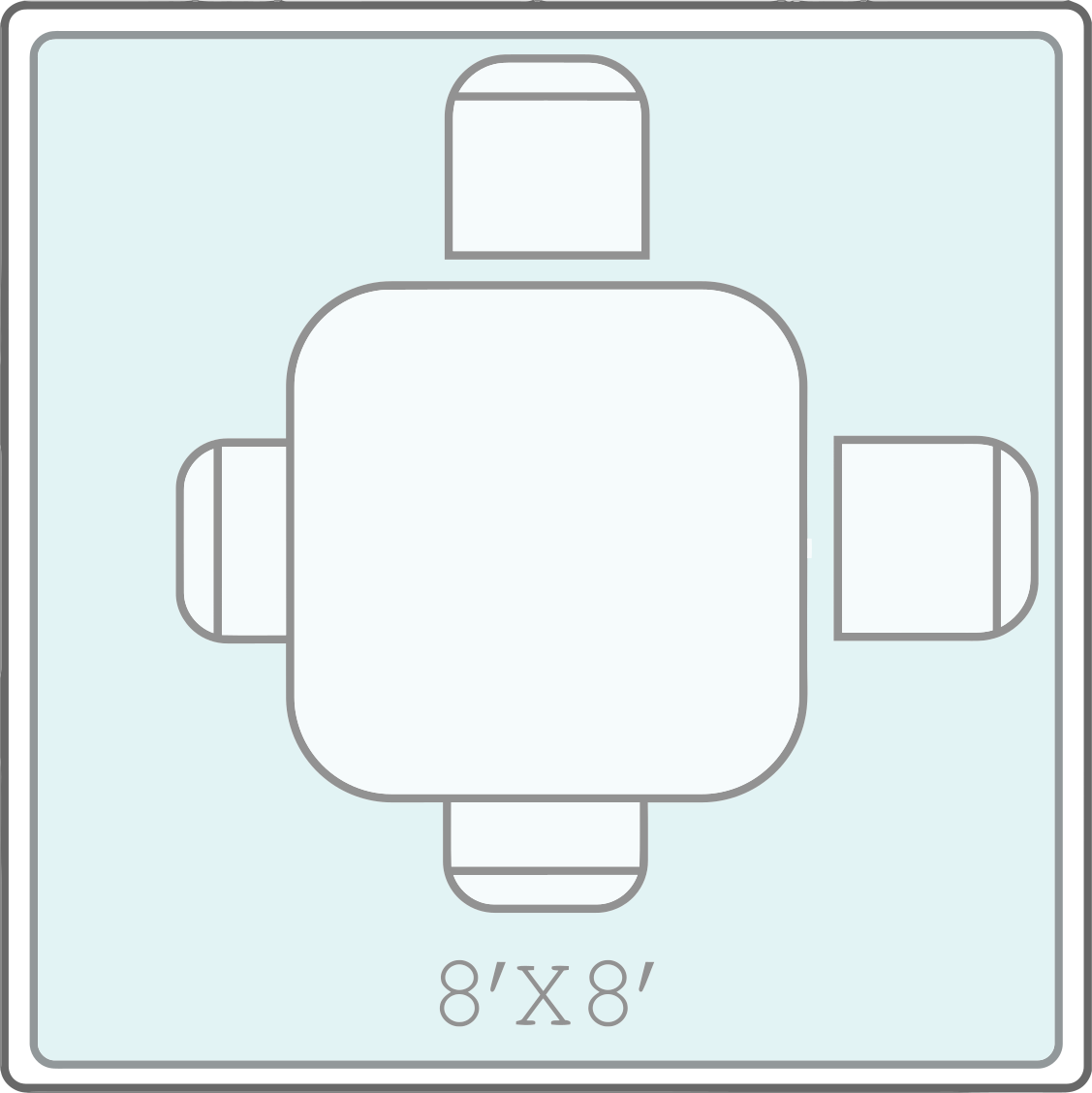 Square