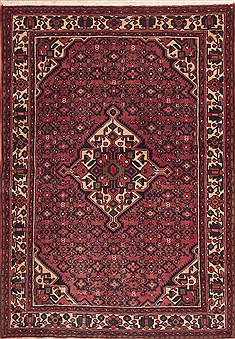
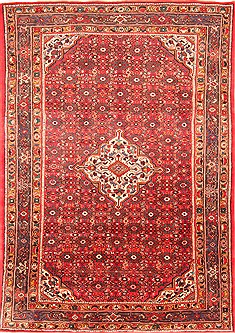
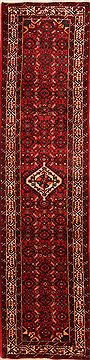
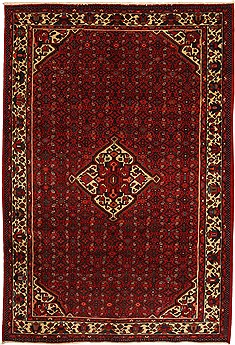
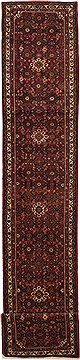
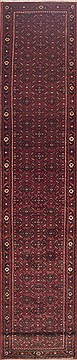
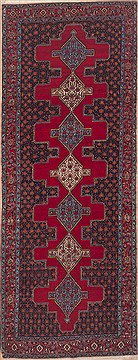
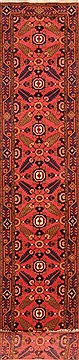
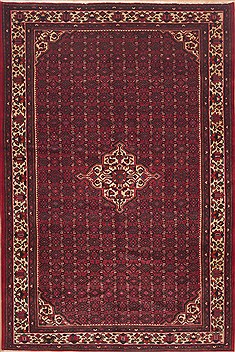
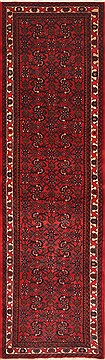
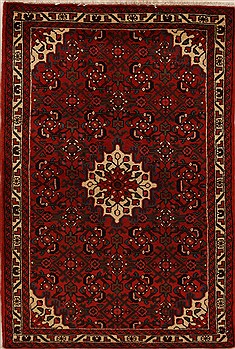
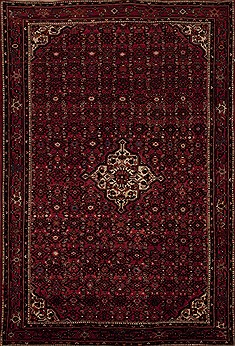
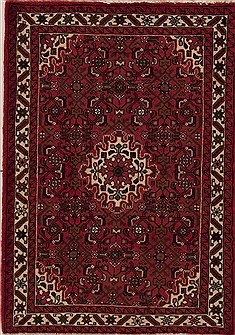
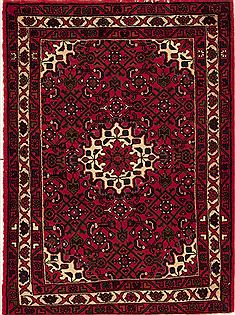
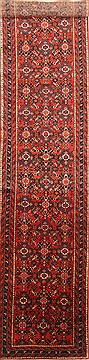
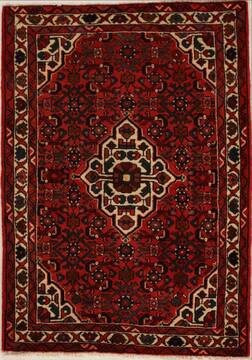
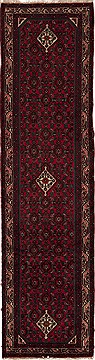
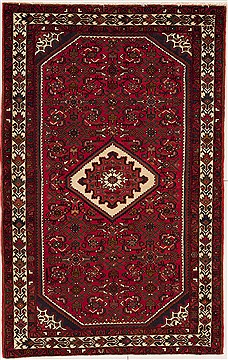
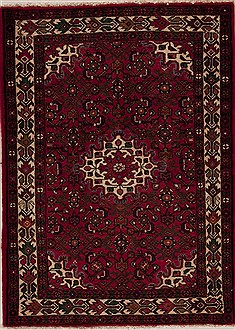
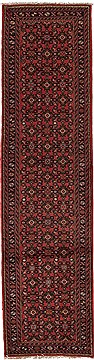
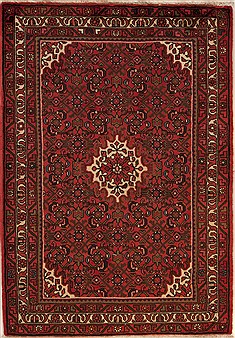
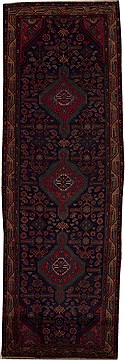
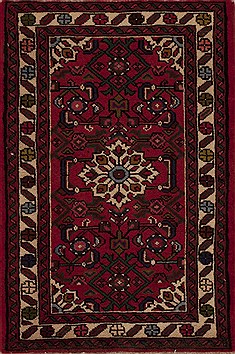
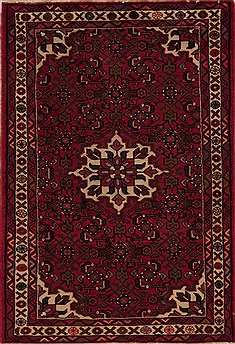
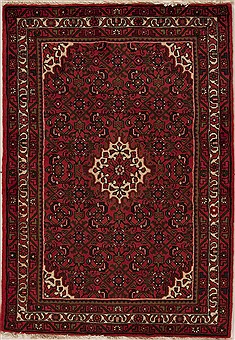
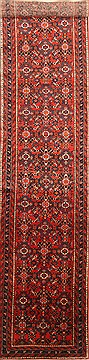
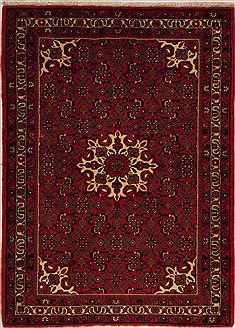
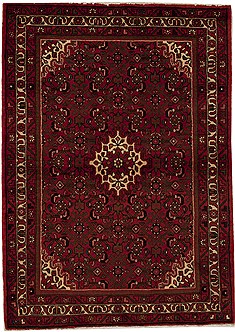
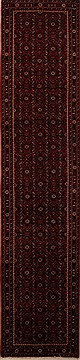
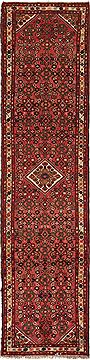
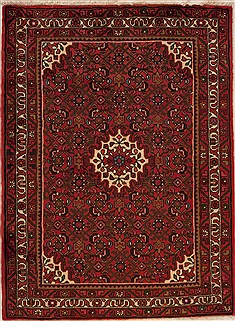
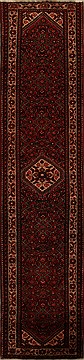
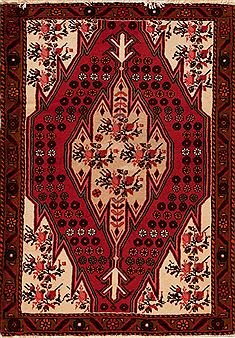
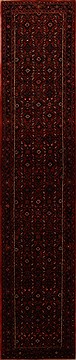
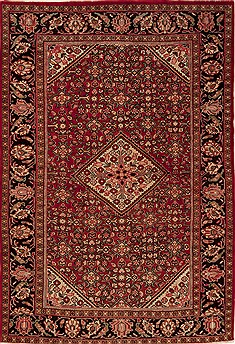
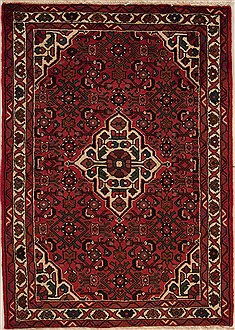
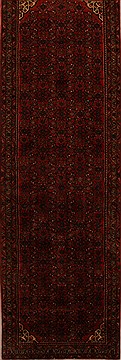
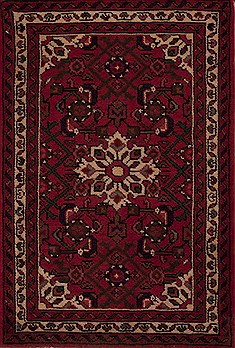
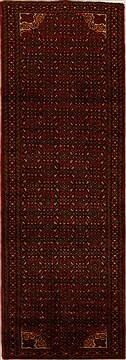
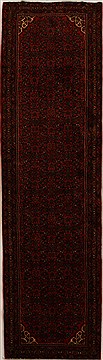
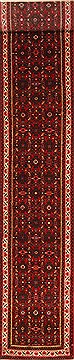
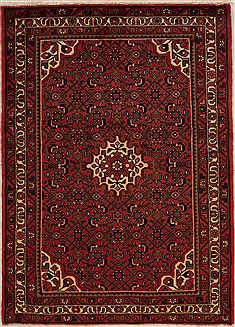
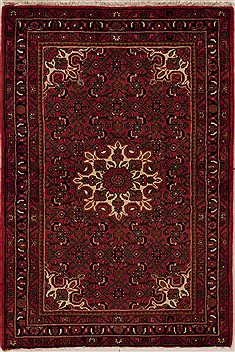
Hosseinabad or Hussainabad rugs are tribal rugs that are handwoven by the semi-nomadic peoples of northern Iran in a village near Hamadan by the name of Hosseinabad. They usually have an intricate pattern with a detailed central medallion. The coloring is predominantly shades of red, navy blue, and ivory. Both geometric and floral patterns are seen in rugs of this type. The quality of these rugs is fairly good and they are made with very soft wool making them very pleasant to walk on. A beautiful Persian tribal work of art, these rugs will greatly enhance the look of any room.
Hamedan is an ancient Persian city (the second oldest city of Iran), which lies at about 6500 feet above sea level in the rugged mountainous region of northwestern Iran. It has a rich history, which dates back many centuries. The city itself, along with the countless villages and districts surrounding it, produces a good portion of the tribal rugs of Iran. Some areas around Hamedan include Chenar, Derjazin, Hussainabad, Nahavand, and the Kurdish districts of Khamseh, and many others, that are between Arak and Hamedan. All the rugs produced in the surrounding area of Hamedan are marketed inside of the city. There can be seen obvious traces of Kurdish and some Turkish influence on the people of the province of Hamedan, which is just east of Kurdistan. The peaceful people of the province of Hamedan have managed for several centuries, despite all the greedy foreign invasions, to keep their precious talent of rug weaving alive.
The rugs manufactured around the city of Hamedan are all handmade, with the pile being entirely wool, and the colors being mainly natural vegetable dyes. Very rarely if ever, is silk seen in rugs from this region. The foundation of the rug (warp and weft) is usually cotton, and in some cases goat hair. The patterns are usually simple geometric arrangements with primary and vibrant colors. Sometimes small animals or garden elements are seen and sometimes the famous Herati design is implemented. These rugs are overall very good in quality and most of them have been known to last surprisingly long periods of time.
(5'0" x 7'0") Persian Hossein Abad
SKU 100-11907
(2'4" x 15'8") Persian Hossein Abad
SKU 100-11179
(7'1" x 10'2") Persian Hossein Abad
SKU 100-20852
(2'6" x 9'9") Persian Hossein Abad
SKU 100-24724
(6'10" x 9'11") Persian Hossein Abad
SKU 100-11103
(6'11" x 10'0") Persian Hossein Abad
SKU 100-75311
(2'9" x 16'5") Persian Hossein Abad
SKU 100-11177
(3'0" x 16'6") Persian Hossein Abad
SKU 100-11605
(4'1" x 11'1") Persian Hossein Abad
SKU 100-11552
(2'9" x 16'0") Persian Hossein Abad
SKU 100-25054
(6'7" x 9'11") Persian Hossein Abad
SKU 100-11553
(2'8" x 9'3") Persian Hossein Abad
SKU 100-11678
(3'7" x 5'4") Persian Hossein Abad
SKU 251-12619
(7'0" x 10'4") Persian Hossein Abad
SKU 251-12516
(3'6" x 4'11") Persian Hossein Abad
SKU 251-12607
(3'5" x 4'6") Persian Hossein Abad
SKU 251-12608
(2'9" x 17'3") Persian Hossein Abad
SKU 250-29619
(3'6" x 5'0") Persian Hossein Abad
SKU 251-13057
(2'9" x 9'10") Persian Hossein Abad
SKU 251-12653
(4'8" x 7'4") Persian Hossein Abad
SKU 251-12462
(3'7" x 4'11") Persian Hossein Abad
SKU 251-12603
(2'6" x 9'6") Persian Hossein Abad
SKU 251-12656
(3'6" x 5'0") Persian Hossein Abad
SKU 251-12632
(3'9" x 10'11") Persian Hossein Abad
SKU 251-12789
(3'9" x 10'6") Persian Hossein Abad
SKU 250-15960
(2'2" x 3'2") Persian Hossein Abad
SKU 251-13439
(3'5" x 5'0") Persian Hossein Abad
SKU 251-12609
(3'7" x 5'1") Persian Hossein Abad
SKU 251-12616
(2'9" x 17'3") Persian Hossein Abad
SKU 250-29627
(3'9" x 5'3") Persian Hossein Abad
SKU 251-12629
(3'6" x 4'11") Persian Hossein Abad
SKU 251-12623
(2'10" x 13'1") Persian Hossein Abad
SKU 251-15734
(2'6" x 10'0") Persian Hossein Abad
SKU 251-12655
(3'4" x 4'10") Persian Hossein Abad
SKU 251-12631
(3'2" x 13'5") Persian Hossein Abad
SKU 251-15735
(3'6" x 4'10") Persian Hossein Abad
SKU 251-12573
(3'1" x 13'6") Persian Hossein Abad
SKU 251-15732
(7'0" x 11'0") Persian Hossein Abad
SKU 251-12470
(4'10" x 4'11") Persian Hossein Abad
SKU 251-12628
(4'1" x 12'11") Persian Hossein Abad
SKU 250-15974
(2'3" x 3'3") Persian Hossein Abad
SKU 251-13469
(3'7" x 10'10") Persian Hossein Abad
SKU 250-15927
(3'8" x 13'4") Persian Hossein Abad
SKU 250-15978
(2'4" x 16'0") Persian Hossein Abad
SKU 250-29640
(3'5" x 5'2") Persian Hossein Abad
SKU 251-12630
(2'9" x 15'10") Persian Hossein Abad
SKU 250-15847
(3'6" x 5'2") Persian Hossein Abad
SKU 251-12618
(2'6" x 16'2") Persian Hossein Abad
SKU 251-15723



Be the first to know about new designs and
exclusive offers, and get up to
10% OFF
your first purchase
Rugman since 1998 | The first and oldest online rug store
You can unsubscribe with a single click. We value your privacy; click here for more info.

You have one more step to join
Rugman Insider Club.
A coupon code will be emailed to you.
Please check your email and just
click the green “Confirm Subscription” button.



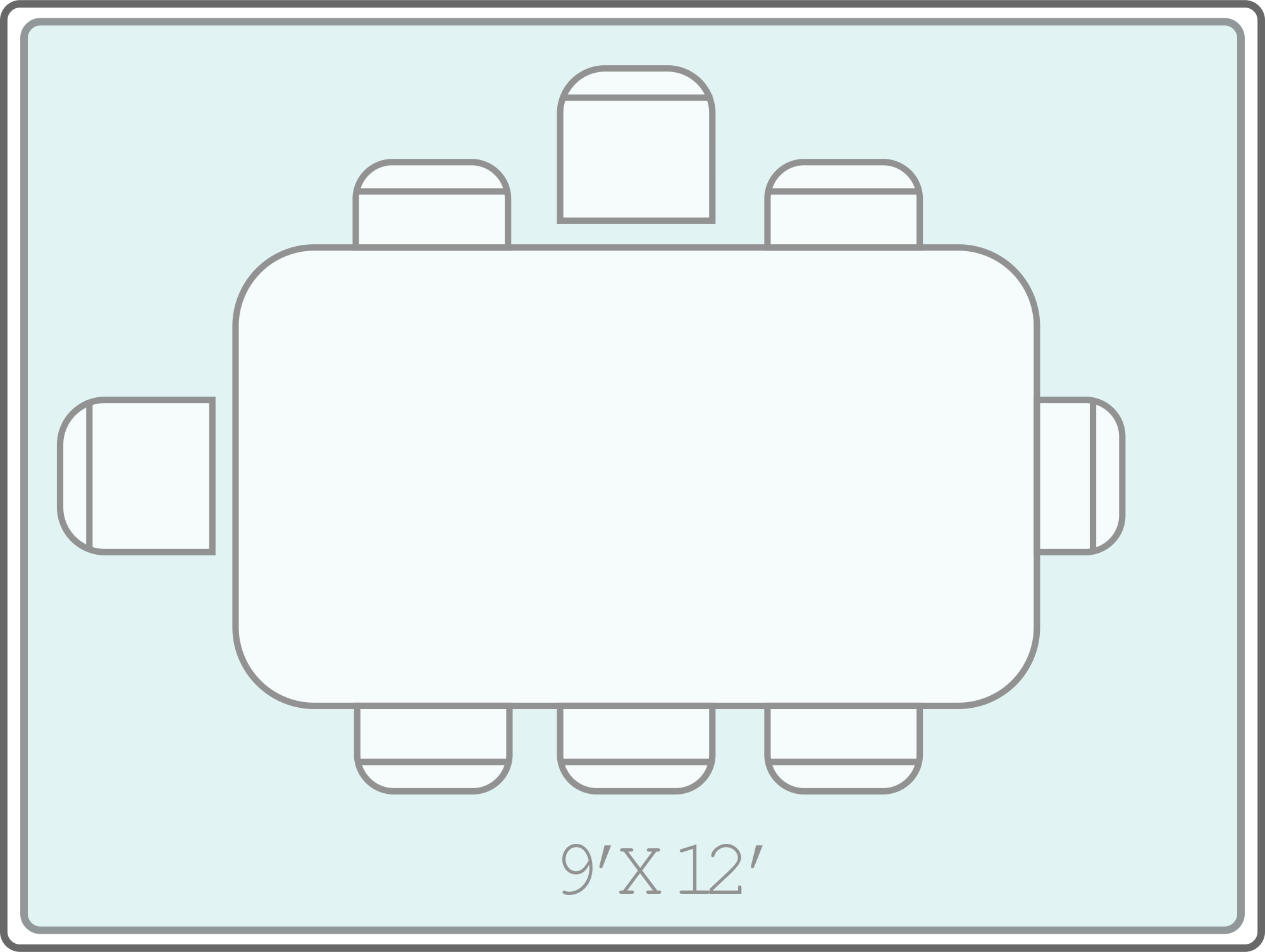 Rectangle
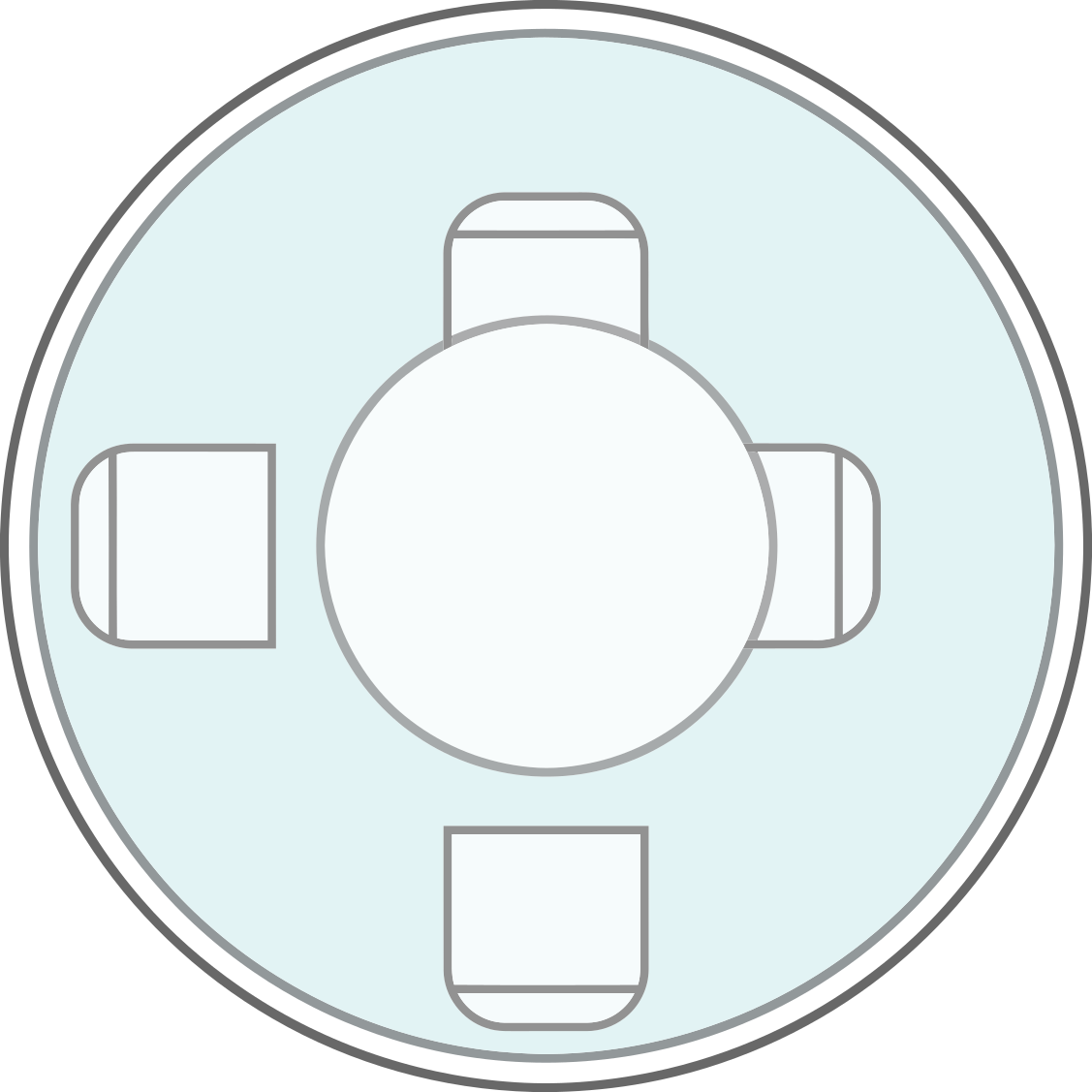 Round
Round
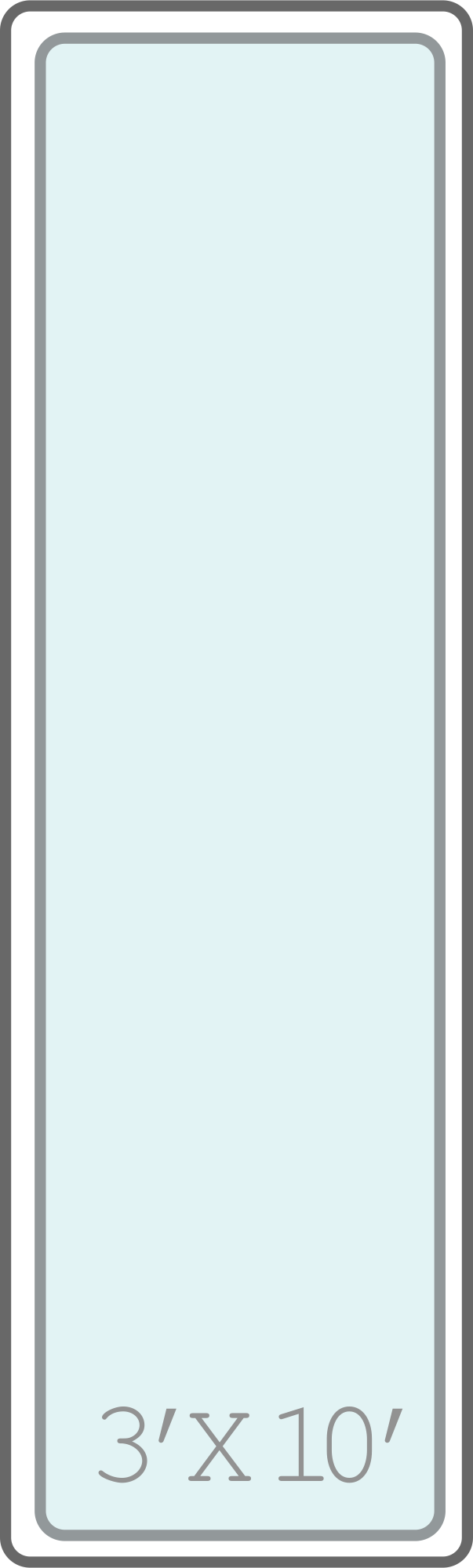 Runner
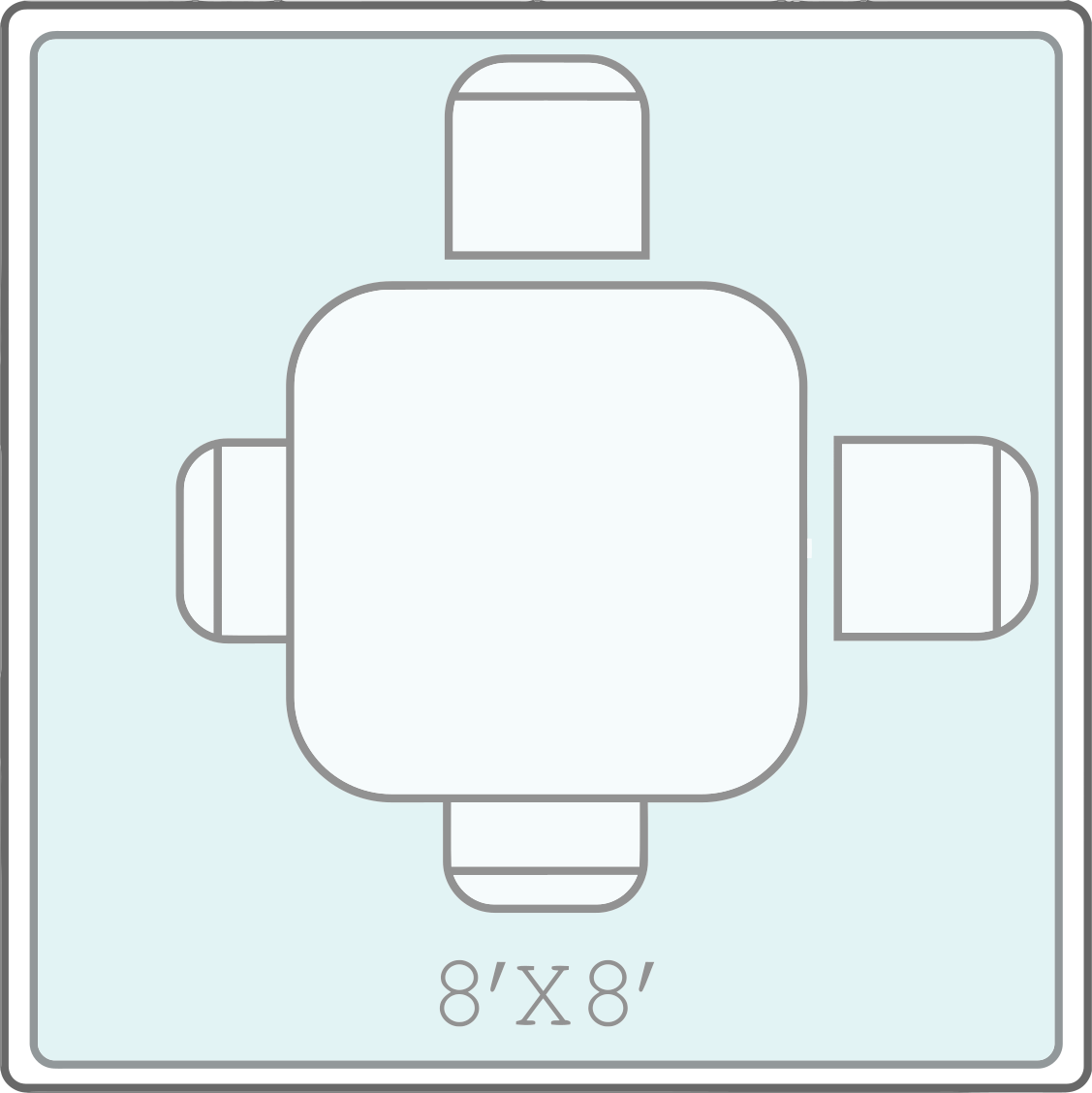 Square