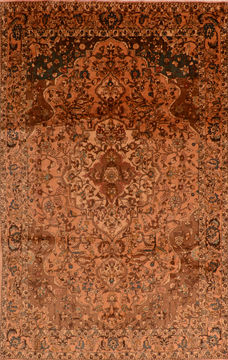
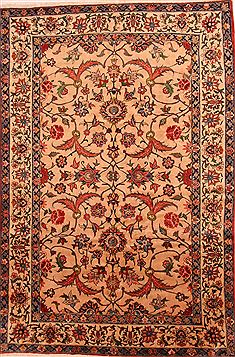
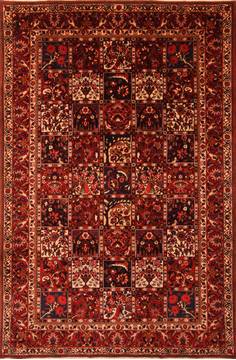
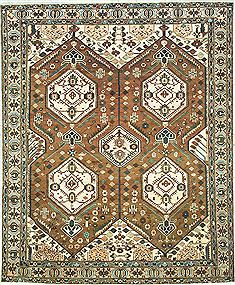
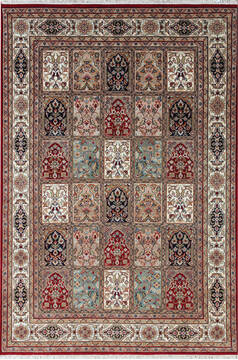
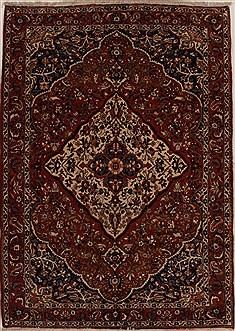
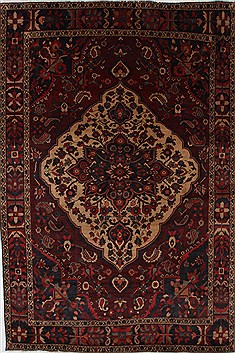
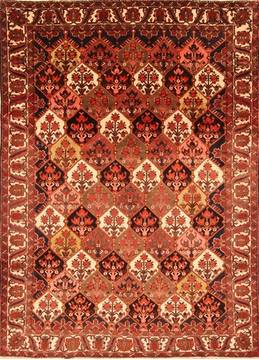
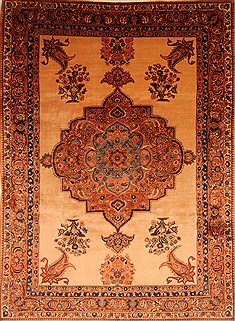
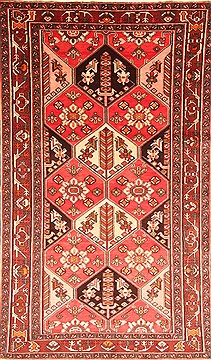
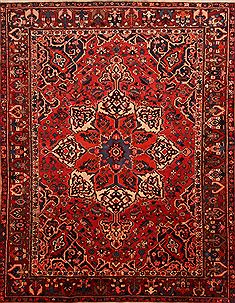
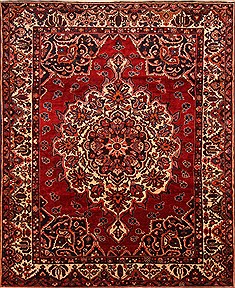
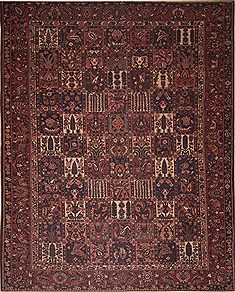
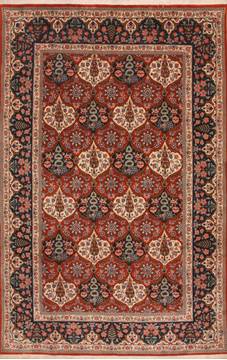
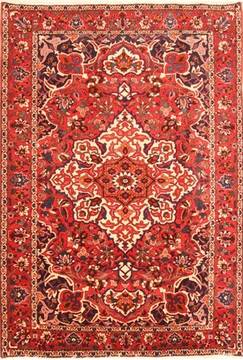
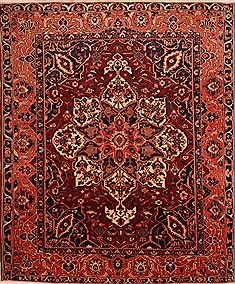
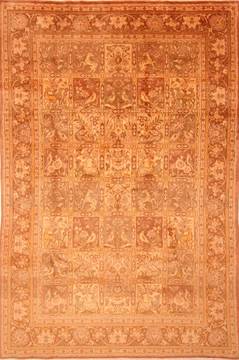
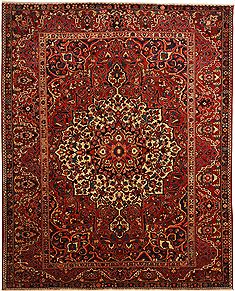
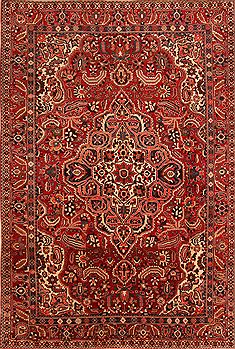
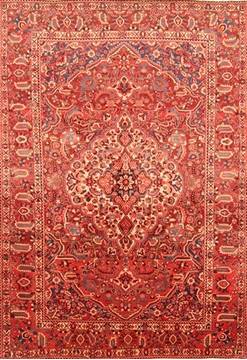
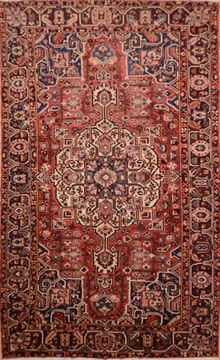
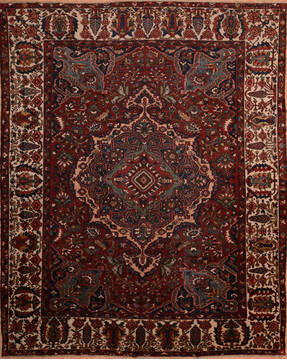
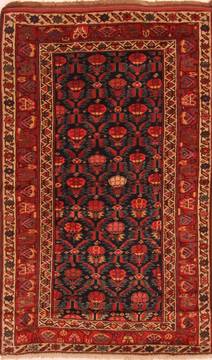
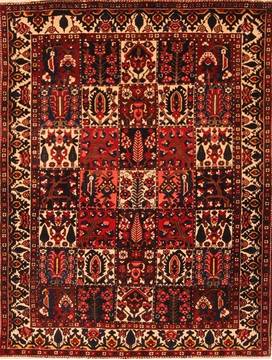
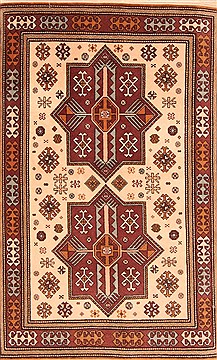
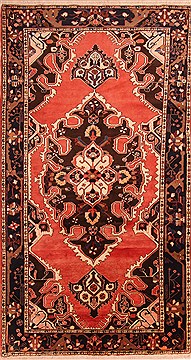
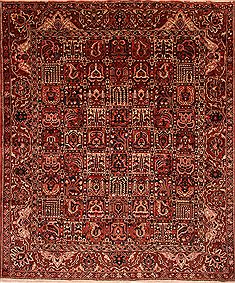
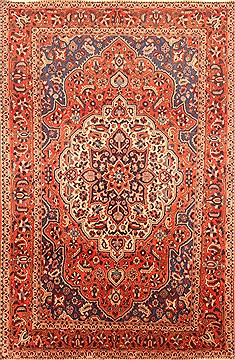
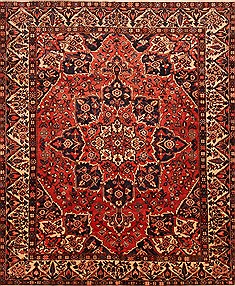
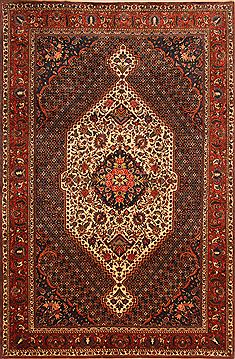
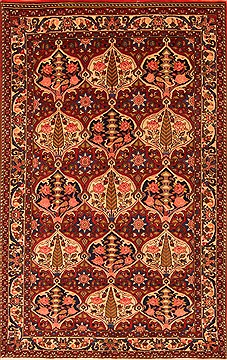
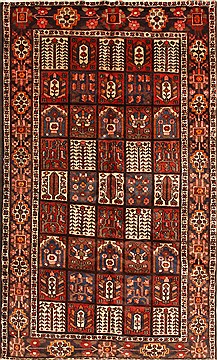
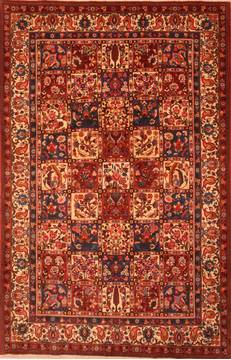
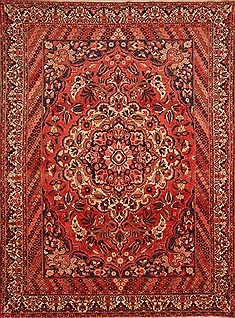
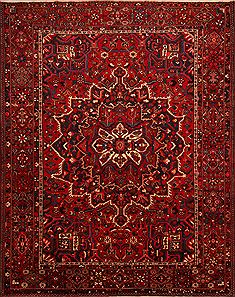
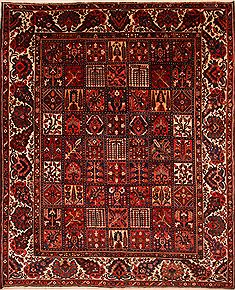
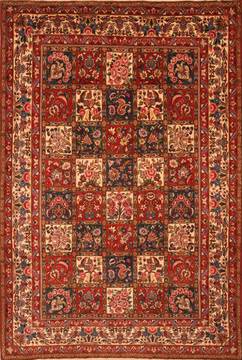
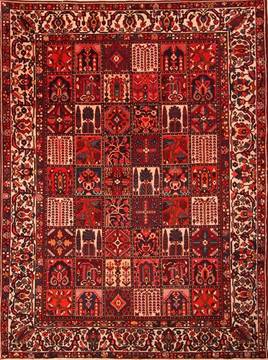
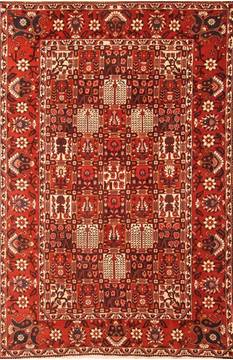
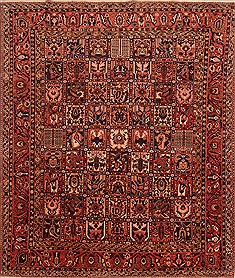
Bakhtiar or Bakhtiari rugs are perhaps one of the finest of the Persian tribal rugs. They are hand-woven by the semi-nomadic Bakhtiari tribes people residing in Central Iran. A checkerboard field pattern of squares representative of a Persian garden decorated with bird and animal images, is typical of the Bahktiari design theme, although sometimes geometric and floral patterns are also woven. This colorful garden design which is typical of a Bakhtiari expresses the Persian love of beauty in contrast with the harsh landscape in which these artful rugs are made. The garden design of the Bakhtiari, is a favorite of many Persian rug enthusiasts because it is a very humble and muted artistic expression that isn't too overwhelming. An authentic Bakthiari Persian rug is truly unique and priceless and it will last a very long time.
During the period of the great Khans, whose wealth and position built many mansions and palaces throughout the Charan Mahal valley of Iran during the eighteenth century, lush and sumptuous gardens which this rug represents, and enclosed courtyards were a symbol of pride and status. These rich merchants also established some of the highest quality rug weaving centers in all of Persia. In the latter part of the nineteenth century, descendents of the early Khans' became rich when oil was found and exploited on their lands. They spared no expense in providing the very best materials to produce their rugs. While much of that weahe Bahktiari rug have belth has long since disappeared or shifted away from the sector in modern times, the design motifs and quality of ten carefully preserved.
The exquisite Bakhtiari Persian rugs have multiple dimensions of beauty, delicacy and elaborate motifs. Each tribe, city, town and village has made its own signature contribution towards the whole picture of hand knotted rugs. Bakhtiari rugs are among most admired hand knotted area rugs in this respect.
Bakhtiari generally last a long time because of their extreme durability. Even though these are tribal products, often produced under the most primitive conditions, the materials, design traditions and knotting styles have remained constant over the centuries resulting in works of brilliant textile art. Most weavers use fine quality wool from their own sheep, which is thoroughly spun by hand and then given intense coloration mainly with vegetable dyes extracted from local plants and grasses in accordance with century old formulas. An authentic Bakhtiari rug is incredibly rigid and very dense making it very strong and immune againt damage.
(6'8" x 10'4") Persian Bakhtiar
SKU 100-110929
(7'1" x 10'6") Persian Bakhtiar
SKU 100-25516
(6'9" x 10'3") Persian Bakhtiar
SKU 100-23104
(6'2" x 9'2") Persian Bakhtiar
SKU 100-20874
(10'9" x 13'1") Persian Bakhtiar
SKU 100-14785
(6'3" x 9'6") Persian Bakhtiar
SKU 100-12310
(7'2" x 10'0") Persian Bakhtiar
SKU 100-14971
(6'8" x 10'1") Persian Bakhtiar
SKU 100-27900
(6'11" x 9'8") Persian Bakhtiar
SKU 100-20718
(8'5" x 11'8") Persian Bakhtiar
SKU 100-21436
(10'2" x 11'11") Persian Bakhtiar
SKU 100-23910
(5'9" x 9'10") Persian Bakhtiar
SKU 100-20875
(6'10" x 10'8") Persian Bakhtiar
SKU 100-20826
(9'7" x 12'5") Persian Bakhtiar
SKU 100-23864
(9'11" x 12'2") Persian Bakhtiar
SKU 100-25202
(10'11" x 13'8") Persian Bakhtiar
SKU 100-11263
(6'3" x 9'9") Persian Bakhtiar
SKU 100-12137
(6'9" x 10'0") Persian Bakhtiar
SKU 100-20869
(10'7" x 12'10") Persian Bakhtiar
SKU 100-23800
(6'8" x 10'0") Persian Bakhtiar
SKU 100-23067
(9'6" x 12'1") Persian Bakhtiar
SKU 100-11012
(6'10" x 10'3") Persian Bakhtiar
SKU 100-23155
(6'8" x 10'1") Persian Bakhtiar
SKU 100-20812
(9'8" x 15'1") Persian Bakhtiar
SKU 100-76290
(10'10" x 14'5") Persian Bakhtiar
SKU 100-75975
(5'2" x 6'9") Persian Bakhtiar
SKU 100-22862
(5'5" x 10'2") Persian Bakhtiar
SKU 100-21722
(10'5" x 12'4") Persian Bakhtiar
SKU 100-25158
(6'7" x 10'2") Persian Bakhtiar
SKU 100-20896
(10'4" x 12'6") Persian Bakhtiar
SKU 100-25726
(6'9" x 10'1") Persian Bakhtiar
SKU 100-23272
(7'3" x 10'1") Persian Bakhtiar
SKU 100-25230
(5'0" x 7'8") Persian Bakhtiar
SKU 100-22759
(6'5" x 6'8") Persian Bakhtiar
SKU 100-22751
(5'1" x 8'5") Persian Bakhtiar
SKU 100-28078
(6'8" x 10'3") Persian Bakhtiar
SKU 100-23061
(8'5" x 11'3") Persian Bakhtiar
SKU 100-21429
(10'1" x 12'10") Persian Bakhtiar
SKU 100-23796
(12'0" x 15'1") Persian Bakhtiar
SKU 100-25601
(6'11" x 10'3") Persian Bakhtiar
SKU 100-23316
(8'8" x 11'7") Persian Bakhtiar
SKU 100-21464
(6'9" x 10'2") Persian Bakhtiar
SKU 100-20183
(8'6" x 11'6") Persian Bakhtiar
SKU 100-21398




Be the first to know about new designs and
exclusive offers, and get up to
10% OFF
your first purchase
Rugman since 1998 | The first and oldest online rug store
You can unsubscribe with a single click. We value your privacy; click here for more info.
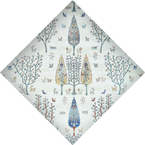
You have one more step to join
Rugman Insider Club.
A coupon code will be emailed to you.
Please check your email and just
click the green “Confirm Subscription” button.



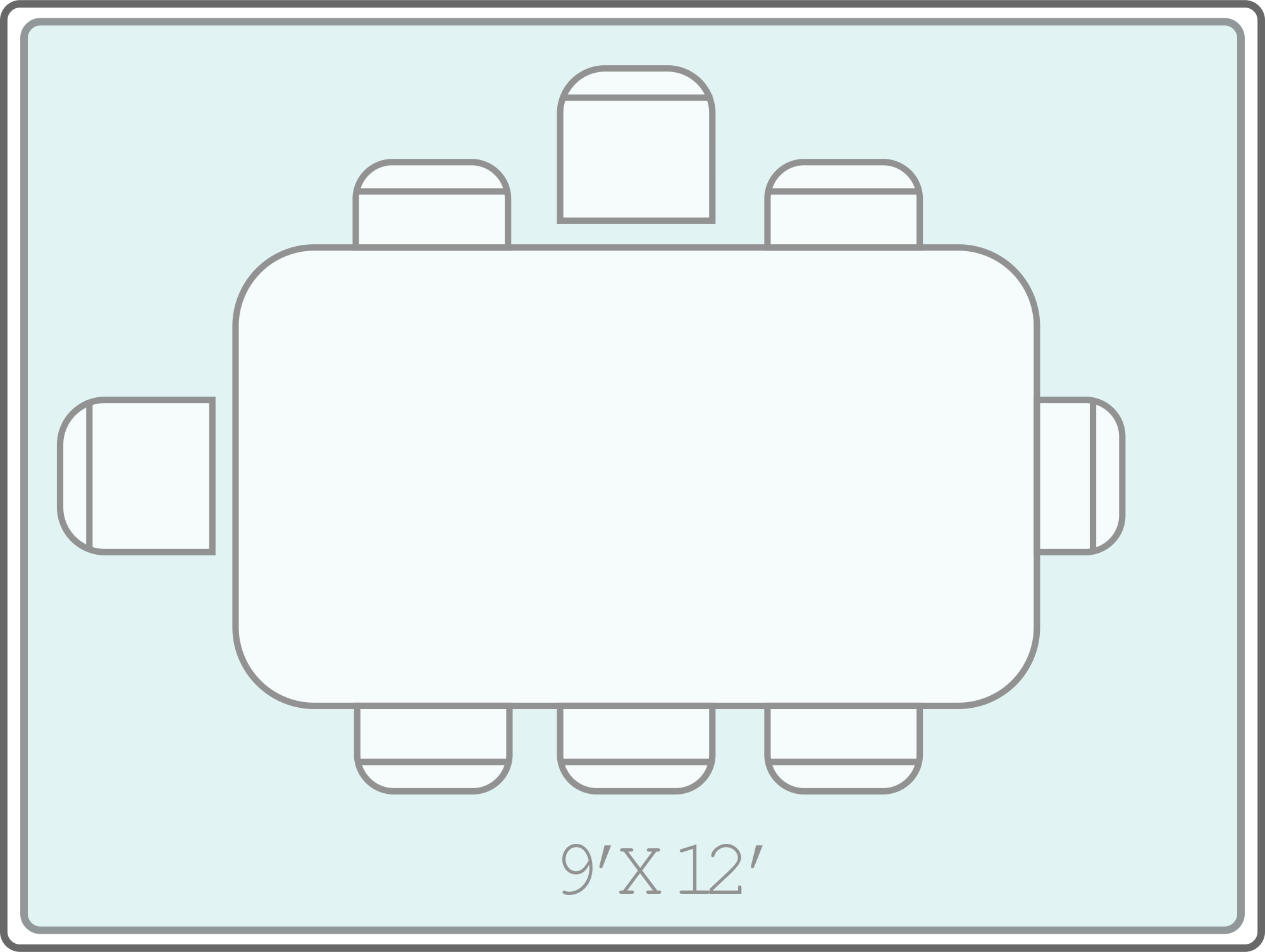 Rectangle
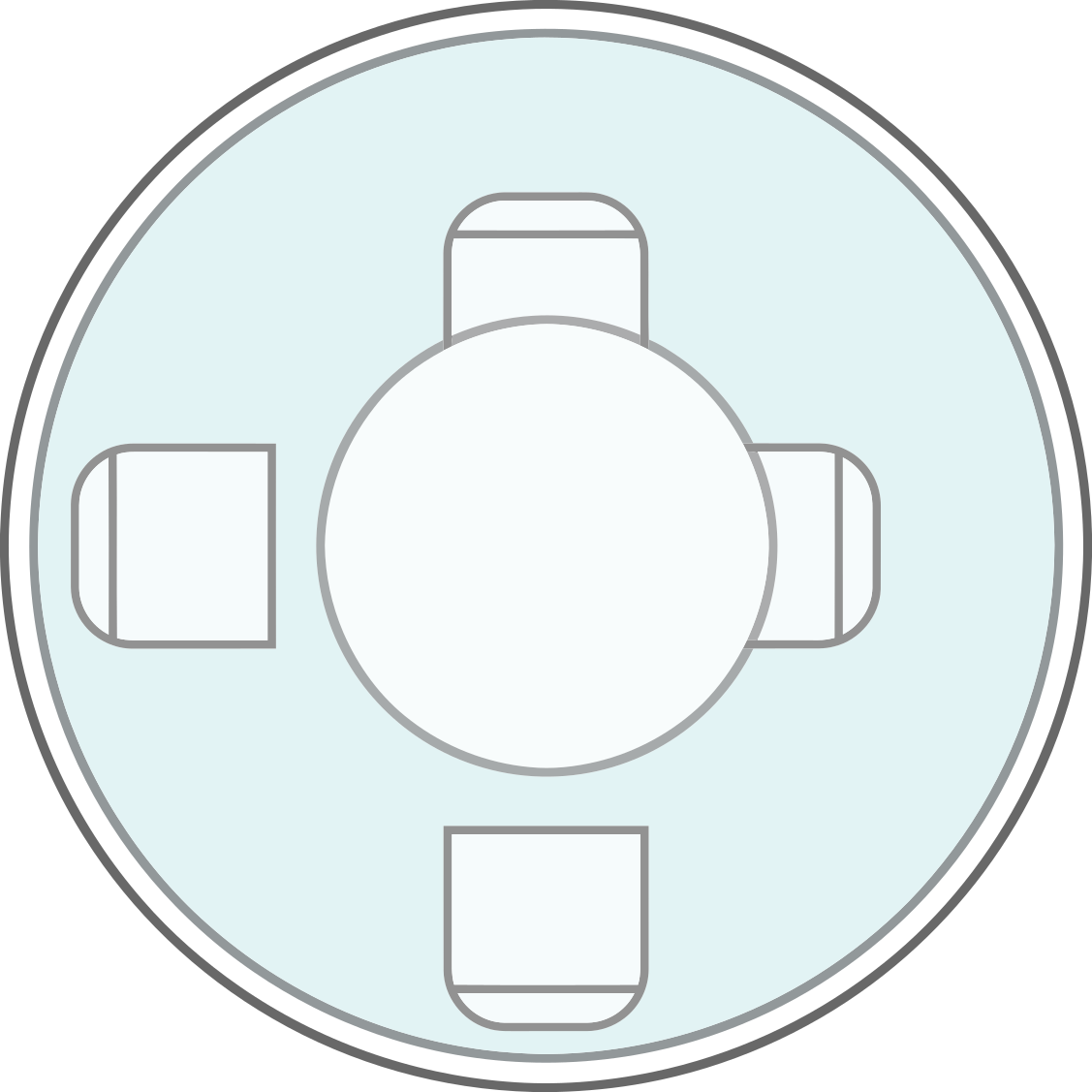 Round
Round
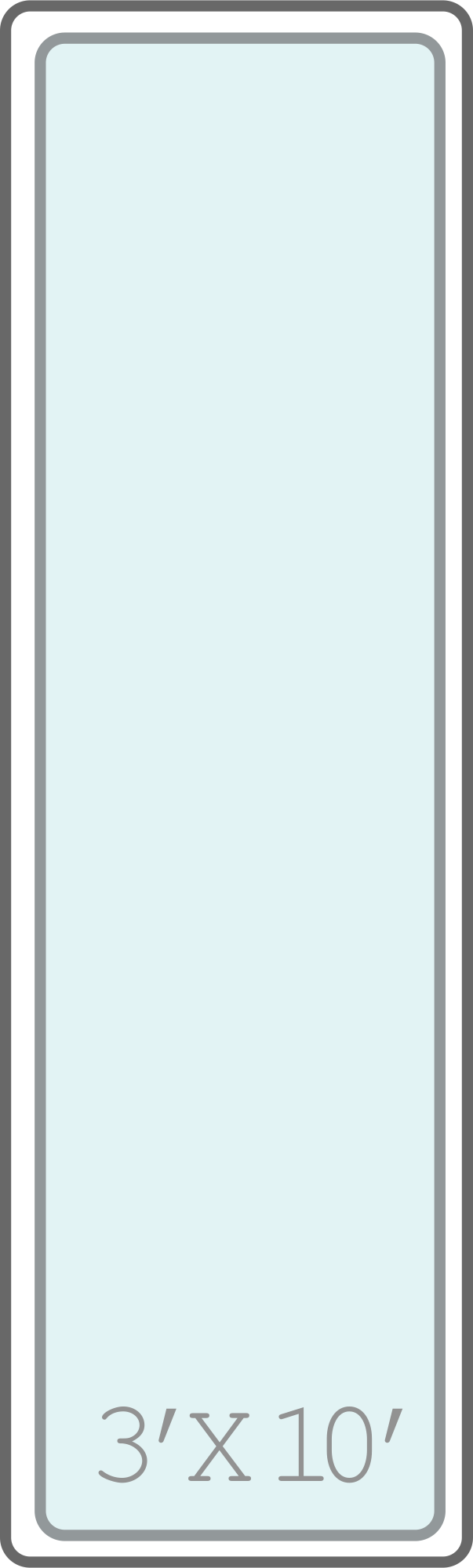 Runner
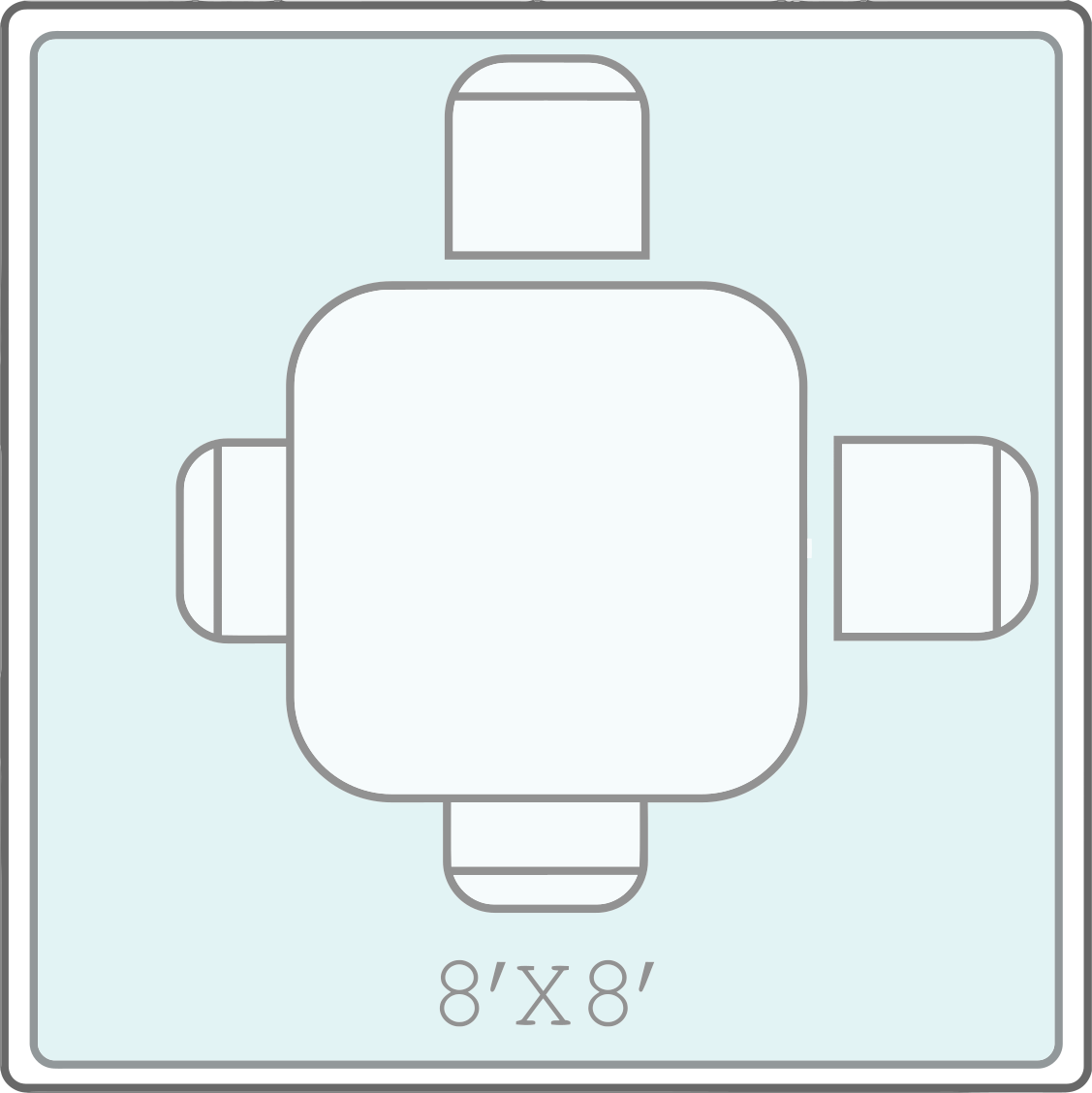 Square