Persian Rugs - Oriental Rugs - Rugman.com
 
 Cart  |  Wishlist  |  My Account  |  Help  | Site Map  |  Live Chat
Home | Ask A Designer | Rug Accessories | Persian Rug Guide
| Advanced Search 
 
RUGS BY SIZE
  Large Area Rugs
  Medium Area Rugs
  Small Area Rugs
  Palace Size Area Rugs
  Area Rug Runners
     
RUGS BY STYLE
 
Persian Rugs
 
Traditional Area Rugs
 
Modern Area Rugs
 
Outdoor Area Rugs
 
Oriental Area Rugs
 
Indian Rugs
 
Chinese Rugs
 
Pakistani Rugs
 
Flat Weave Rugs
 
Antique Area Rugs
 
Tribal Area Rugs
  Signature Series Rugs
 
ACCESSORIES
  Rug Accessories
     
 
Persian Rugs > Tutorial

Persian rugs (Iranian rugs) are easily among the most desired carpets in the world.

Persian rugs were initially simply necessities for homes of the nomads, protecting the inhabitants from harsh, cold elements. Through their bright colors and magical designs, Persian rugs were much more than floor coverings providing warmth and comfort. They were also a form of literary expression, bringing happiness and enchantment to tent homes of the desert wanderers.

The intrinsic beauty of Persian rugs found new owners in kings and noblemen looking for symbols of wealth to adorn their palaces. Persian rugs reveal a glance into a world of artistic excellence nurtured over more than 2500 years. The Persians were among the first carpet weavers of the ancient civilizations and through centuries of creativity and ingenuity, achieved a reputation around the world for their craftsmanship.

To make a carpet in the early days required tremendous perseverance. Even with a few weavers working together, it took months or even years to construct a single rug. When it came time for the tribe to migrate to another area, the entire loom was dismantled and the rug folded and put away. With spring's arrival, the loom would be set up again and the tribesmen and women would continue the weaving process continuing the tradition of Persian rugs that continues to today.

Today, with Iranians being increasingly swallowed up in an urban, industrial society, their love of the carpet and the tradition of Persian rugs is as strong as ever. To them it's a symbol of pride, because a home is bare and soulless without one. And to this day, Iran produces more Persian rugs than all other rug producing nations combined.

Persian Rugs Design

Persian Rugs - Designs The best thing about hand-crafted Persian rugs is that, unlike machine-produced rugs, they're all unique. No two are the alike because no two handmade rugs can be identical.

Each is beautiful in its own way, with its own patterns and designs. However, most Persian rugs can be placed in broad categories based on similarities of layout.

The three broadest categories we can place all Persian designs into are: Geometric designs; curvilinear and floral designs; and pictorial designs. Plus, each group has many different styles, and sometimes one carpet can incorporate more than one design.

Geometric Designs

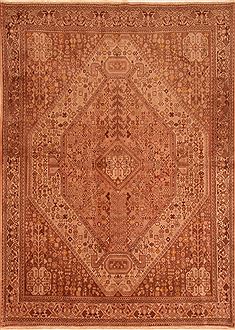
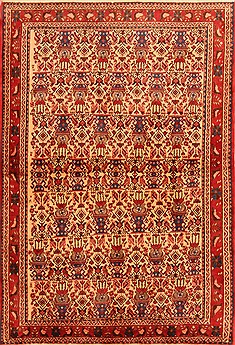
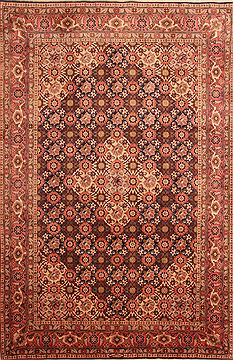
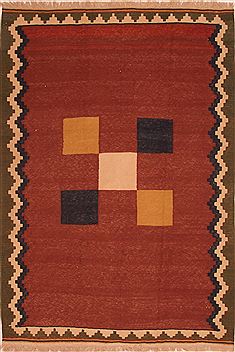
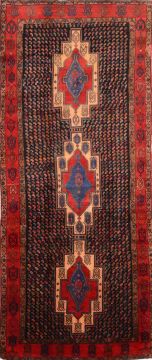
Persian Rugs Information All the carpets in this group are decorated with repeated linear elements of vertical, horizontal, and diagonal lines, usually woven by nomadic tribes using particular traditional and cultural symbols. Most of the elements are symbols of something special or sacred, cherished by that tribe for hundreds of generations.

Because they're made by hand in the most primal conditions, tribal pieces usually don't have full symmetry or color consistency, thus giving them a 'primal' quality.

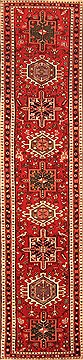
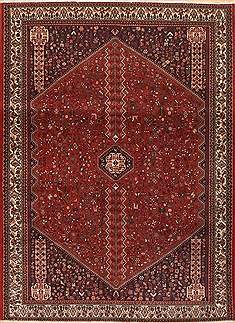
Some cities and villages that weave beautiful geometric rugs include Heriz, Hamadan, and Shiraz.

Curvilinear and Floral Designs

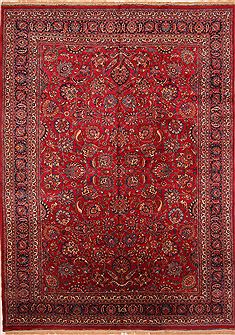
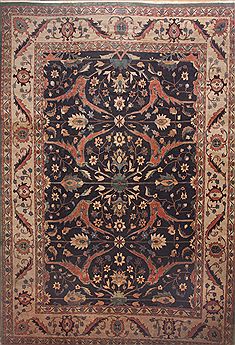
Persian rugs Most elements in Persian rugs have great meaning and reflect their close affinity with nature. That's why nature in some form whether in small plants and flowers or delicate animals can be seen in almost all carpets.

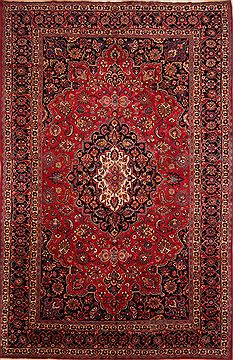
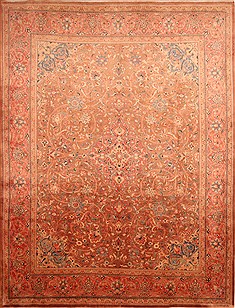
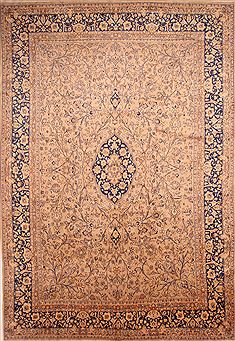
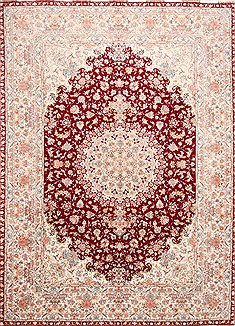
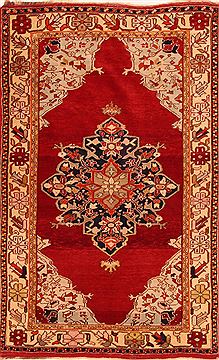
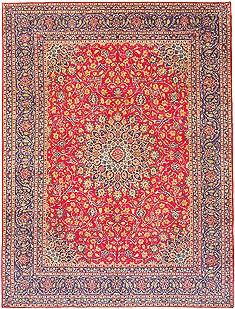
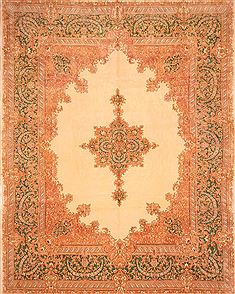
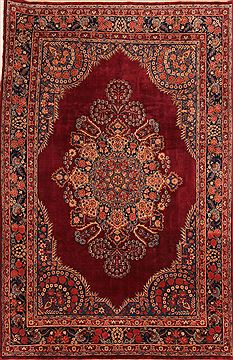
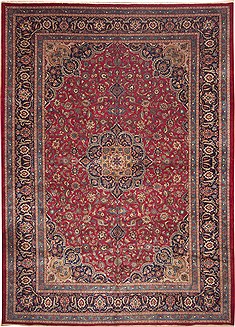
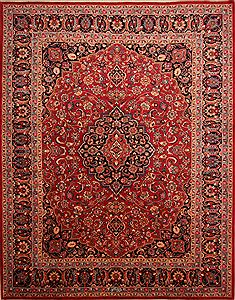
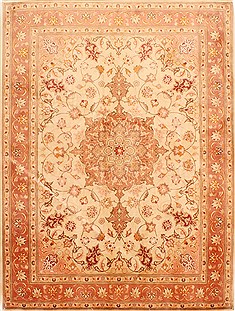
In most Persian rugs, the most common motif is the central medallion, and even though two may look similar, no two medallions are completely identical. Some experts believe that the medallion design stems from the spiritual nature of the weavers and that their inspiration probably came from the domes of the Mosques.

When discussing fine Persian rug patterns, it helps to be familiar with the Safavid Dynasty in Iran, especially the era when the Great Shah Abbas was king. He is the one that springs to mind as the inspiration for various patterns, all of which feature the lily in an isolated central position linked only by delicate tendrils.

Often, you will see a rug classified as a Shah Abbasi design. Shah Abbas was responsible for a large portion of the Persian rug industry by setting up royal rug factories all over Iran and making Isfahan the country's capital.

Today, a Shah Abbasi is among the finest Persian rugs available.

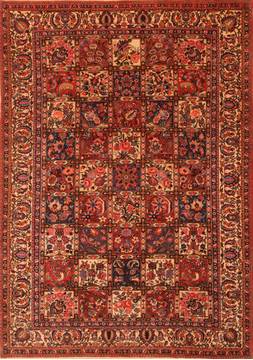
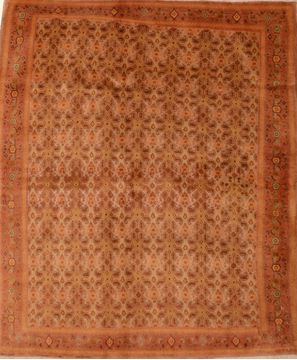
The Herati pattern -- a central diamond shaped figure forming the medallion while also a border to another similar medallion, which is another border to another inner medallion -- is found in rugs from around Iran, although almost all rug producing countries have made this design at one time or the other.

It is probably one of the most famous designs, deriving from the town of Herat, now in Afghanistan but once part of the Persian Empire.

Pictorial Designs

Persian rugs Perhaps the rarest of Persian rug styles is the pictorial design. This type of pattern doesn't follow a standard outline and each rug is unique in its details.

The weaving of a pictorial rug demands much more skill from the weaver. They must be great artists because unlike curves, circles, or repetitive floral elements, it is more difficult to weave details and smaller elements that require great accuracy.

This style of weaving was initiated in Iran several hundred years ago when artists and poets wanted to express themselves by means other than paper.

Persian rugs It is important to understand how proud the Persians were of their history and culture. Seeing how weaving has always been a big part of the artistic expression of Persian culture, the two were combined to preserve a moment of their history in a beautiful rug.

The Iran Carpet Company, a specialist in the subject, has attempted to classify Persian carpet designs and has carried out studies of thousands of rugs. Their results show that there have been slight alterations and improvements to almost all original designs.

In its classification the company has called the original designs as the 'main pattern' and the derivatives as the 'sub patterns'. They have identified 19 groups, including: historic monuments and Islamic buildings, Shah Abbassi patterns, spiral patterns, all-over patterns, derivative patterns, interconnected patterns, paisley patterns, tree patterns, Turkoman patterns, hunting ground patterns, panel patterns, European flower patterns, vase patterns, intertwined fish patterns, Mehrab patterns, striped patterns, geometric patterns, tribal patterns, and composites.

Persian Rugs - Classification

Persian Rugs - Regions

Generally, Persian rugs are classified by the region in which they are made. For example, a rug would be identified in the market as a Tabriz if it was woven in or near the city of the same name. A major rug-producing center such as Tabriz may also have subcategories, such as the famous Tabriz Mahi.

Persian rugs Every city, village, or tribe has their own design that they incorporate into their rugs, much like a trademark. If a design becomes famous, other centers may attempt to imitate the design though it seems imitators never quite match the quality of the original.

Persian rugs aren't always from the city they are identified as quality is also an identifying factor. For example, in the holy city of Mashad, when finer pieces are woven, they are often referred to as Moods. Although Mood is a village near Mashad, the name doesn't necessarily mean that the rug was woven there.

Another way Persian rugs are classified is by the city in where they are marketed. For example, Arak is a small rural town that has an incredibly large rug trading industry. It is surrounded by dozens of other villages that all produce rugs of their own. All these rugs are marketed in Arak, and thus many of them are referred to as Araks.

Likewise Birjand is a town in the province of Khorassan a fair distance south of Mashad, but some rugs of a certain quality marketed through Mashad are referred to as Birjands. This system of geography and quality of the Persian rug industry is common throughout Iran.

Persian Rugs - Tribal or City

Typically there are two types of rugs made in Iran: tribal rugs and city rugs. Tribal rugs are those woven by nomads and inhabitants of small rural villages. For the most part, these rugs are inferior in quality to the ones made in the cities. However the materials such as the wool and dyes used are often of excellent quality and occasionally a tribal rug turns out surprisingly fine.

The dyes used in tribal rugs are still mainly natural vegetable dyes, which is superior to chemical or chrome dyes.

There are many different designs found in Persian rugs. Tribal rugs tend to have geometric designs with little detail, only a few bright colors. City rugs and finer pieces usually have a more detailed design and much more color. Also, some cities will have very few designs and others such as Tabriz will have a great number. A rug expert can usually determine the origin of a rug simply by analyzing the design.

Persian Rugs - Quality

Persian rugs Persian rugs are categorized by quality first and design second. Quality refers mainly to the knotting of the rug plain and simple: the higher the knot count, the higher the quality. Other factors that contribute to the grading of rugs are the quality of the wool or silk, the dyes used, and the symmetry and accuracy throughout the design.

You may come across coarse Persian rugs that aren't perfectly square or contain a main color that varies in tone from one end of the rug the other. These imperfections, however, are what give these rugs their character and authenticity. A machine made rugs may be perfectly square, but the quality of these mass-produced rugs is otherwise inferior to handmade rugs in every aspect.
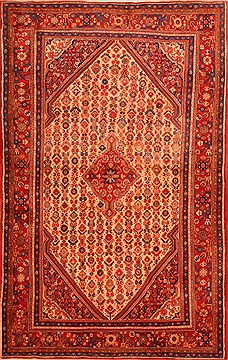
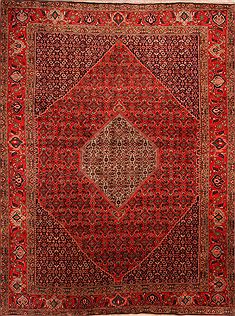
Surprisingly, a fine Persian rug will almost always include intentional imperfections. In fact, there's an old Persian proverb that says, "A Persian Rug is Perfectly Imperfect, and Precisely Imprecise". This notion of intentionally including slight and minor irregularities is derived from the religious belief that God is the only perfect being and that attempting absolute perfection would be claiming the position of the Almighty.

Persian Rugs - Size

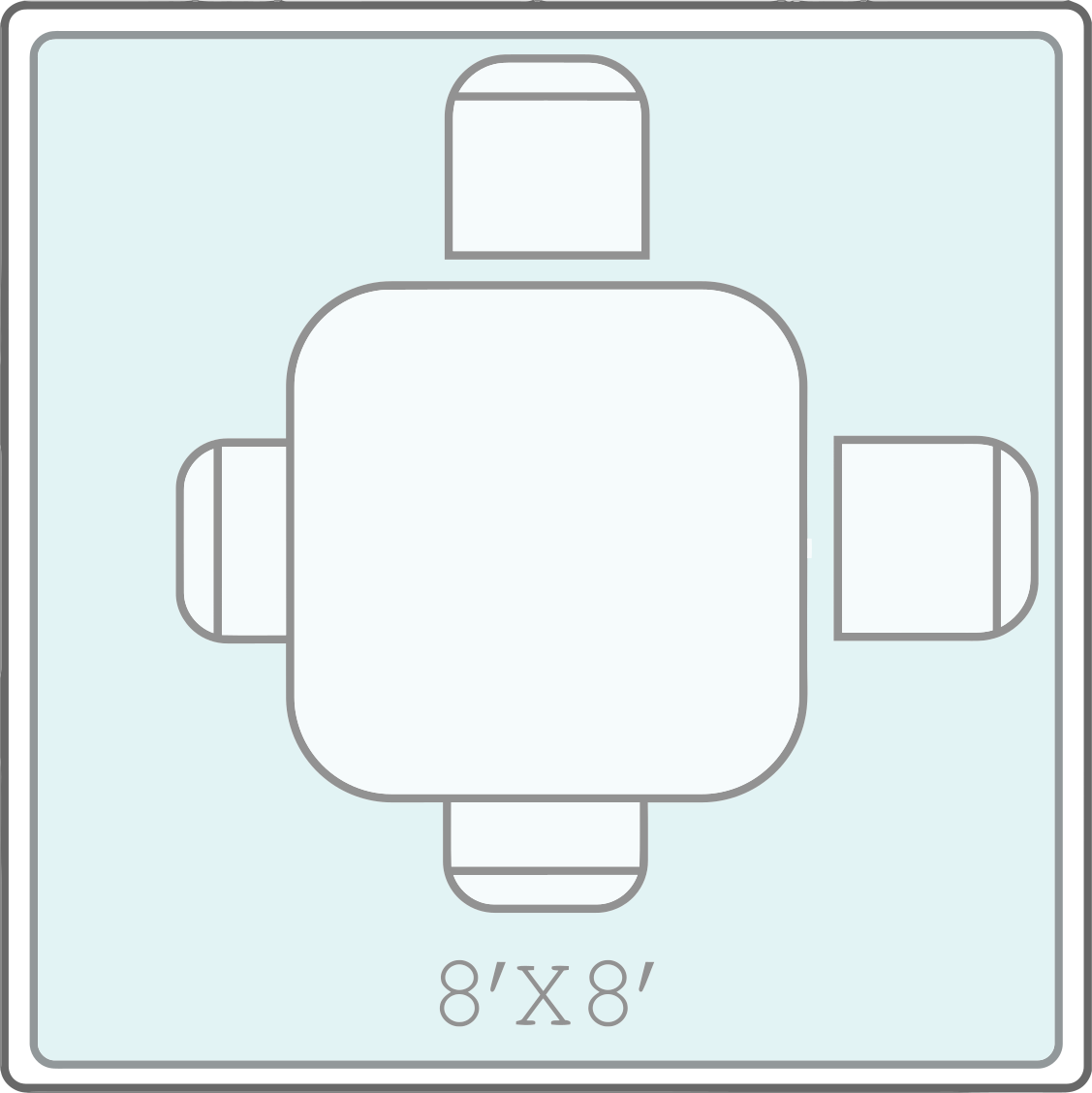
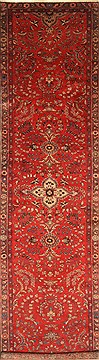
The most popular sizes for Persian rugs are seven by ten feet, eight by twelve feet, and ten by thirteen feet. These standard sizes each have names in Iran, and most regions will usually produce only one size. In larger centers, however, you can find rugs of non-standard dimensions ranging from a small two by three foot mat to carpets as large as a city block.
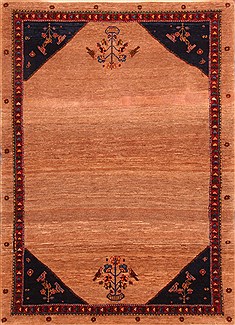
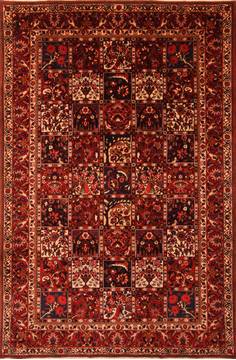
You can also find runners for hallways and corridors ranging from five to thirty feet long, and some cities even produce round or oval carpets.

« Back to Tutorial IndexNext: Oriental Rugs »
WHY BUY FROM RUGMAN Why Buy Area Rugs from rugman.com?
Middle Man
Customer Service
  • Free Shipping
    Within the contiguous US & Canada
  • No Risk
    100% Satisfaction Guaranteed.

    180-Day Guarantee*
  • 3 Easy Payment Plan
    All purchases of $1,000 or more
  •   Designer Picks
      Rug Gallery

    ASK A DESIGNER
    Get A Free Consultation

    Contact Now


    Gift certificate

    HACKER SAFE certified sites prevent over 99.9% of hacker crime. Rugman is an official member of Oriental Rug Retailers of America and Better Business Bureau © 2006 - Rugman.com - ®Rugman is a registered trade-mark of 1306538 Ontario Inc.