| |
| How can I buy rugs from Rugman.com? |
It’s easy! We offer two convenient ways to shop.
- Via www.rugman.com through our 100% secure shopping service.
This is easy and always available for your shopping convenience.
We have state of the art technology including secure server encryption
technology to protect all of your personal credit information.
- Via our call center at 1-877-784-6261. Just call and one of our
helpful, knowledgeable customer care representatives will take your order
over the phone. Our hours of operation are:
Mon ?Fri: 8:30am ?11:30 EST and
Sat ?Sun: 10:30 am ?6:00pm EST.
|
Back To Top |
|
| |
| How do I create a Personal Wish List? |
|
A personal wish list is a great way to save carpets to look at later or
to email to family or friends. Click the “Add to wish list button” on
the Rug Details page located on the far right column.
To see your selections, simply click on the icon at the top right of
any page, called Wish List, and you will see all of the carpets. There
is an easy to use comment section and you can email your list to a
friend or family member. Your selections will remain indefinitely
in your Wish List or until the carpet is sold. You do not have to
register with us to enjoy this useful feature. |
Back To Top |
|
| |
| How does our pricing work? |
We’re often asked how we can afford to offer these authentic, handmade
Oriental and Persian rugs at such affordable prices. The answer is
simple... at Rugman.com there are no middlemen.
In North America there are generally six to ten layers
of middlemen between them and the source of the rug and this adds
significantly to the price .
Our buy-direct / sell-direct philosophy means that we
eliminate most of these middlemen and bring the rug to you at a price
lower than the wholesale price most rug dealers pay. |
Back To Top |
|
| |
| What methods of payment does Rugman.com accept? |
|
For your comfort & convenience, Rugman.com accepts a wide variety
of secure payment methods ?both online and off. We currently accept
Visa, MasterCard, American Express, Diner’s Club, Discover, and PayPal,
as well as International Money Orders in US Dollars, and corporate
checks. |
Back To Top |
|
| |
| Do you offer a payment plan? |
| All
purchases of $1,000 and above qualify for our easy payment plan. The
cost of your purchase will be spread out over three convenient
payments. View more information on the payment plan. |
Back To Top |
|
| |
| How
can I be sure that both my credit card number and personal financial
information is kept safe when making a payment to Rugman.com? |
|
Our secure server software is among the best available today for secure
commerce transactions. All information transmitted is first encrypted
using a 128-bit SSL (Secure Socket Layer). This is industry standard
and offers the highest level of encryption possible, which means you
can breathe easy- all communications between your web browser and our
site’s servers are always private and secure. |
Back To Top |
|
| |
| How can I tell if it’s in Secure Mode? |
|
Standard, unsecured URL address begins "http://". When you enter secure
mode, the beginning of the URL address will change to "https://"; the
"s" stands for secure. Most browsers in secure mode also display a blue
line along the top of the browser window. Netscape Navigator?(versions
3.0 and earlier) displays a broken key symbol in the lower left corner
of your browser window when you are not viewing a secure page of a
site. This key will become solid when you enter secure mode. Netscape
Communicator 4.0 uses a padlock, in the same location as the key, to
indicate if you are in standard or secure mode. The padlock is open in
standard mode and closed in secure mode. In Microsoft's Internet
Explorer? you'll see a padlock symbol at the bottom of your browser
window when the browser is in secure mode. |
Back To Top |
|
| |
| How do I view my orders? |
|
From the homepage of the site, select My Account at the top of any page
and enter your email address and password. A selection of options will
be presented, check “My order History?to track your order. |
Back To Top |
|
| |
| What shipping options are available to me as a Rugman.com customer? |
Rugman.com uses FedEx as its primary source of transport. Products
which are shipped from our own warehouse are offered with Basic Ground
shipping, Express Ground shipping, Second Day Air, or Next Day Air
shipments. Special delivery options apply to products (mostly machine
made rugs and accessories) that are shipped to you directly from a
manufacturer.
Please note that only those orders shipped via Basic Ground shipping qualify for free shipping within US & Canada.
|
Back To Top |
|
| |
| How much will I have to pay for shipping? |
|
Rugman.com uses FedEx as its primary source of transport. Our Standard
Delivery Options include Basic Ground shipping, Express Ground
shipping, Second Day Air, or Next Day Air shiping. Please note that
only those orders shipped via Basic Ground shipping, qualify for free
shipping within US & Canada. Special Delivery Options apply to
certain items not held in our own warehouse. |
Back To Top |
|
| |
| Do you ship to APO/PO Boxes? |
|
We regret that at this time we are unable to ship our products to APO or PO Box addresses.
|
Back To Top |
|
| |
| How long does shipping take? |
|
For those orders shipped via FedEx?Basic Ground to residences within
the US and Canada, you may generally expect your delivery to arrive
within 2-3 weeks of order processing. Please note that consignment
orders held in an overseas inventory may take longer to arrive. |
Back To Top |
|
| |
| Do I need to be at home to accept my delivery when it arrives? |
|
No, unless you specially request that a signature be obtained upon
delivery, you are not required to be home. However, if you require a
signature you must be home. If delivering to your home is inconvenient,
you may opt to redirect the package to your work address in care of
yourself, so that a signature can be acquired. If you choose to have
your rug shipment sent to your place of business, please make sure to
complete the Company Name field while checking out. |
Back To Top |
|
| |
| Can I track my order while in shipment? How? |
After you have placed your order, you will receive a confirmation email
from Rugman.com. Once your order has been shipped, we will contact you
again with the necessary shipping/tracking information. You may use
that information to login at the FedEx website to track your shipment
by confirmation number.
Alternatively, you may login at Rugman.com to check the
status of your order. From the homepage of the site, select My Account
at the top of any page and enter your email address and password. A
selection of options will be presented, check “My order History?to
track your order. |
Back To Top |
|
| |
| How will I be contacted if I don’t have an email address? |
|
You do not need an email address to order a rug from us. Once your
order is placed online or via phone, you will receive a phone call from
our Customer Care department with details regarding your order details.
|
Back To Top |
|
| |
| How is my rug packaged for safe shipment? |
|
Your rug will arrive tightly and carefully wrapped to best preserve it
during its journey from Rugman, to your door. While wrapped in its
original packaging, the rug may appear to be quite small in comparison
to what one might expect. Don’t be fooled by its small package size!
Following a thorough wash and dry process, your rug is folded up as
small as possible before being rolled up tightly for safe packaging and
shipment. |
Back To Top |
|
| |
| What happens if my rug is damaged or lost while in transit to me? Who is responsible? |
|
Because of the way our wool rugs have been packaged, and because of our
long-standing relationship with our trusted transport provider, please
note that damage and/or loss during shipment is a rare occurrence.
Nonetheless, Rugman.com takes careful precaution to ensure our
customers are inconvenienced as little as possible under such
circumstances. That means full insurance coverage has been provided by
Rugman.com in order to cover the cost of such loss in the rare case
this should occur. |
Back To Top |
|
| |
| When I un-wrap my rug I see slight folds & creases. How can I get rid of them? |
|
Because your rug has been folded and/or rolled up tightly for safe and
efficient transport, you’ll note that in some cases the rug may curl
along edges, or show creases along lines where it has been folded.
Never fear- to remove the ‘curl? simply place something heavy (but
safe!) like a stack of books on the curling edge. After a few days, the
rug will lay flat, as it should. Ridding your rug of any creases is
even easier. Simply allow for regular traffic over the rug, and creases
will be put to an end shortly following its debut. |
Back To Top |
|
| |
| What if I don't like the product after I receive it? |
|
Persian
rugs must be returned within 180 days of delivery. All other items
(e.g. non-Persian rugs and accessories) must be returned within 30 days
of delivery. Rug care items (e.g. cleaning lotion) and rug pads are
subject to a 25% restocking fee.
If a returned item is
covered by a payment plan and not yet paid in full, it will be subject
to a Payment Plan Adjustment Fee in the amount of 10% of the item price
(max $100 per item).
Merchandise must be returned in its original packaging or equivalent.
IMPORTANT:
Please email ( support@rugman.com) or call us (1-877-784-6261) before
you ship any items back to us. We will give you specific instructions
about how to return your items. You may need to obtain an RMA number
from Rugman.com client services prior to shipping. Please note that
clients are responsible for return shipping.
|
Back To Top |
|
| |
| How do I maintain my rug? |
|
Before discussing different ways of maintaining a rug, it is important to mention that even though a handmade rug
is a work of art, it is made to be used and walked on. Traditionally,
handmade rugs, especially in the Middle East, were the only type of
furniture; people slept, ate, and sat on them. Older rugs are expected
to look worn. With usage, as the top layers of pile (in most cases
wool) break, the pile looks shinier and smoother, and with light
exposure the colors look more harmonious. With proper use, handmade
rugs generally become more valuable. Remember that handmade rugs are
not easily damaged, so enjoy your handmade rug without any worries.
-
Follow the instruction below and you will enjoy your rug for
generations:Every two to three years wash the rug professionally. It is
important to have it washed professionally because as the rug is used,
dust, dirt and broken fiber get into the foundation. Do not take the
rug to general carpet-cleaning companies because the techniques and
chemicals they use for wall-to-wall carpets may not be appropriate for
handmade rugs.
- In case of soft
drink or alcohol spill, apply salt or baking soda to the spot for a few
minutes to absorb the color of the drink. Then vacuum off the salt or
baking soda. After vacuuming, use a wet towel to gently wipe the stain
in the direction of the pile. You can wet the towel with regular or
carbonated water. Be gentle; do not scrub the rug.
-
In case of water spill, dry the wet spot immediately with a hairdryer
on warm temperature. Try to dry both sides of the rug if possible.
-
Vacuum or sweep your rug regularly. Use suction in the direction of the
pile. AVOID USING A BEADER BAR since it will ruin the pile of the rug.
Be very careful so that the fringes do not get pulled or sucked in by
the vacuum cleaner.
- For old stains, take the rug to a professional handmade rug retailer. Do not try to clean old stains yourself.
- Rotate
your rug 180 degrees every few months depending on the extent of
traffic. Rotation can be helpful since all parts of a rug can be
exposed to light equally so that the colors fade evenly. When colors
are exposed to the sun evenly, they become harmonious and the rug ages
nicely, but if different parts of the rug receive unequal amount of sun
exposure, overtime, one side might look over faded and one side too
bright. Also, rotation can distribute the traffic evenly as well. All
parts of the rug should be exposed to equal amount of traffic so that
the pile wears evenly.
|
Back To Top |
|
| |
| How to choose professional carpet cleaning services? |
|
As
a general rule, the safest recommendation we offer regarding cleaning
any type of rug is to have it done professionally using the steam
extraction method.
Be sure your cleaner knows how to
clean your particular type of rug. Cleaning a hand-made oriental rug is
very different from cleaning wall-to-wall carpet!
- Inspect the rug with the cleaner. Note existing stains and damage before it is cleaned.
- Get a signed receipt for the work to be done and a guarantee, if possible, that it will be done.
- Make sure the cleaner can afford an insurance claim should something go wrong.
|
Back To Top |
|
| |
| What are consignment pieces? |
|
Our consignment pieces are rugs that are held in an overseas location.
Once your order is placed, Rugman.com will confirm your order within 3
business days. Upon confirmation this rug will be delivered within 2 to
4 weeks. |
Back To Top |
|
| |
| What is the pile of the rug? What is it made of? |
|
Pile refers to the material (fiber) used for weaving rugs. Only natural
fibers are used in handmade rugs. The main pile materials are wool,
silk and occasionally cotton. Sometimes, goat and camel hair are also
used. In general, the same material is used for both by nomadic and
village weavers. |
Back To Top |
|
| |
| How thick is the pile of a rug? |
|
Thickness of pile varies from rug to rug. It usually up to the
weavers?discretion to trim the pile as he desires. However, as rule of
thumb, city rugs are trimmed lower (almost one to one and half
Centimeter) and the tribal rugs are trimmed longer (up to two and half
centimeter). City rugs usually are very creative in the nature of
design and are full of curvatures and complex images. In order to show
the design sharply the weaver must trim the pile low (if long they wool
treads will mingle and will show a very messy pattern). However, the
tribal rugs have very simple geometric design which can be trimmed
longer. These nomadic people use the rug a tool of protection and they
must be thick to prevent the cold to penetrate through the rug. |
Back To Top |
|
| |
| What is the Foundation of the rug? What is made of? |
|
Foundation refers to the basic structural components of handmade rugs. These components consist of warps and wefts that
is often cotton. Wool is used as a foundation material in some nomadic
and village rugs because wool is readily available to these weaving
groups. Silk is generally used in foundation of rugs with silk piles.
Rugs with silk foundation and pile are very exceptional and expensive.
These rugs are light in weight and are very finely knotted. Silk is a
very good foundation material because it is very strong and keeps its
shape.
Warp - Warps are vertical strands of
fiber which stretch from the top to the bottom of the rug. Warps are an
extremely important component because the knots are tied to them and
the weft strands are passed (woven) through them. Even tension of all
warp strands is essential in producing a rug without wrinkles.
Weft
- Wefts are horizontal strands of fiber that are passed (woven) through
the warp strands. Unlike the warps, wefts are not structured prior to
weaving. They are added before and in between the rows of knots to
secure the knots in place. Each side of the rug, where the wefts begin
and end, is called selvedge. |
Back To Top |
|
| |
| What is Fringe? |
|
The extensions of warp strands are rug fringes. Fringes are knotted at
the ends to ensure that the wefts and the knots do not unravel. |
Back To Top |
|
| |
| Why do the fringes of the rugs vary? |
|
The exact length of the fringes of handmade rugs was a choice made by
the weaver of that particular rug or the client for whom it was made.
Some are trimmed short, some long, and in older pieces are braided or
non-existent. The type or length of the fringe of the rug has little to
do with its value or quality. |
Back To Top |
|
| |
| How do I determine the age of a rug? |
|
The approximate age of each rug should be stated in the rug's
description. Generally, rugs are placed into categories including new,
semi-antique and antique. The older pieces are usually higher in retail
value. Some antique pieces are on display in museums around the world
with a price tag of over a million dollars, and some are priceless. |
Back To Top |
|
| |
| What do you mean by the age of rug? Is the rug been used before this? |
|
The age attribute specifies how old a rug is. There are three major
timelines: New (0-25 years), Semi-antique (25-60 years) and Antique (60
years and up). We cannot tell you if the rug has been used before or
not since there has not been a log for these rugs. Sometimes the rugs
will stay in the Bazaar of Tehran moving from one merchant to another.
However, Rugman.com guarantees that the rugs are inspected by our
trained inspectors and are professionally cleaned prior to exporting to
USA. Please note that aged rugs are more expensive and Persian rugs are
made very durable so they can last for generations. |
Back To Top |
|
| |
| What do you mean by the condition of the rug? |
|
The condition of a rug is an important element because it affects the
beauty and value of the rug. Handmade rugs are classified according to
their overall condition. In the handmade rug industry these conditions
are Excellent, good, repaired, stained and low pile. |
Back To Top |
|
| |
| What does repaired mean? |
|
Generally all of our wool rugs are in superb condition. Some older
pieces may have had slight repairs done to them, but this is normal in
older rugs. In such cases, the condition of the rugs will be mentioned.
The repair should not be noticeable and should not devalue the rug in
any way. Almost any rug can be repaired and restored to its original
condition. Also, please note that repairing a handmade rug, similar to
weaving, is very time consuming and labor intensive; as a result,
repair can sometimes be costly. |
Back To Top |
|
| |
| What does low pile mean? |
|
Some older pieces may have a low pile, but that wear often adds to
their value. As is the case with wine, a good rug matures with age. |
Back To Top |
|
| |
| What is the difference between good and excellent rug? |
An excellent rug is a rug in excellent shape with no stains, tears or
holes, and no previous repair work. Since handmade wool rugs are very
durable, most wool area rugs are in fine condition. It is very easy to
maintain a rug in its excellent condition.
A good rug is a rug that may have undergone or may
require some minor repair because of a few broken or torn warp strands,
knots or fringes. If repair is needed, it should be done by a
professional rug retailer. |
Back To Top |
|
| |
| Why do handmade Oriental and Persian rugs occasionally have imperfections in regards to symmetry or size? |
|
A famous Persian proverb states: “The Persian carpet is perfectly
imperfect, and precisely imprecise? This phrase comes from their
important belief that only God can create perfection. Therefore, to
make a perfect rug would be flying in the face of the Almighty!
Fortunately, most of these 'imperfections' are very small details of
pattern, like an extra leaf on a tree, or one flower of a color
different from all the rest. In tribal pieces most variations are not
intentional, but simply due to the fact that it is much harder for
nomadic weavers to operate than it is for city weavers. The looms used
in rural areas are usually very basic horizontal looms placed on the
floor, which makes it much more difficult to weave a perfectly
symmetrical rug. By definition nomadic weavers migrate according to the
seasons, and slight variations might also be caused by temperature
changes and by the constant dismantling and re-assembly of their
primitive looms. It is important to expert rug buyers to know that
these items are hand-made and may have slight imperfections, as this
can often increase their value and interest and is what many experts
are looking for. |
Back To Top |
|
| |
| What KPSI mean? |
|
KPSI stands for Knots per square inch and determines the number of
knots in one square inch of the rug. It represents the overall number
of knots used in creation of a handmade rug. Usually, City rugs have
higher KPSI since they have more detail and they use finer wool. Tribal
rugs have lower KPSI since their design is more simple and geometric. |
Back To Top |
|
| |
| How many knots per square inch are there in your rugs? |
|
The knot count per square inch is a unique number for each rug. This
number could range from 60 to 1400 KPSI depending on the material used
and the skill of the weaver. When it comes to wool rugs, generally, the
higher the knot count, the more valuable the rug. |
Back To Top |
|
| |
| What is the layout of a rug? |
Layout is the overall arrangement of motifs or objects woven into a rug.
Motif is any single form or interrelated group of forms which make up part of the
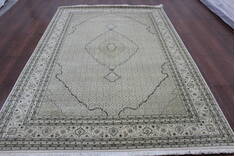
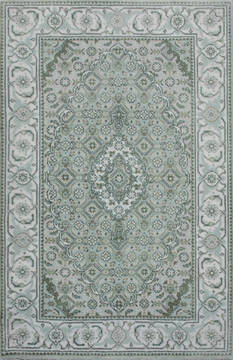
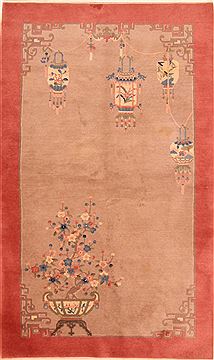
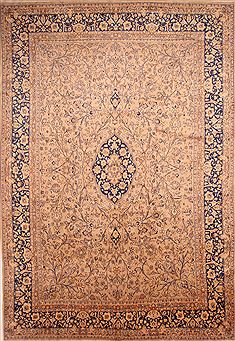
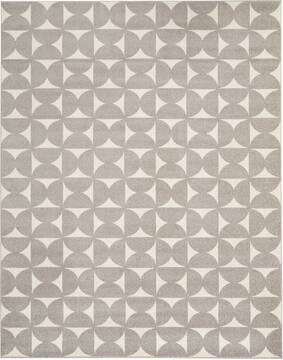
overall design. All wool area rugs can be divided into three major layouts of all-over, medallion, or one-sided.
 One Sided |
 Medallion |
 All-Over |
|
Back To Top |
|
| |
| What is one-sided layout? |
|
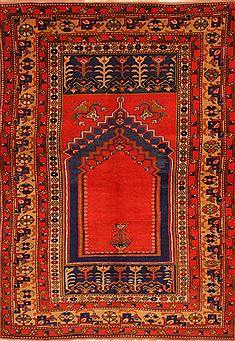
In this layout, the design is woven in one direction. Therefore, the
rug can be properly viewed only from one side, similar to a photograph.
For this reason, this layout is also known as one-directional. Prayer
and pictorial rugs fall into this category. |
Back To Top |
|
| |
| What is all over layout? |
|
In this layout, there are no dominant or central designs. The motifs on
the rug are spread throughout the rug. Sometimes they are connected and
sometimes they are separate. Usually a single motif or a group of
motifs is repeated throughout the rug. The motifs could be small and
repeated many times, or large and repeated only a few times. The
Persian name afshan, which means scattered, has been given to the
all-over layout. Some common designs that fall under this layout are
repeating, endless repeat, and paneled. |
Back To Top |
|
| |
| What is the Medallion layout? |
|
In this layout, a large centerpiece called medallion is the center
point of the design. In Persian, this centerpiece is called toranj. The
medallion layout is by far the most frequently used layout in every
handmade rug producing country. |
Back To Top |
|
| |
| What is the field of the rug? |
|
Field of a rug is the main central part of the rug which contains the
medallion, motifs and the corners of the rug. Usually the color of the
field has the dominant color in the background of the rug. The
background color is the underlying color of the entire rug with the
exception of the border. The most widely used background colors are
red, blue, beige, and yellow. |
Back To Top |
|
| |
| What is the border of the rug? |
|
Border is the outer part the rug which surrounds the field of the rug.
The border consists of an internal and external border. The internal
border encloses the field and the external border encloses the whole
rug which is secured by Selvedge. The border color is not as readily
distinguished as the background color. Major border colors are red,
blue, beige, yellow, and green. |
Back To Top |
|
| |
| What do you mean by the make of the rug? |
|
Make is the actual location where a rug is produced. A rug produced in
pakistan may be Persian style and could be sold under the name of its
style. At the same time, a rug could be woven in the same exact place
where its style first originated. Therefore, sometimes the style and
the make have the same name, and sometimes they have different names.
When you are buying a handmade rug, you need to know both the name of
its style, and its make because make could be a factor in the value of
the rug. |
Back To Top |
|
| |
| What do you mean by the style of a rug? |
|
Style of rug is the design or the look of the rug that the associated
to the region, city or the village that they make the rug. Persian
styles are the most diverse styles worldwide. There are over fifty
different Persian styles woven in Iran and other countries such as
India, Pakistan, China, and some European countries. Some well-known
Persian styles include Afshar, Arak, Ardabil, Bakhtiari, Bijar,
Esfahan, Farahan, Ghouchan, Hamadan, Heriz, Joshaghan, Kashan, Kerman,
Kermanshah, Lilian, Malayer, Mashad, Nain, Najafabad, Natanz, Qashghai,
Qazvin, Qum, Ravar, Sabzevar, Sarab, Saruk, Senneh, Serapi, Shiraz,
Sultanabad, Tabriz, Tehran, Varamin, Yazd and Zanjan. |
Back To Top |
|
| |
| How is the wool dyed? |
The process of changing the natural color of materials such as wool,
silk, and cotton is called dyeing. There are two types of colors:
natural colors and synthetic colors.
Natural Colors
Until
the late nineteenth century only natural dyes were used for coloring
weaving yarns. Natural dyes include plant dyes, animal dyes, and
mineral dyes.Plant dyes come from roots, flowers, leaves, fruit, and
bark of plants. Below are some examples of plants used as dyes:
- Woad: mustard family
- Indigo: blue family
- Saffron safflower, sumac, turmeric, onionskin, rhubarb, weld, and fustic: yellow family
- Madder, Redwood and Brazilwood: Red Family
- Catechu dye, oak bark, oak galls, acorn husks, tea, and walnut husks:
Brown and Black family
Please note that all the primary natural colors could be mixed to
produce a wide variety of secondary hues. Today, natural dyes are still
used in some traditional dye-houses and villages where natural sources
are readily accessible.
Synthetic Colors
In the mid-nineteenth century, due to increased demand for handmade
rugs increased in the West, their production increased in the East. The
need for easy-to-use and less expensive dyes with wider range of colors
caused the development of synthetic dyes in Europe, especially in
Germany. Synthetic dyes were soon imported to Iran. The first synthetic
dyes were synthetic aniline dyes which were developed in the 1850s.
Synthetic aniline dyes made from coal tar were brilliant, inexpensive,
and easy to use; however, they faded rapidly with exposure to light and
water. In 1903 Nasser-e-Din Shah, the Persian king of Qajar Dynasty,
banned the use of aniline dyes in Iran. Persian weavers discontinued
the use of synthetic dyes until the modern synthetic chrome dyes were
developed in the years between the First and the Second World Wars.
Chrome dyes are stable (any dye that retains its intensity despite
exposure to light and water), and are produced in an infinite variety
of attractive colors and shades. Today, mostly chrome synthetic dyes
are used for coloring weaving yarns. Natural dyes are used in places
where they are easily obtainable. We could be confident that today
whether we buy a rug made from natural or synthetic dyes, it will only
improve with time. |
Back To Top |
|
| |
| What are patterns? |
Pattern is the way lines are used to form shapes on a rug. The main patterns of rugs are curvilinear, geometric, and pictorial.
Curvilinear
Patterns
created with smooth curving lines are called curvilinear. Curvilinear
patterns can be seen in all three layouts of all-over, medallion, and
one-sided. Creation of curves generally requires a higher knot density.
However, a high knot density does not automatically result in a
curvilinear pattern. Kerman, Kashan, Isfahan, Nain and Qum styles are
good representations of the curvilinear pattern
Geometric
Patterns
created with straight lines are called geometric. Their designs are
created mostly with right angles, diagonals, triangles, and other
geometric shapes. Geometric patterns can be used in all three layouts
of all-over, medallion, and one-sided. Most geometric rugs are
predominantly woven by nomadic tribes and village groups. The ones
woven by nomads are simpler and the ones woven by villagers can either
have simple or very complex motifs such as geometric rugs of Heriz
style, which are very intricate. Baluchi, Turkoman, Hamdan, Heriz and
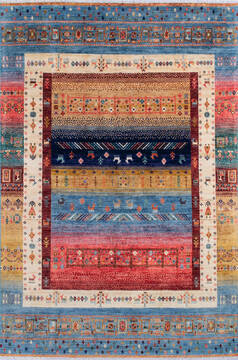
Gabbeh styles are good representations of the geometric pattern.
Pictorial
Pictorial
rugs portray people and/or animals and are usually based on history and
mythology. Pictorial rugs are a special and less common pattern and
sometimes they consist of one or more famous figures and sometimes they
depict a famous historical event. Pictorial rugs should not be mistaken
with all-over hunting scenes. In pictorial rugs people and animals are
the main design. In all-over hunting scenes, they are the supplementary
decorative motifs.
|
Back To Top |
|
| |
| What are the benefits of using under-padding? |
|
Under-padding has many benefits for your rug. It holds the rug securely
in place to prevent slipping, adding cushioning and luxury, and
allowing for easier vacuuming.
Under-padding also prevents pile crush, protects rugs from the effects
of sharp objects like heels, and generally extends the life of your
rugs. Its use is highly recommended. |
Back To Top |
|
| |
| Do you sell under-padding for rugs as well? |
|
Yes, we do sell under-padding for our rugs and it is available upon request during check-out.
|
Back To Top |