The Gharajehs / Gharadjehs are hand-woven Persian rugs made by Turkish nomads living in the mountains and valleys between Tabriz and the Caspian Sea, in Northwestern Iran. These tribes-people incorporate quality wool, long lasting durability, and gentle earth tone colors to produce these exquisite floor pieces. The patterns are mainly geometric with some small plants or animals in rare cases. Gharajeh rugs are very tough and can take a lot of abuse for several years. The sizes of these rugs vary but it is safe to say that the Gharajehs are mostly small rugs and runners. When bigger rugs are made in these regions, they are usually given other names such as Heriz, or Goravan. This lovely rug will be a warm addition to any home and its beauty will always remain invaluable .
This ancient region of Iran is very renowned for rug weaving. It has a rich history that dates back a long time. Here, in these rugged and mountainous conditions, much like many other parts of Iran, almost all the men and women have the talent and skill to weave high quality carpets by hand, with no use of modern technology whatsoever. In some cases, rug weaving is the family's main source of income. They trade the rugs in nearby cities with local merchants for staples and necessities of the home. A few regions and towns that are included in this Turkish region of Iran are Ardabil, Bakhshaish, Gharajeh, Goravan, Heriz, Mehraban, Sarab, and Shahsavan. Their weaving style originates partly from Mongols who invaded Iran in the 13th century, and settled the northwest. This historic region of Iran and some parts of Turkey and Uzbekistan have really been significant in the forming of the present day carpet industry. Carpet weaving has long been a custom of theirs and they continue to weave them everyday.
Weavers of these regions usually use their own symmetrical Turkish double knotting style, which tends to be dense and tightly packed down. The asymmetrical Persian knot can also be seen in cities such as Ardabil. The pile of these rugs is thick lustrous wool, handspun from local sheep. Cotton is the material of choice for the foundation because it is very strong. However, goat hair can also be seen in some Turkish tribal carpets. In a few regions such as Ardabil, silk is blended in with the wool pile to produce a gorgeous rug. Natural vegetable and root dyes are mainly used for the coloring of the rugs. These rugs are generally very sturdy and hardwearing and they still use the brilliant weaving techniques that they used thousands of years ago.




Be the first to know about new designs and
exclusive offers, and get up to
10% OFF
your first purchase
Rugman since 1998 | The first and oldest online rug store
You can unsubscribe with a single click. We value your privacy; click here for more info.
You have one more step to join
Rugman Insider Club.
A coupon code will be emailed to you.
Please check your email and just
click the green “Confirm Subscription” button.



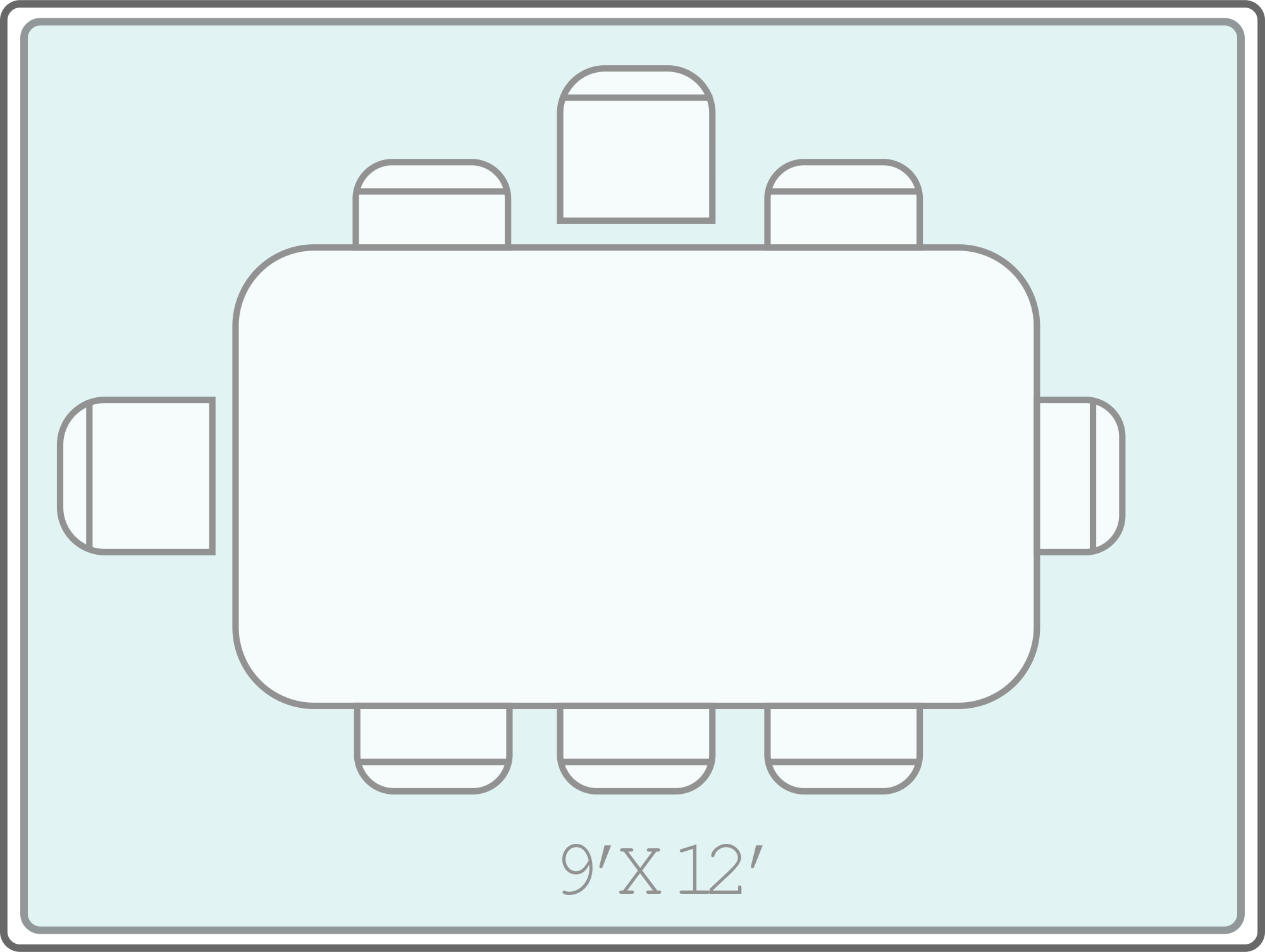 Rectangle
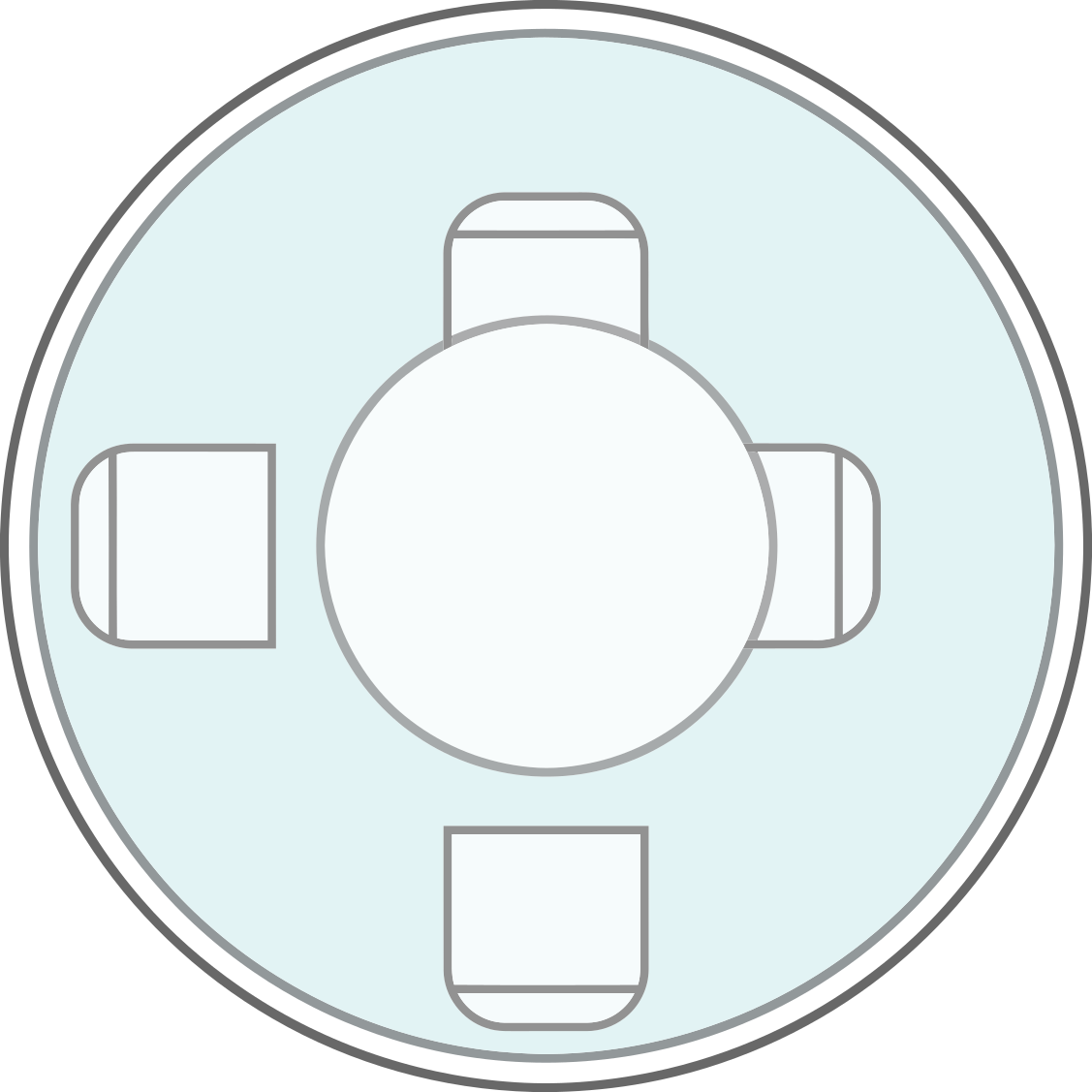 Round
Round
 Runner
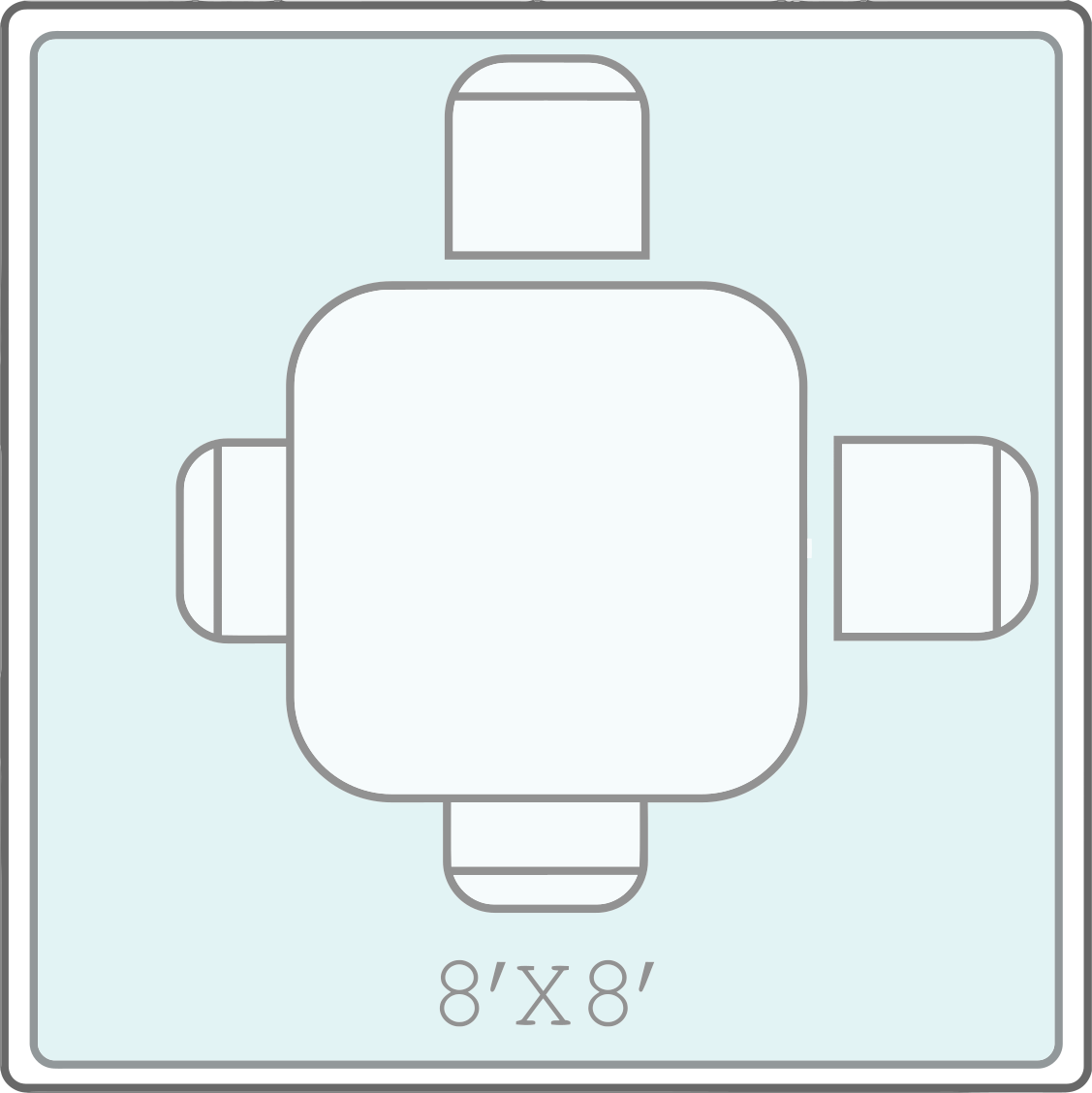 Square

